CULTURE
Why Is There a Tiny ‘9/10’ on Gas Prices?
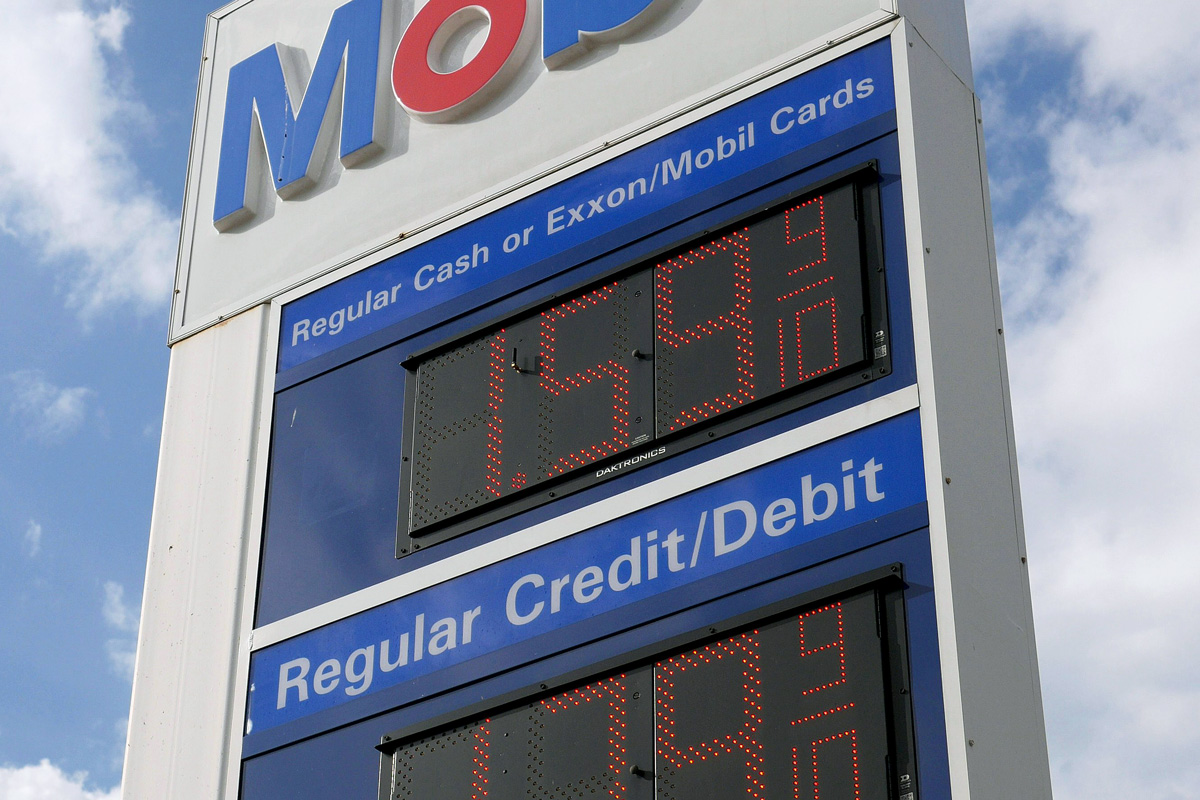

You pull up to a gas station and eye the roadside sign with a groan. It reads $4.49, and you’re thinking that’s simply too high a price for regular gas. What’s even worse is that you’ve likely become accustomed to simply ignoring the little “9/10” next to the price.
Unfortunately, your wallet doesn’t ignore it. That tiny fraction means you’re actually paying even more for gas than you might think. The “9/10” represents nine-tenths of a cent, meaning that if a gas station sign is advertising gas for $4.49 followed by “9/10,” you’re actually paying $4.499 per gallon. Think about how many times you’ve topped off your tank, and how many years you’ve been driving — that fraction of a cent adds up.
Nobody sells milk for $3.599 or bread for $2.999, so why is gas the one thing you’re paying for this way — despite there not even being a coin small enough to cover such a surcharge?
A Penny Used To Be a Big Deal
In 1932, the Wayne 40 mechanical gas pump debuted and was the first pump to display its output with three dials: price per gallon, gallons delivered, and total sale. This three-tier pricing structure is still used in modern pumps today. That same year, the first federal gas tax — one penny per gallon — was passed. A year later, it was increased another cent and a half.
Gas station owners were able to use their mechanical pumps, which showed customers the exact cost of the gas being pumped into their tanks, to display gas down to a tenth of a cent. That enabled merchants to advertise at prices using nine-tenths of a cent as a marketing tool — the “9/10” made the increased cost of taxed gas seem cheaper than it really was.
Since we tend to read prices from left to right, $10 feels more expensive than $9.99. This pricing tactic is used all the time, but gas stations took things even further by adding an additional decimal place. So, even if you know that you’re paying $4.999 rather than $4.99, you still tend to round down and incorrectly perceive the actual cost as closer to $4.99 than to $5.
Perhaps even more importantly, there was also a practical advantage to using the fraction. Adjusting the cost of gas by a whole cent was a significant price change at the time. During the Great Depression, fuel prices fell below 10 cents per gallon in many areas.
At 10 cents a gallon, even a penny more would have been a 10% increase. Pricing gas down to a fraction of a cent gave stations some wiggle room to raise or lower prices without making a full 1-cent jump.
As inflation took gas beyond $1 per gallon (and, eventually, far beyond), the difference between 1 cent and nine-tenths of a cent became less significant. However, the strategy stuck around. Rather than doing the mental math, many drivers simply ignore the “9/10” altogether. Drivers just assume the cost is $4.99.
For what it’s worth, you never actually have to come up with nine-tenths of a penny. Pumps round your final bill to the nearest cent. That means you also could end up paying even more than what’s advertised, “9/10” included: If you buy exactly 12 gallons at $3.499 per gallon, the math comes to $41.988, but you pay $41.99 — losing out on more than a tenth of a cent.
For this reason, there’s not much incentive for a gas station to get rid of fractional pricing. In 2018, Ed Jacobson, a former gas station owner who ran the Northwoods Petroleum Museum in Wisconsin, estimated that the average station made an additional $2,000 per month from adding up all those extra fractions of a penny. That number is likely even higher with today’s gas prices.
So don’t expect the gas sign oddity to go away anytime soon.
The tiny “9/10” next to a gas price means you’re paying an additional nine-tenths of a cent. If a sign says $4.49 and 9/10, the actual price is $4.499 per gallon. Whatever fraction is left over after you’ve finished pumping is rounded to the nearest cent, meaning you may pay more than advertised. The practice dates back to the 1930s, when a 1-cent change in gas prices was a significant increase, but it is still used today because even those tiny fractions add up to increased profit.
Short Answer