TECHNOLOGY
How Do Record Players Make Music?
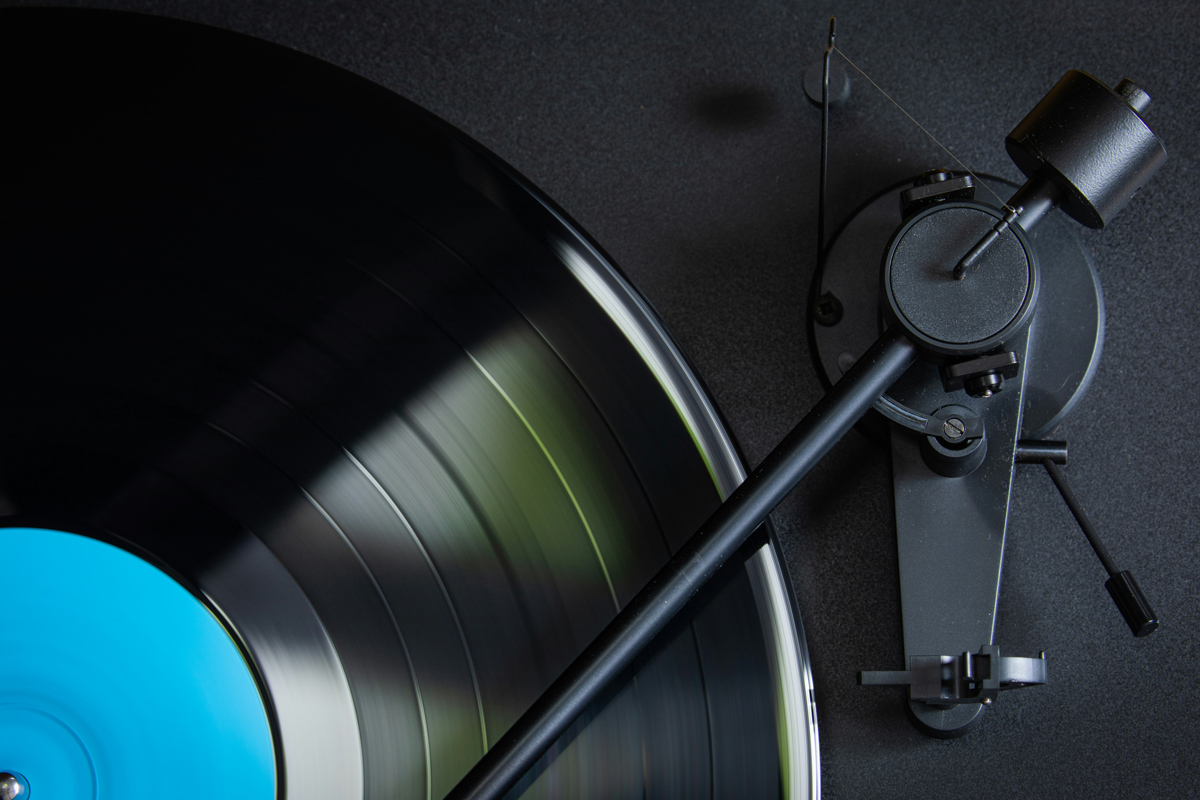

“It’s better on vinyl.” You’ve probably heard an audiophile extol the virtues of a vinyl record. Whether the quality really improves or not, the music produced via a record player is certainly different compared to streaming an album online, playing a CD, or listening to the radio in your car. Classic vinyl records have been making a comeback over the last two decades, officially surpassing CD sales in 2022 to clinch more than $1.4 billion in revenue. And while the ribbed discs and boxy players might be familiar, putting the two together to create the music we love is still a mind-blowing experience.
You’ve probably guessed that the record player’s needle moving around the grooves of a record creates music, but what does that really mean?
The Science of Good Vibrations
Music has the power to move us emotionally. But at its most basic level, it’s really just a pattern of vibrations called sound waves. These waves travel through the air to our ears, where they register as notes, lyrics, or sometimes just dissonant noise (hey, you do you).
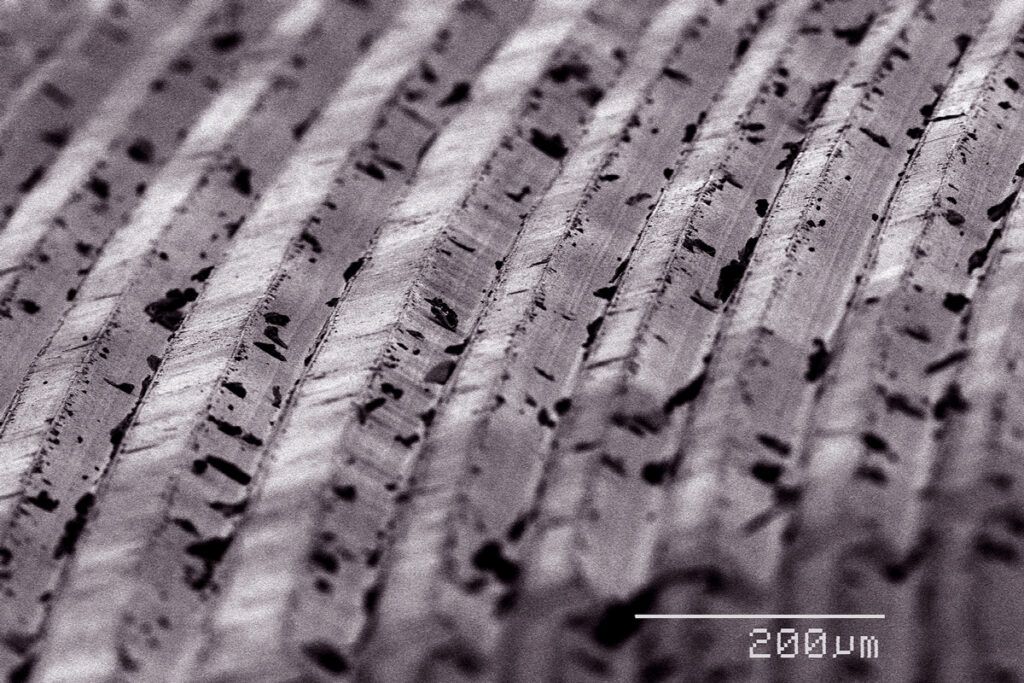
Records are an analog, or physical manifestation of those sound waves etched onto the surface of plastic — well, a polyvinyl chloride plastic, but you get the idea. Picture a sound wave moving up and down to create a continuous V-shape in the air. Record grooves are a physical version of that shape. In fact, if you look under a microscope, you’ll be able to see those V-shaped ridges traversing the record’s surface like a series of mountains and valleys.
Once an album is recorded, it’s played into a machine called a record cutting lathe. The vibrations from the sound waves move the lathe’s needle up and down over the surface of a lacquer disc, cutting notches in the shape of those sound waves. The width and depth of these indentations affect volume and frequency. So that bass line on your vinyl record of Queen’s “Another One Bites the Dust” might have deeper grooves with more distance between them than Mariah Carey’s impressive high notes, which would be tighter and shallower.
That lacquer disc is then placed in a stamper, a machine that applies immense pressure to, as its name suggests, stamp the grooves of the record onto the polyvinyl chloride, creating the final version of the record.
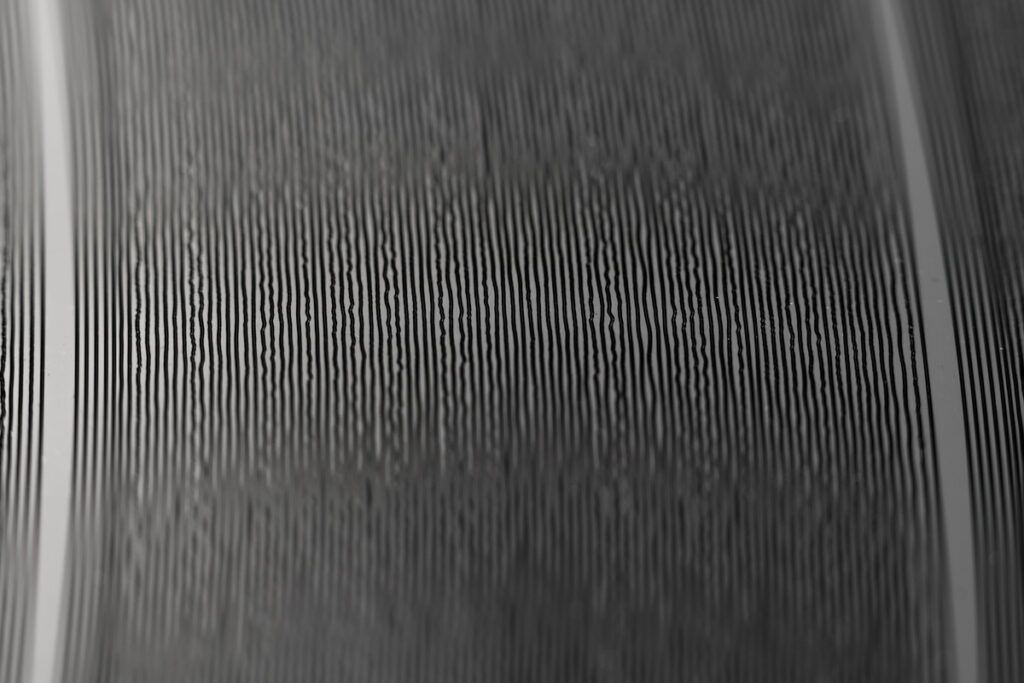
Turning that stamped record into something you can hear is a little more complicated. The needle (also called a stylus) on your turntable traverses the grooves as the record spins. As the needle moves back and forth, it activates a coil and magnet inside the record player (specifically, in a piece called the cartridge, where the needle is also housed). The vibrating magnet and the coil create an electric current that travels to a speaker. From there, the record player works like most audio players — the electric current vibrates the speaker, reproducing what some might consider a superior sound.
So, does vinyl really sound better than digital? That comes down to preference. While some listeners like having the physical interaction with their records, and others might love the nostalgia, true audiophiles believe a vinyl record represents a more pure version of the music. Digital music compresses music, potentially affecting the sound, while vinyl records come from the “master” copy, sometimes viewed as the true representation of the music as intended. We’ll leave the final judgement between you and whatever music stirs your soul — and your dancing feet.
Sound waves are etched into record grooves. When the needle (stylus) of a record player moves across these grooves, it vibrates in response to the shape of the grooves. These vibrations are transformed into an electromagnetic current that travels to a speaker that recreates the sound waves in the air. Then voilà — music!
Short Answer