NATURE
How Spiders Build Webs for Every Job
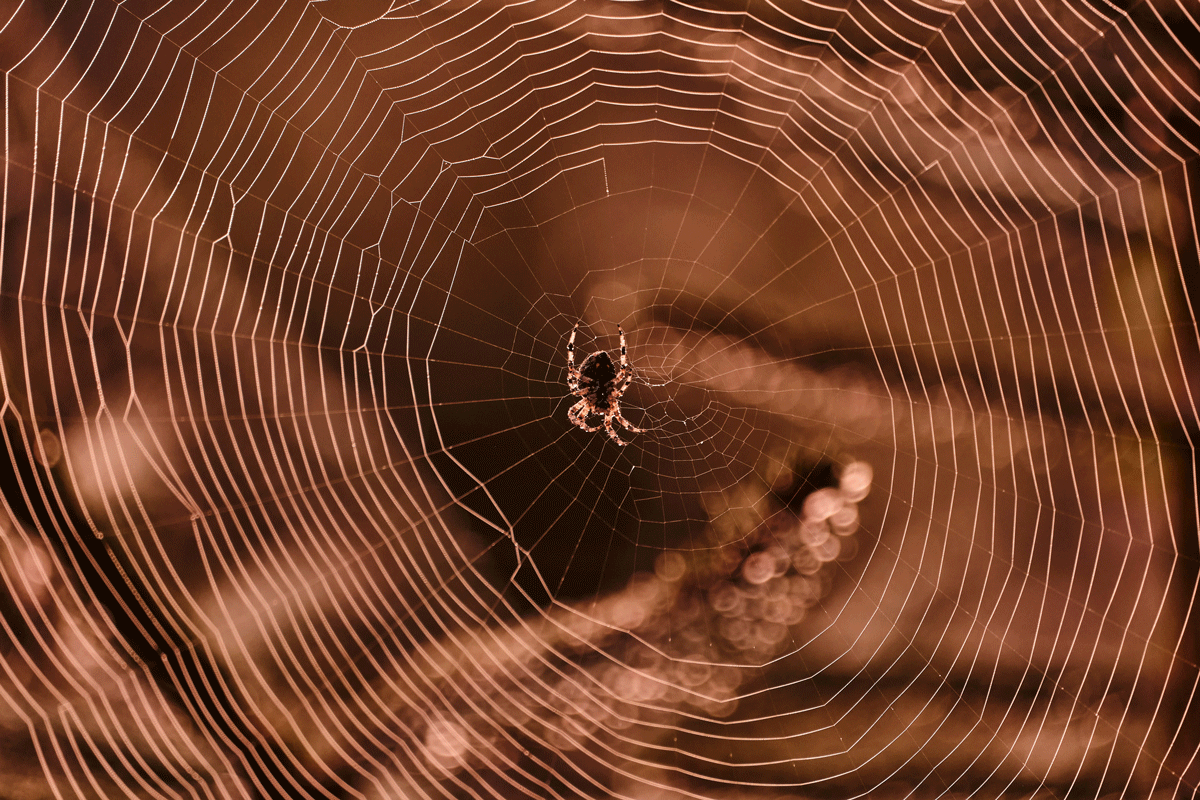

When you picture a spiderweb, you probably imagine a neat, circular design — maybe glistening with dew or spelling out “fine pig.” Perhaps you imagine that icky feeling you get when you unwittingly pass through one on a morning walk. That classic circle shape comes from orb-weaving spiders, the tidy engineers of the spider world. But spiders are an incredibly diverse group, and their silk structures are just as varied.
Some build intricate traps, others set clever ambushes, and a few have turned silk into something closer to a tool than a home. Here are some of the ways spiders engineer silk for very different jobs.
Standard Webs
While every spider can produce silk, only about half of the more than 51,500 known species actually build webs to catch prey. The rest take a more active approach to mealtime — like wolf spiders and jumping spiders that chase down food — or lie in wait, like trapdoor spiders hiding in burrows. Among the web builders, most designs fall into a few main categories, each suited to a particular hunting style.
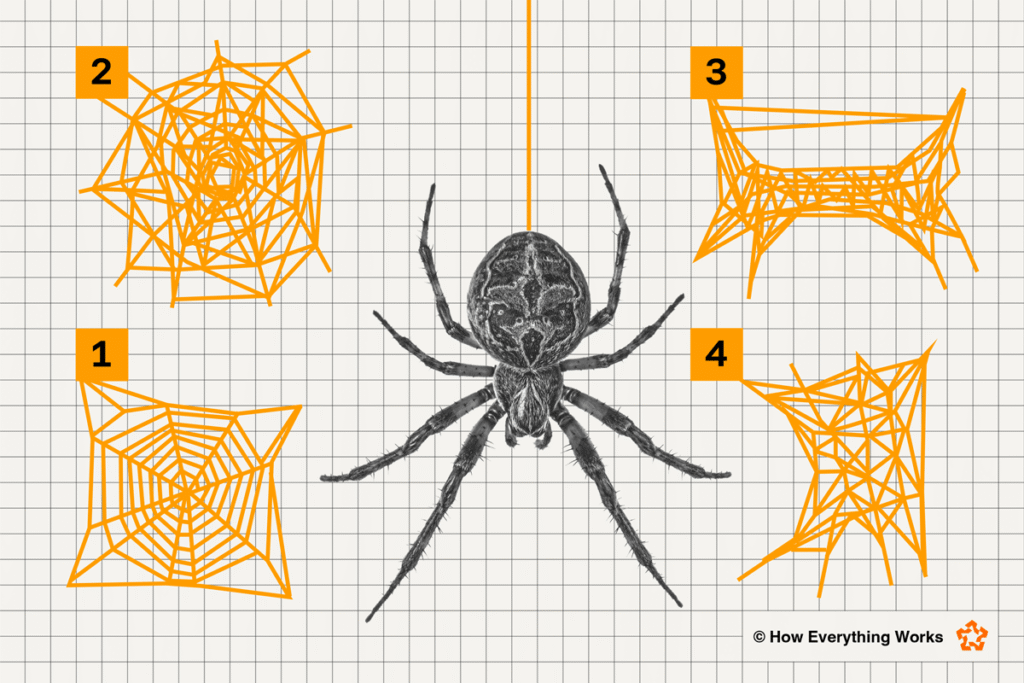
Orb webs (#1 in the above diagram) are the most familiar. These wheel-shaped webs, with their radiating spokes and sticky spiral threads, are built to intercept flying insects like flies and mosquitoes. They’re usually vertical — perfect for catching something midair — and surprisingly efficient for something so delicate-looking.
Funnel webs (#2) take a different approach. Instead of sticky threads, these spiders spin a flat sheet of silk that leads into a narrow, tube-like retreat. The spider waits inside the funnel, out of sight, and rushes out the moment something lands on the web.
Sheet webs (#3) look a bit like simplified versions of funnel webs. They’re flat, dense platforms of silk, often with a messy tangle of threads above. Those upper threads act like tripwires — bumping or knocking insects down onto the sheet below, where the spider can quickly subdue them.
Tangle webs (#4), also known as cobwebs, are the opposite of neat and orderly. Built by comb-footed spiders like black widows, these webs are irregular, three-dimensional, and sticky in all directions. Instead of guiding prey in, they simply entangle anything that stumbles into them.
Not-So-Standard Webs
Beyond the four basics, some spiders take web design in much stranger directions. Ray spiders, for example, turn their webs into something like a spring-loaded trap. They pull the web into a cone shape and hold it under tension. When an insect touches the web, the spider releases the tension — and the web snaps back like a slingshot, entangling the prey more tightly.
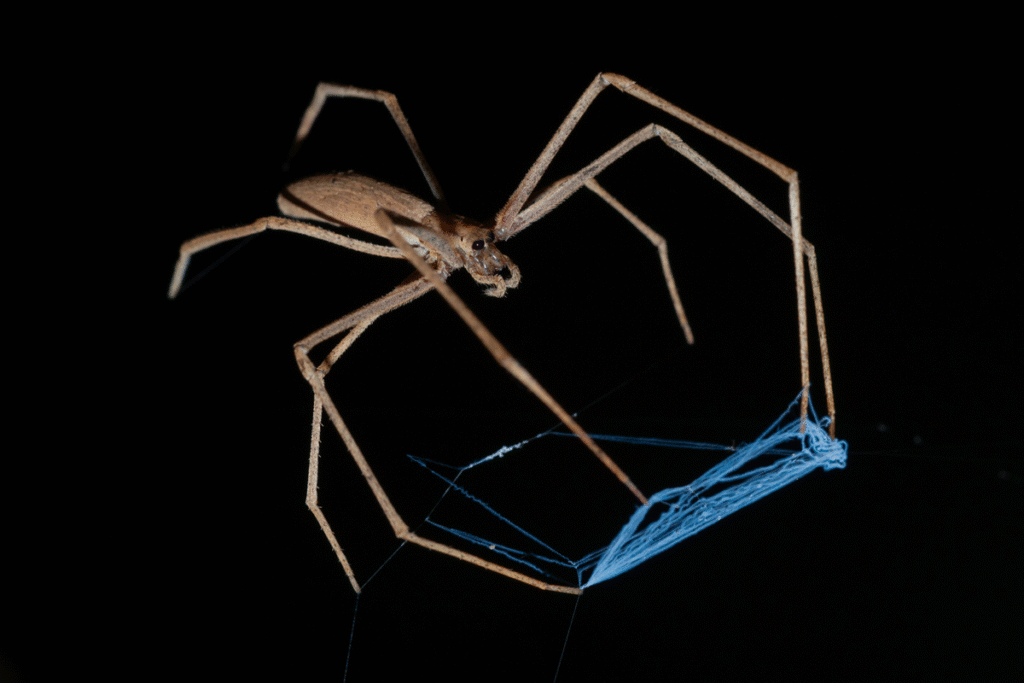
Then there are the net-casting, ogre-faced spiders. With their oversized eyes and unusual faces, they already look a bit otherworldly — but their hunting method is even stranger. Instead of building a fixed web, they hold a small, stretchy net between their front legs. When prey comes within range, they lunge forward and throw the web over it, like a fisherman with a casting net.
Bolas spiders go even further. Instead of building a full web, the female produces a single silk line with a sticky droplet at the end. She then swings it like a lasso at flying insects, mostly moths. To aid her hunt, she cunningly releases chemicals that mimic the pheromones of female moths, luring in unsuspecting males. When one gets close enough, she flings the sticky “bola” and reels in her catch.
Other Uses of Silk
Catching food is only part of the story. Spider silk is one of the most versatile materials in the natural world — strong for its weight, flexible, and endlessly adaptable. Some spiders can produce multiple types of silk, each with different properties, and combine them for different tasks.
Many hunting spiders use silk as a safety line, anchoring themselves before making a risky jump or sudden drop — a built-in belay rope that can mean the difference between escape and a fatal fall. Others use it to tether themselves down during windy conditions, or while sleeping.
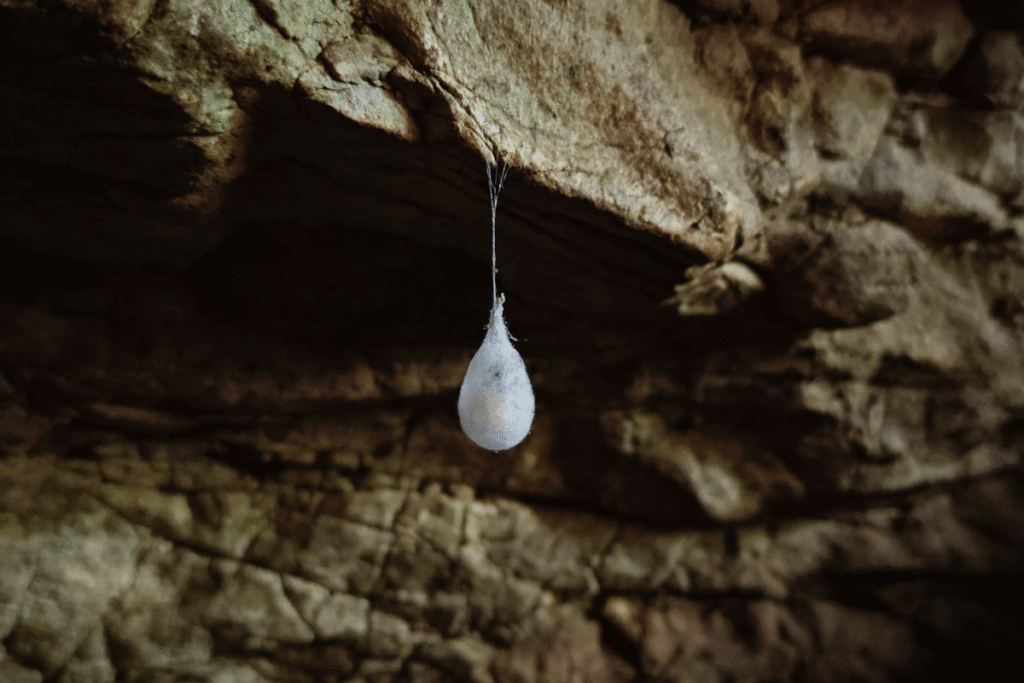
Silk is also essential for protecting the next generation. Spiders spin carefully constructed egg sacs, often wrapping them in multiple layers for insulation and defense. Some species carry these sacs with them, while others hide or suspend them in protected spots.
Some spiders even use silk to travel. Young spiders, in particular, can release fine strands that catch the wind and lift them into the air in a behavior known as “ballooning.” It’s a surprisingly effective way to disperse — spiderlings have been found high in the atmosphere on their way to new homes.
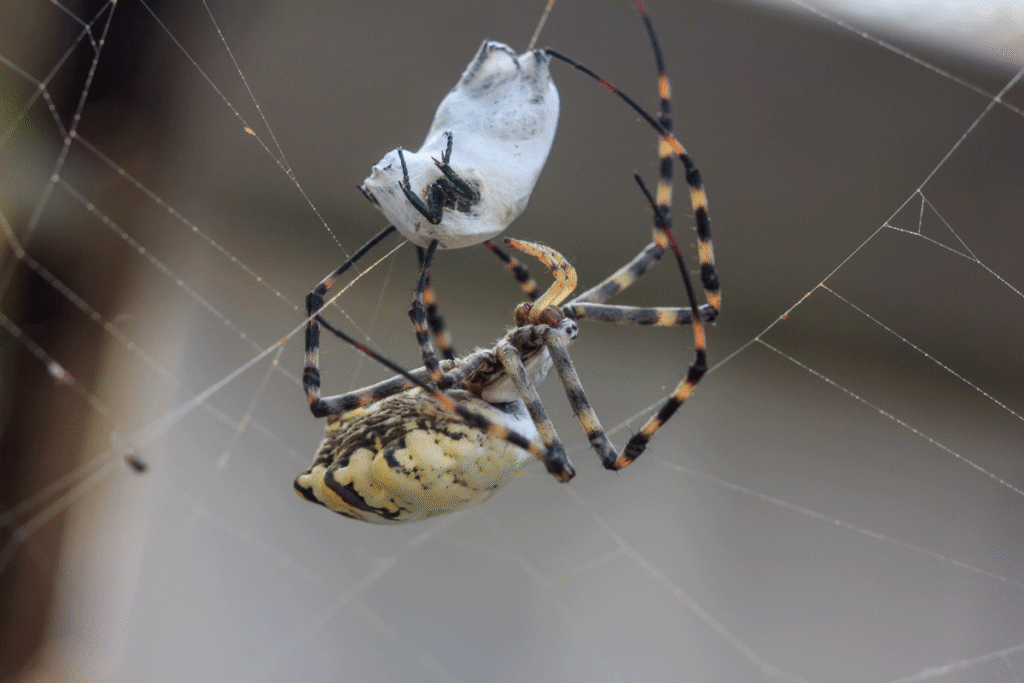
Silk can also double as a kind of packaging material. After capturing prey, many spiders wrap it tightly in silk to immobilize it and save it for later, like a neatly bundled meal. Male nursery-web spiders often present females with a “nuptial gift” — a prey item neatly wrapped in silk — to distract her during mating (and avoid being eaten). But sometimes it’s just silk without a tasty morsel inside, a deception that can cost him his life.
Many burrow-dwelling spiders use silk tripwires to detect vibrations from approaching prey. Some even line their burrow walls with silk — the most luxurious burrows in the animal kingdom.
From neat spirals to sticky lassos, spider silk is anything but one-size-fits-all. Each strand is part of a carefully engineered strategy — sling, snare, safety line, tripwire, nursery, even a kind of gift wrap — shaped by millions of years of trial and error. So the next time you spot a web, whether it’s a perfect wheel or a chaotic tangle, remember, you’re not just looking at a trap. You’re looking at a tiny masterpiece, built for a very specific job.