SCIENCE
5 Things That Make Science Look Like Magic

If your knowledge of physics includes little more than what you’ve seen on The Big Bang Theory, we get it. Physics is a particularly difficult subject — after all, its goal is to explain how the entire universe works. Not to mention, it involves advanced math such as calculus and linear algebra, and deals with particles so small they make atoms look huge. Indeed, some concepts defy intuition so thoroughly they seem more like magic than science. Just because something looks mind-blowing doesn’t mean it’s impossible to wrap your head around, though. Here are five seemingly impossible things that, at the end of the day, are just physics at work.
Curveballs
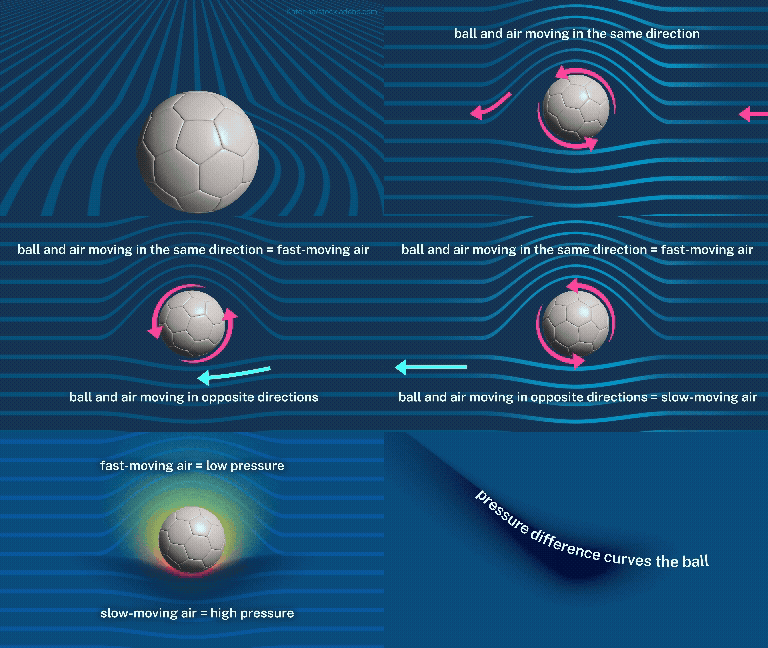
If you’ve seen a pitcher throw a baseball that seemingly changed direction in midair before crossing home plate, you might think it’s magic (or dark magic, if the pitcher’s on the opposing team). The “magic” lies in the spin of the ball, relying on a phenomenon known as the Magnus effect.
Breaking ball pitches, such as curveballs and sliders, “break” their trajectory as they fly toward the plate. When a pitcher throws a curveball, for instance, they snap their wrist over the ball to put spin on it. This makes the ball move downward and sideways over home plate, while the batter still expects it to follow a straight line.
Here’s how it works: The spinning ball curves midair because it drags air along with it. This causes air to move faster on one side and slower on the other. The drag creates a pressure difference that pushes the ball sideways, bending the direction of its path.
Airplanes
Magicians never reveal their secrets, but we’re pretty sure they’re not really making anyone levitate on stage. But physics does make things float. It’s known as Bernoulli’s principle, and here’s a simple way to visualize it.
Imagine a fan pointed so the air is blowing upward. If you place a beach ball in just the right spot within the airflow, it will hover, as if it’s levitating. The magic is in the air pressure. The faster the air moves around the beach ball, the less pressure there is pushing on it from the sides. But if the ball moves outside of the column of blowing air, the stationary air will exert higher pressure onto the ball, and it will fall.
Our understanding of Bernoulli’s principle is also used to design the wings of aircraft, which use the difference in air pressure to seemingly float in midair.
Bending Water

Bending a stream of falling water sounds impossible, but it’s a physics trick you can do right at your kitchen sink. No magic needed — but you do need static electricity, the kind you create when you rub a balloon on your head and your hair stands on end.
That trick generates static electricity because some of your hair’s negative charge moves to the balloon. The same idea works with a negatively charged balloon and water. A single water molecule (H2O) has one negatively charged oxygen atom, but two positively charged hydrogen atoms.
If you use a negatively charged balloon and hold it close to the water, the flow will be attracted to the negatively charged atoms on the balloon. In other words, the positive regions of the water molecules will realign toward the negatively charged balloon, essentially “bending” the water toward the balloon.
Instantly Freezing Water
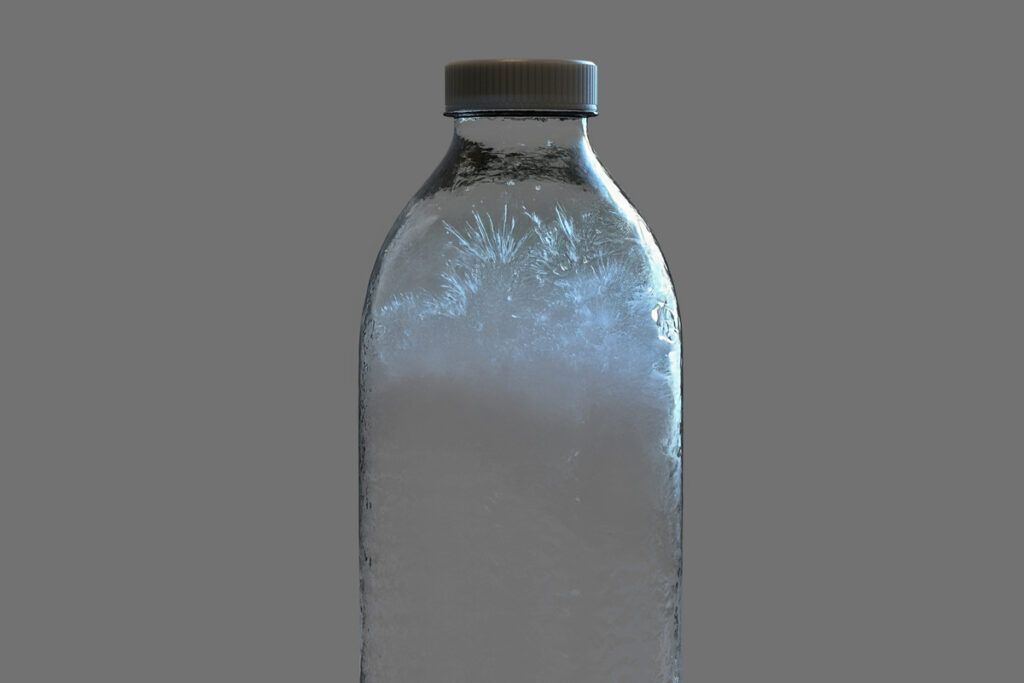
We all know water turns to solid ice when it reaches 32 degrees Fahrenheit, right? Well, not always. Pure water can remain liquid even well below freezing temperatures. And you can make a bottle of water turn to ice — on command.
It’s not magic; it’s supercooling. Your average tap water won’t do it, though. Supercooling only works with water that’s completely free of impurities or minerals, such as distilled water, because ice needs these to form crystals. Water molecules crystallize when they touch and lock together. Impurities, whether calcium, bacteria, or other common microscopic things in tap water, make it easy for water molecules to bump into each other — like riding on a crowded subway train.
Distilled water, on the other hand, flows freely, so ice crystals don’t readily form even if the water is below freezing temperatures. To see supercooling in action, put an unopened bottle of distilled water in the freezer and leave it for about two and a half hours. It will reach a supercooled state. Very carefully remove it from the freezer.
Either shake the bottle or tap it on the table and watch the water instantly form into a band of ice crystals. The supercooled water remains liquid in the freezer because the nucleation process hasn’t begun. That’s the first step in freezing when crystals form around minerals, impurities, or ice in the water.
Shaking or tapping the water bottle jumpstarts the nucleation process by forcing the water molecules to collide, locking them into ice crystals right before your eyes.
Bending Light

Ever placed a straw in a clear glass of water and noticed that the part of the straw under the surface of the water seems to be completely disjointed from the straw that’s above?
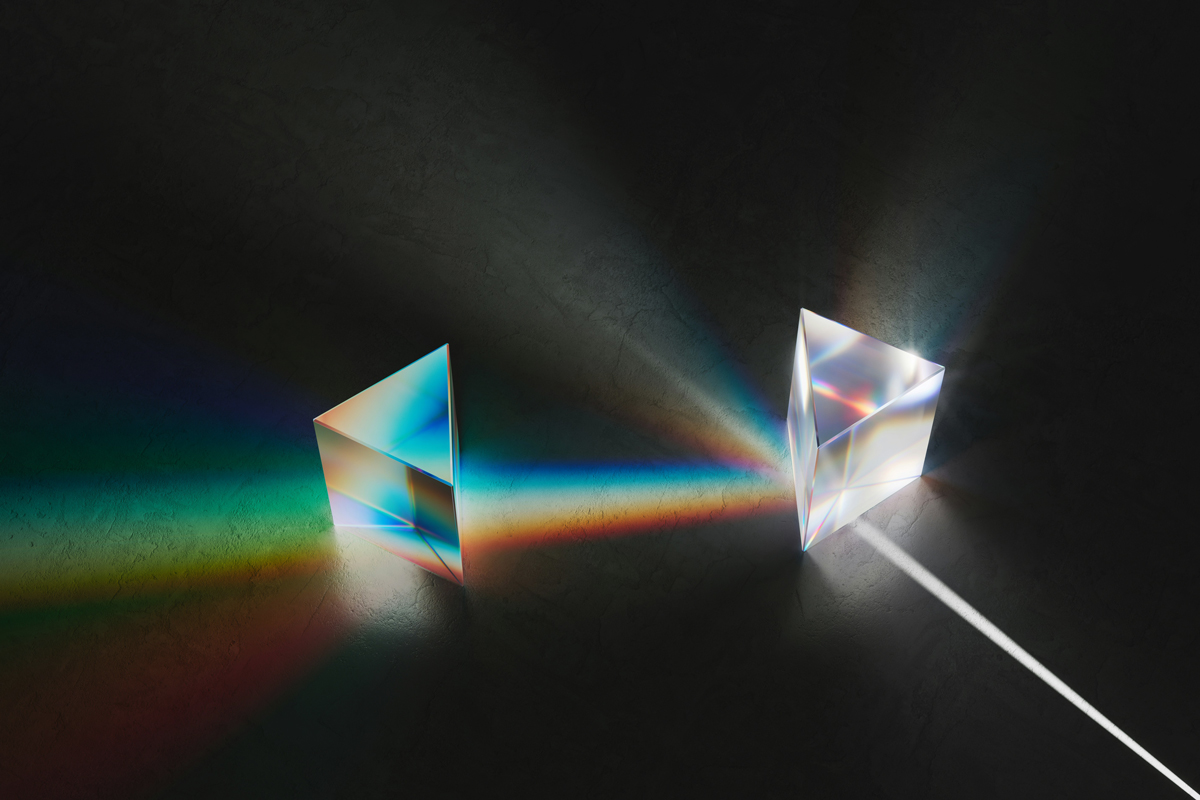
It’s not an optical illusion, but an example of light refraction, which is when light bends as it passes from one medium to another. Another, iconic, example is the cover art for Pink Floyd’s album The Dark Side of the Moon. It features a beam of white light passing through a glass prism and splitting into a rainbow.
Refraction occurs when light (made of particles called photons) changes speed as it enters a new material, such as from air to water. The denser the medium is with electrons that can interfere with photons, the slower the light travels, which dictates how and where the light will bend. (The “speed of light” we typically think of refers to the speed of light in a vacuum.)
The bent rays of light reflecting off the submerged part of the straw make it look like the straw has broken apart from the segment above water.