HEALTH
What Does Your Appendix Actually Do?


The appendix has a reputation as a useless troublemaker — the odd organ out, so to speak. Small, expendable, and quick to be removed, it’s long been the textbook example of a vestigial organ, a biological leftover from an earlier stage of human evolution. But as scientists have taken a closer look at this small structure, that assumption has begun to unravel.
The appendix is a narrow, finger-shaped tube attached to the beginning of the large intestine. For decades, it was thought to have no clear purpose in modern humans. It has also had a bad boy reputation: appendicitis is infamous for triggering emergency surgery (just ask Madeline who lives in a house in Paris covered in vines).
Since removing the appendix is the standard response to appendicitis, we know that this appendage is not essential to our day-to-day functioning But research suggests it may still play a modest but useful role in the body.
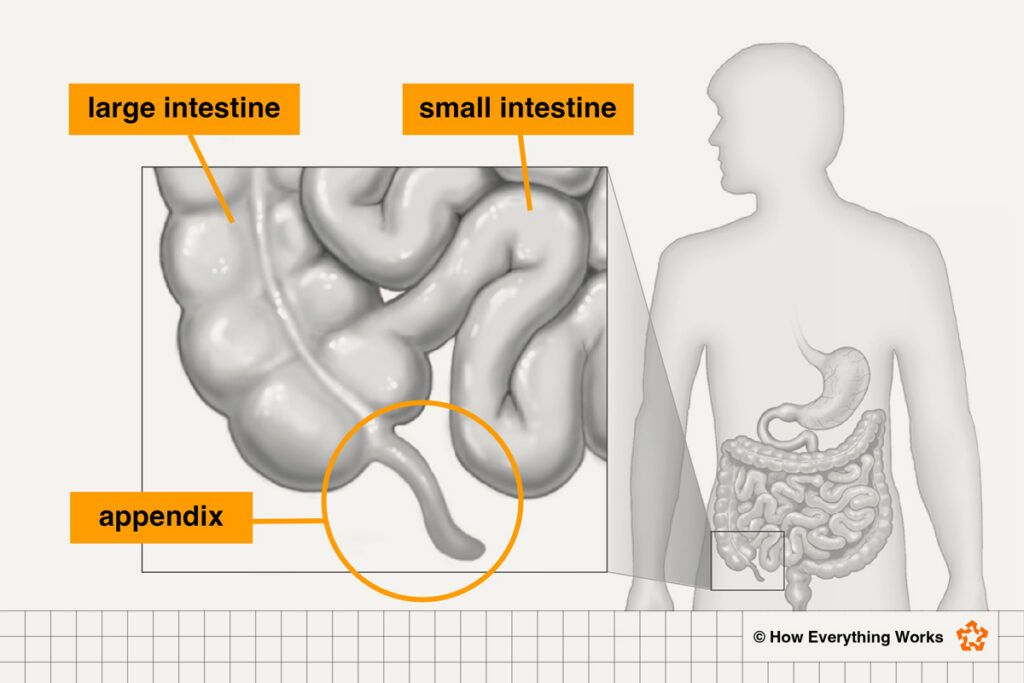
So What Does It Do?
One clue to the appendix’s usefulness lies in its evolutionary history. The structure appears to have evolved independently multiple times in mammals rather than being inherited from a single common ancestor — an unusual pattern that suggests it offers some recurring advantage. Even so, scientists agree that the appendix is gradually disappearing from the human species, meaning its benefits today may be subtler than they once were.
A key feature of the appendix is its concentration of lymphoid tissue. In practical terms, it appears to help the body recognize and respond to pathogens, contributing to immune development. Indeed, white blood cells in the appendix are exposed to a steady flow of foreign material from the gastrointestinal tract. Think of the appendix then as a sort of training ground where these immune cells learn to manage microbes and other would-be invaders.
The appendix also seems to play a role in human development. The organ begins to develop around 6-8 weeks of gestation, and begins producing endocrine cells that help maintain the body’s chemical balance, or homeostasis. It isn’t until about 10 weeks later that the organ starts acquiring its immune-boosting lymphoid tissues.
The appendix is also thought to serve as a reservoir for beneficial gut bacteria. The human digestive tract depends on a complex community of microbes to aid digestion and maintain overall health. When illness — such as severe diarrhea — or antibiotic use disrupts this community, the appendix may help restore balance by sheltering helpful bacteria and reintroducing them to the gut.
You can live without your appendix — that hasn’t changed. In fact, surgeons once routinely removed it just in case, but that practice has largely stopped. Today, it’s recognized as a useful backup, one that can even be repurposed to help repair other parts of the body. So it’s less of a useless leftover and more of a handy spare part, ready and waiting if you ever need it.
The appendix is neither useless nor indispensable. Instead, it appears to function as a quiet supporting player — contributing to immune development and possibly helping maintain the stability of the gut’s microbial ecosystem.
Short Answer