ENGINEERING
How Do Cruise Ships Stay Afloat?
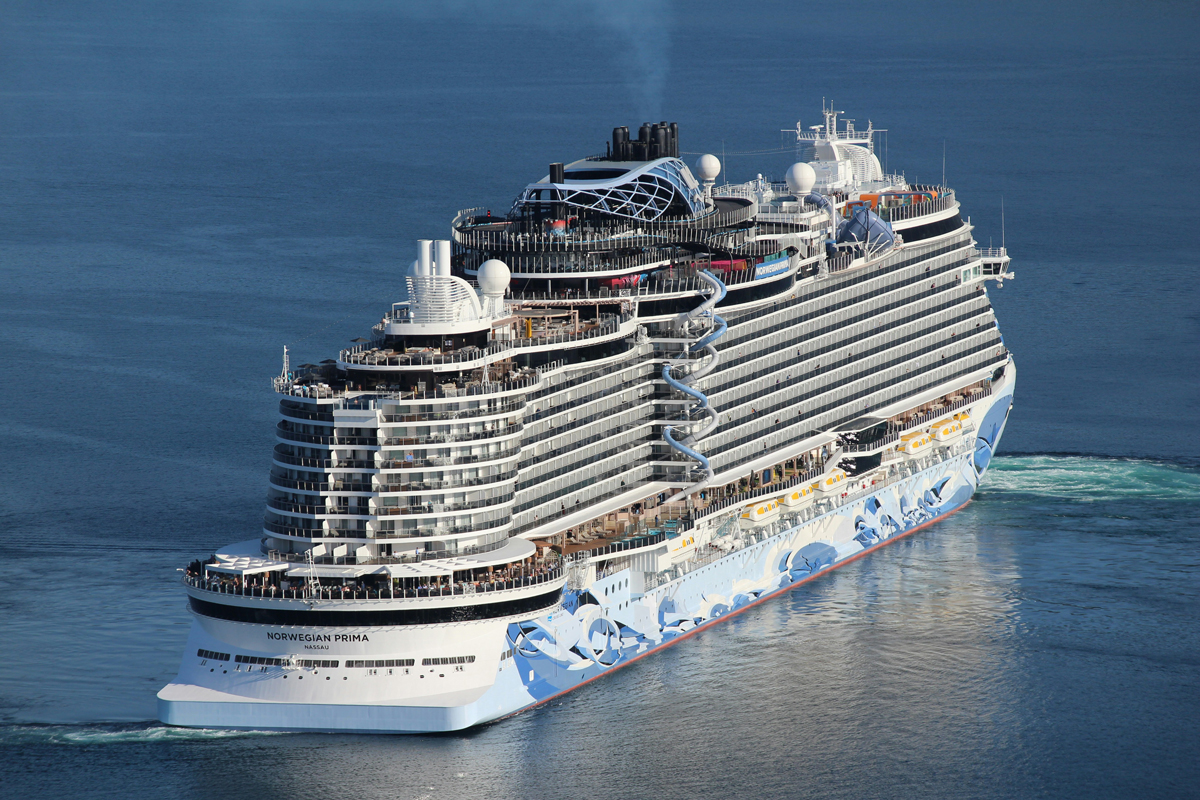

Cruise ships don’t look like they should float. Some of the largest vessels on the sea are closer to cities than boats and come stacked with restaurants, pools, theaters, and thousands of passengers. At a glance, they seem far too heavy to stay above water. And yet, they do, smoothly and reliably, like floating resorts that forgot they’re made of steel. So what’s keeping them from sinking to the ocean floor?
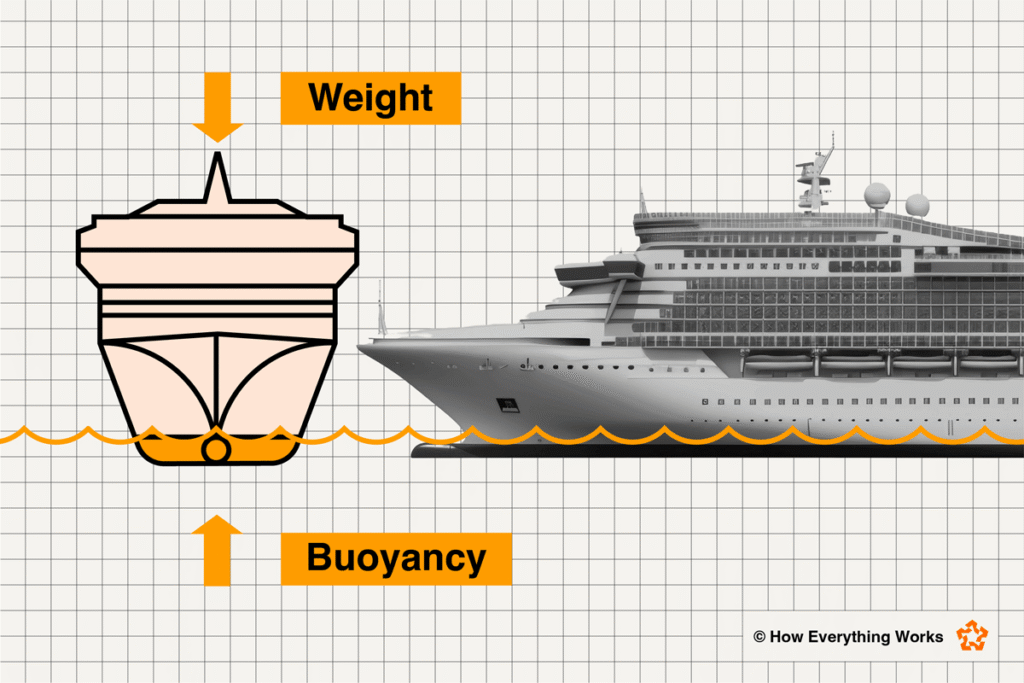
The answer comes down to a simple principle first described more than 2,000 years ago: buoyancy. According to Greek mathematician Archimedes’ principle, an object placed in water will float if it displaces a volume of water equal to its own weight. In other words, it’s not about how heavy the boat is — it’s about how much water it pushes aside.
Making Waves
Cruise ships may be massive, but they’re also mostly hollow. Their hulls — the watertight outer shells — enclose large volumes of air, from passenger decks to cavernous interior spaces. This lowers the ship’s overall density, making it less dense than the water around it. As long as that remains true, the ship floats.
Shape matters, too. The wide, softly rounded hull of a cruise ship is carefully engineered to displace as much water as possible, creating a strong upward buoyant force. In effect, the shape helps spread the ship’s weight over a large area of water, keeping it from sinking too deeply. Interestingly, unlike traditional sailing ships, the bottom of most cruise ships is relatively flat, which helps increase stability, even in choppy seas.
When a ship is launched, it sinks into the ocean until the weight of the water it displaces equals its own. As it’s loaded with mountains of food, booze, passengers, water slides, BINGO chips, and fuel, it settles deeper, displacing more water with every added ton. That weight is carefully distributed — not just front to back and side to side, but from bottom to top. Heavy engines and fuel are kept low in the vessel, while lighter spaces like restaurants and entertainment decks sit higher up. This lowers the ship’s center of gravity and helps prevent tipping. Modern ships also rely on ballast tanks — compartments that can be filled with water or air — to fine-tune balance and stability depending on conditions at sea.
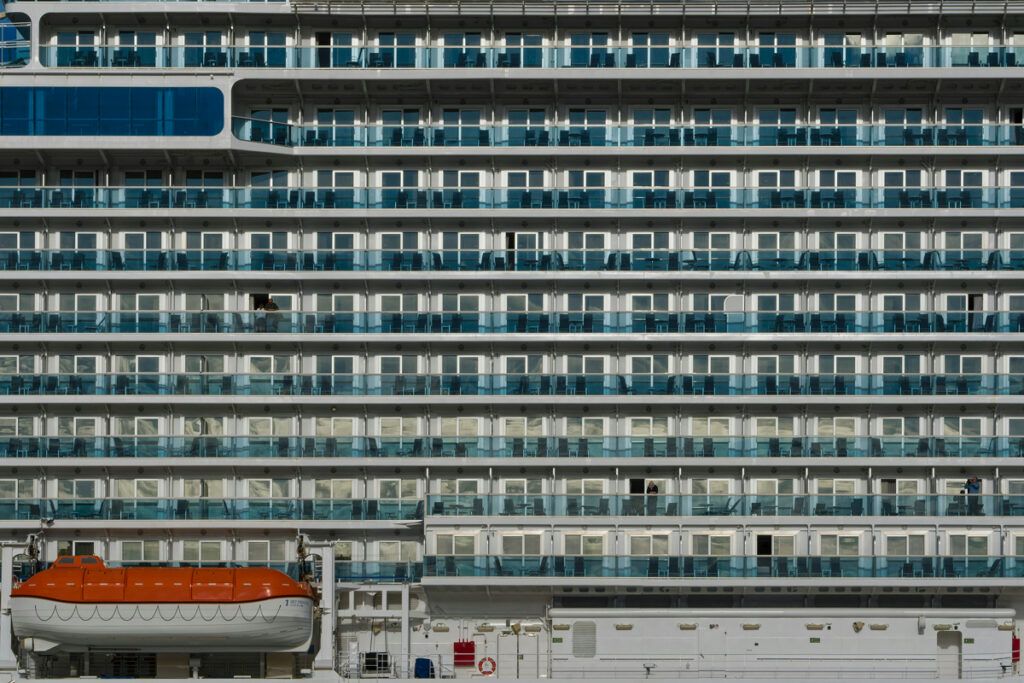
So while a cruise ship may look improbably large, its ability to float isn’t all that mysterious. It’s an engineering marvel, a careful balancing act between weight, volume, and design. Physics and good design can turn a seemingly impossible object into something that glides across the ocean — and offers three different all-you-can-eat buffets.
Cruise ships float thanks to buoyancy: They displace a volume of water equal to their weight, allowing them to stay afloat despite their size. Their large, hollow hulls reduce overall density, while careful design and weight distribution keep them stable.
Short Answer