CULTURE
Why Don’t Planes Board Back to Front?
No matter what time of day, how big the flight, which airline you’re flying, or what airport you’re departing, it seems like there’s always a backlog of passengers during the boarding process.
You look at your ticket: you’re sitting in row 32 of 32, so you’re wondering why the flight crew doesn’t seat the back of the plane first. You have the farthest to walk and you won’t block anyone trying to pass you as you stow your overhead luggage. The logic feels obvious.
Except there’s one significant problem — one that quickly snowballs into an aisle clogged full of disgruntled passengers. You’re not the only one in row 32.
The Aisle Is Where Things Get Complicated
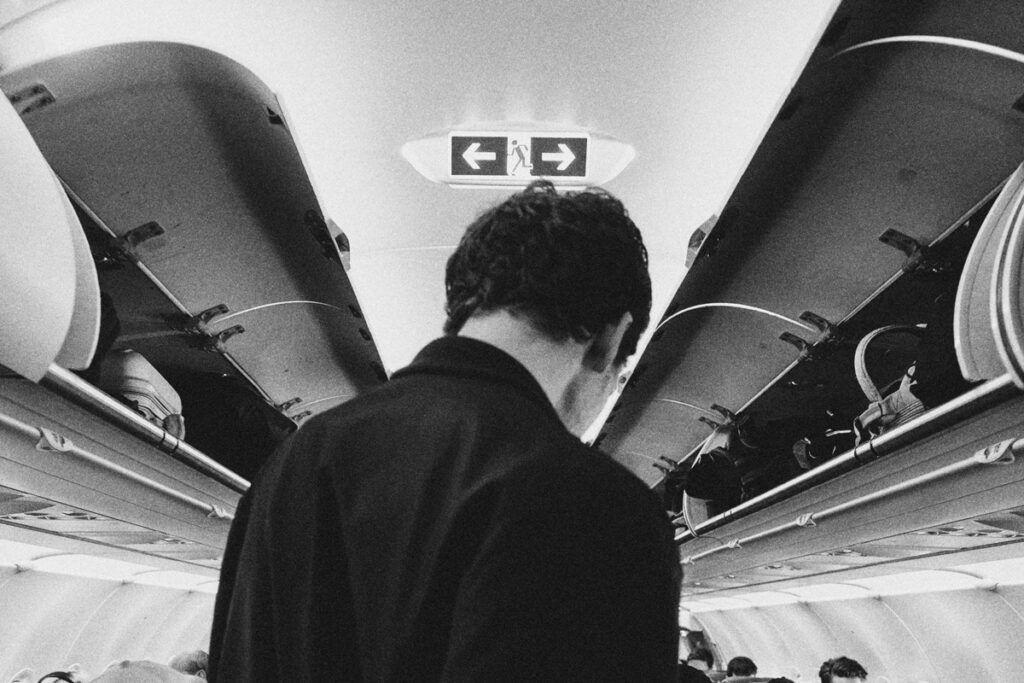
Passengers don’t just walk to their row and drop into a seat. They stop to wrestle a bag into an overhead bin, wait for someone else to slide out of the way, or double-check which row is actually theirs. Every one of those pauses backs up the people standing behind them.
Researchers have a name for this: aisle interference. There’s an adjacent conundrum, too: seat interference, which happens when someone already seated has to stand up and step into the aisle so a middle- or window-seat passenger can get past them.
Both aisle and seat interference slow things down, and boarding back to front tends to produce plenty of both, because passengers keep arriving in the same stretch of the plane at the same time. This is really where everything falls apart.
Loading the rear first sounds efficient on paper, but in practice, it can mean a whole group of passengers arriving at the same stretch of aisle together, each one waiting for the person ahead of them to finish stowing a bag.
One study using a mock Boeing 757 cabin and some very patient test subjects found that several other boarding methods were faster than a traditional back-to-front approach. A separate analysis supported that finding, while pointing to other methods as being more efficient.
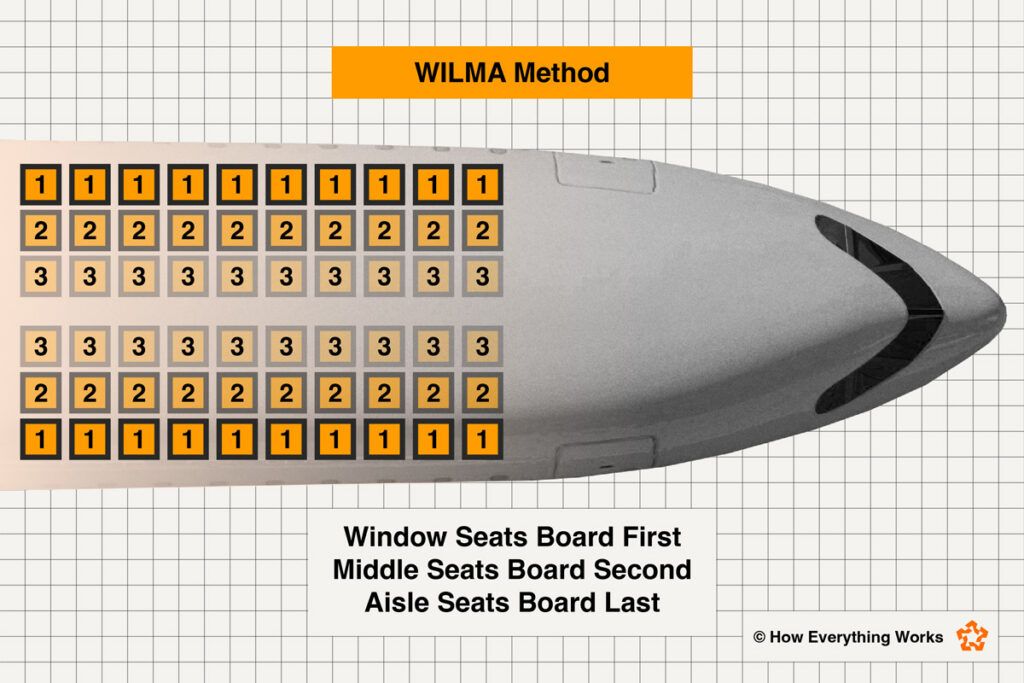
Spreading people out tends to work better. Board passengers from different rows at the same time, and you’re less likely to funnel everyone into the same few feet of aisle. Letting window-seat passengers board before middle- and aisle-seat passengers, which is how the WILMA method works, helps as well, since people don’t have to climb over someone who’s already sitting down.
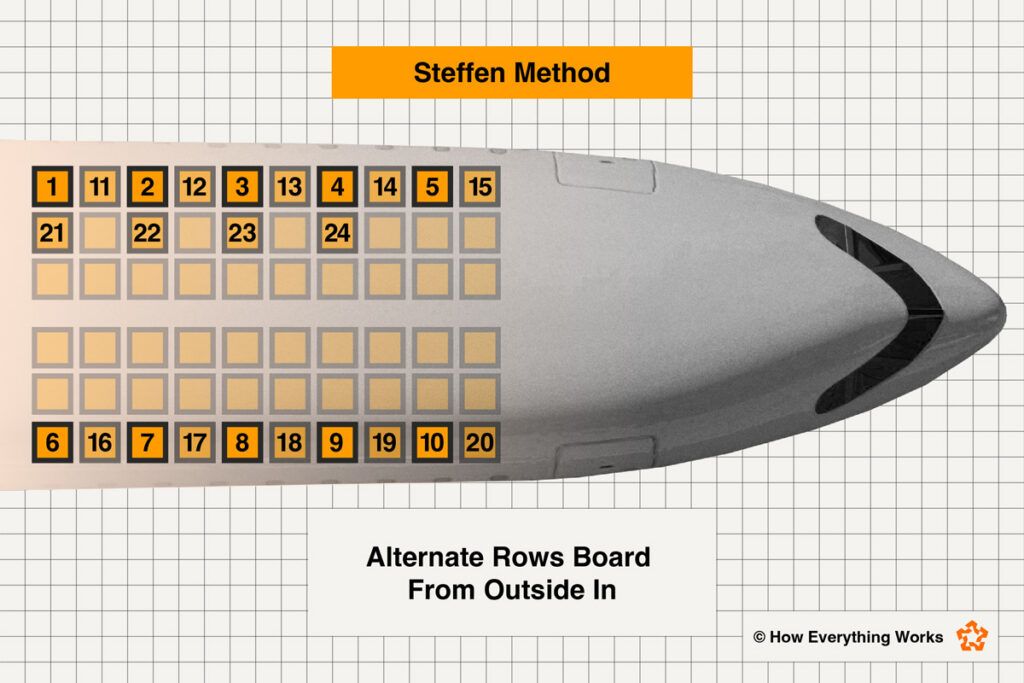
There’s a more extreme version of this idea called the Steffen method, which assigns each passenger a specific boarding order so that people arriving at the same time are seated far enough apart to avoid getting in one another’s way. On paper, it looks almost absurdly orderly. The payoff is that several passengers can stow their bags at once instead of forming one long line behind a single person.
Combining multiple strategies, the Steffen method begins by filling window seats first, from back to front, but not all of them — instead, rows are alternated. This is why you may find yourself in a completely different boarding group as the person sitting next to you or in front of you. (It doesn’t help that airlines also allow passengers to pay extra for priority boarding.)
Despite more efficient methods available and even in use, boarding still seems to inevitably end up in a human traffic jam. Some passengers need extra time or assistance. Families want to sit together, regardless of what the boarding group on their tickets say, and some people just fail to line up exactly where they’re supposed to anyway. Speed is just one factor.
Next time your boarding group gets called ahead of the rows behind you, remember that it’s not random and that there’s a method to the madness. Unfortunately, that method isn’t perfect, though, and there’s a good chance the aisle will still end up turning into a parking lot. Think of it as taxiing to your seat.
Planes don’t always board back to front because loading the rear first can bunch passengers together in the aisle while they stow bags and find their seats, creating a slowdown for everyone behind them. Boarding methods that spread passengers across different rows and seat types tend to move faster because fewer people are waiting on the same stretch of aisle. Airlines also have to account for families, passengers who need assistance, and other real-world considerations.
Short Answer