NATURE
Why Don’t Spiders Get Stuck in Their Webs?
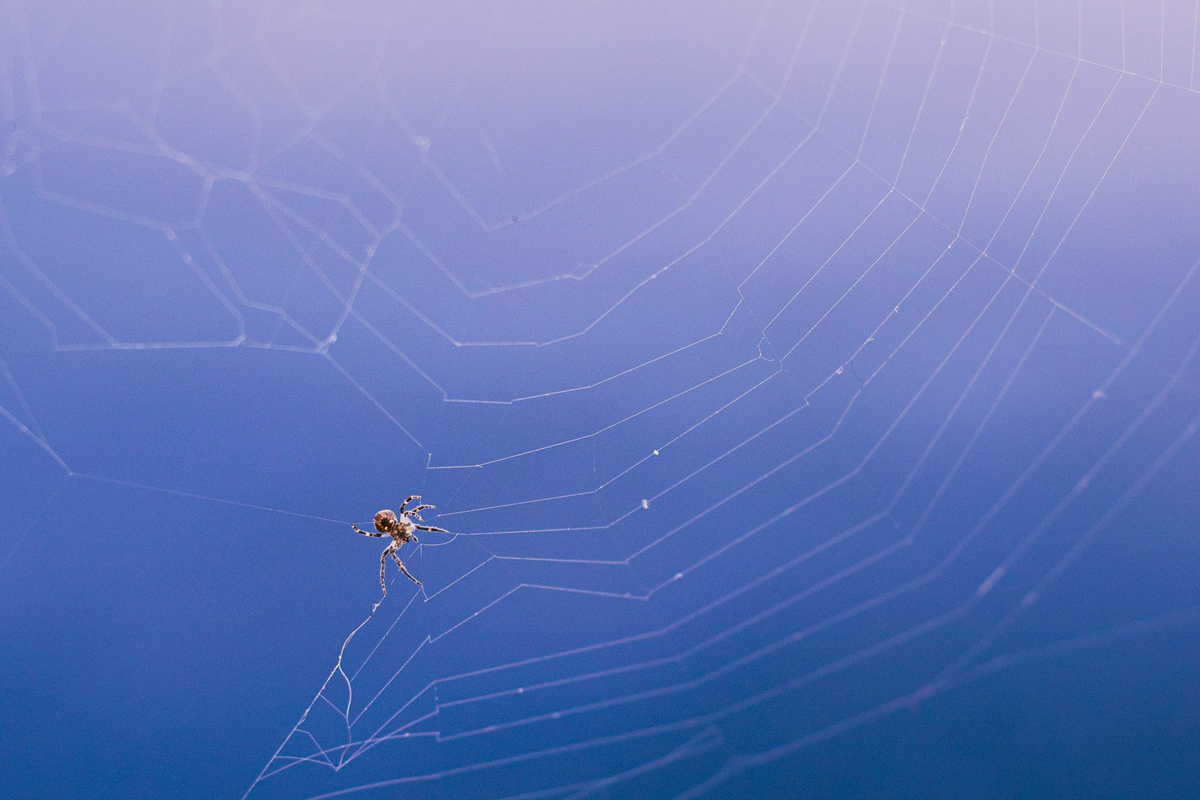

If you’re setting up a snap trap to get rid of a mouse, you need to make sure it doesn’t accidentally catch your fingers. For the same reason, hunters need to be very careful not to step into their own bear traps. Now imagine a spider, some of which spend most of their time living inside a trap of their own design — a trap that’s also one of nature’s stickiest.
Web-building spiders (not all spiders build webs, and web structures vary widely among species that do) construct elaborate silk structures designed to ensnare fast-moving insects. Yet the architects themselves can race across the strands, hang upside down, and sit motionless in the center without getting stuck.
What’s their secret? The answer comes down to creative engineering, specialized anatomy, and some fancy footwork.
A Sticky Situation
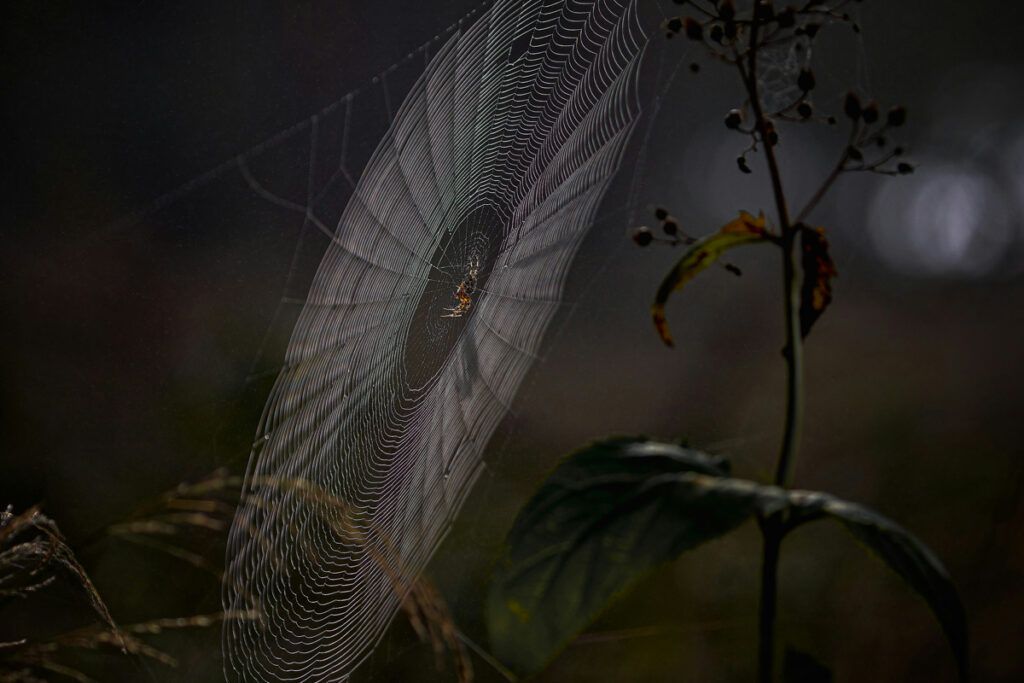
The most famous examples of sticky webs are the classic, circular webs made by common garden spiders. Orb-weavers begin by laying down a structural skeleton of radial lines — the spokes of the wheel — that support the rest of the web. This framework is made from a type of silk that is incredibly strong but often completely dry and nonsticky.
To understand why a web-weaving spider doesn’t get trapped, you first have to look at how its web is built. A web is not a uniform sheet of glue, and in fact, some webs don’t use sticky silk at all. Sheet-web weavers, for example, rely on a chaotic grid of nonsticky threads to physically trip and entangle prey rather than glue it down.
Once this safe scaffolding is secure, a spider begins to spin the viscid spiral, where the silk is coated in microscopic glue droplets. Just as many of us can navigate our home in the middle of the night without turning on the lights, a spider instinctively knows its own web’s blueprint.
This allows the creature to intentionally avoid the sticky spirals as it meticulously walks along the dry radial spokes. When it does touch a gluey line, a spider uses careful leg movements to minimize further contact and delicately avoids pulling the strands toward itself.
Fancy Footwear
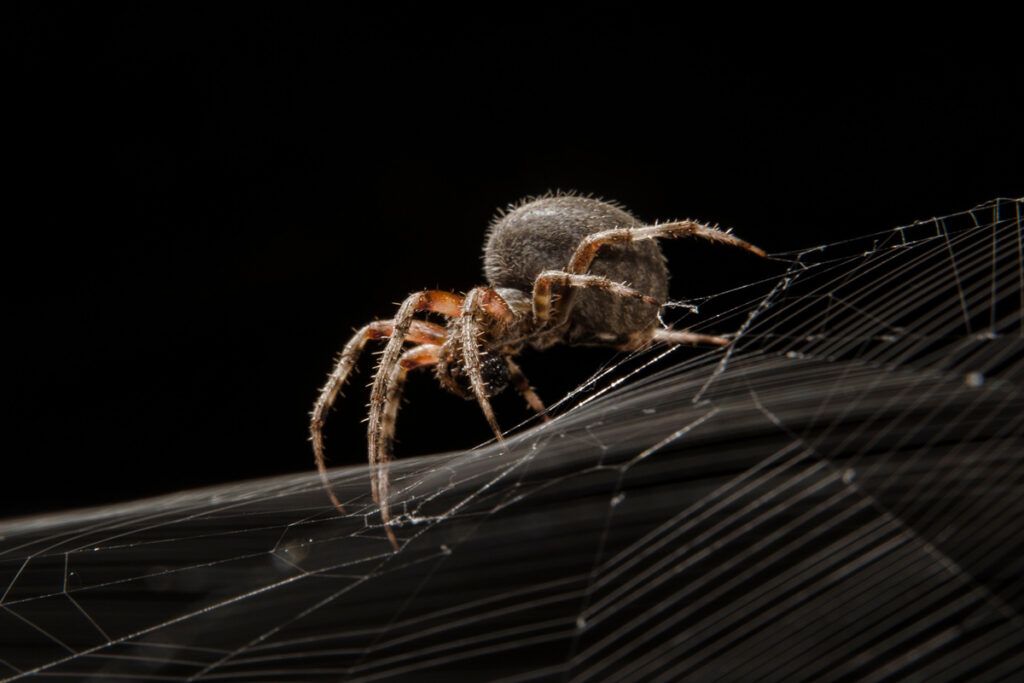
Orb-weavers are also equipped with unique, branching claws at the tips of their legs, surrounded by dense, stiff bristles. These specialized hairs minimize the surface area that comes into contact with sticky silk, preventing glue droplets from fully grabbing hold — even when the spider is maneuvering close to a captured meal that’s covered in the stuff.
Researchers have discovered that these spiders’ legs are coated in a specialized, nonstick chemical layer that acts much like cooking spray on a frying pan. Even if a leg brushes against a sticky droplet, the adhesive struggles to cling on.
That doesn’t mean spiders are completely immune to their own traps. If forced into a sticky strand incorrectly, a spider can become just as entangled as its prey. Still, a spider casually strolling across its sticky web is a testament to evolution, a diverse toolkit of specialized silks, and a lifetime of taking things one step at a time.
Though there are different types of spiderwebs, many are made from a silk coated in microscopic glue droplets to entrap prey. Web-building spiders avoid getting stuck in their own traps by walking primarily on dry, structural strands and by utilizing specialized leg bristles and nonstick chemical coatings to repel the glue.
Short Answer