SCIENCE
Why Is Superglue So Hard to Unstick?
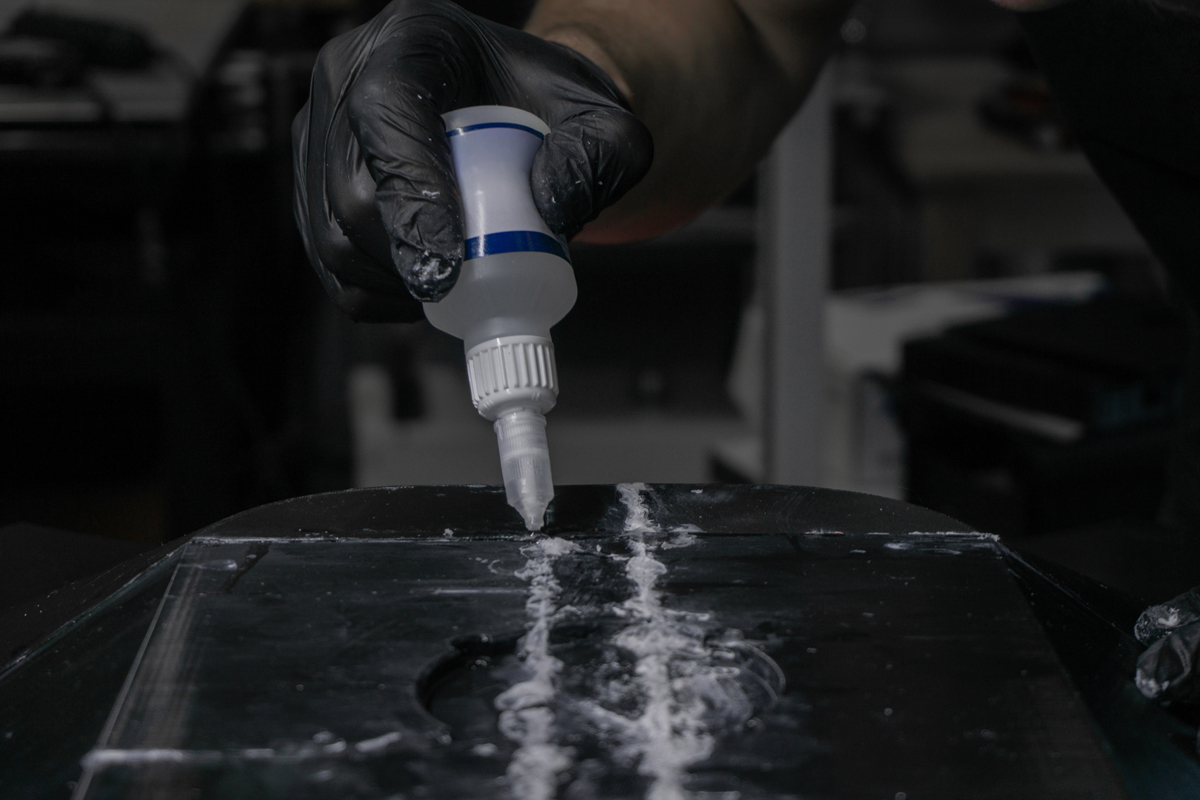

On January 7, 1959, superglue — a one-size-fits-all solution when you absolutely, positively need to bind two things together securely — became a household name. It had already been on store shelves for several months, but when its (accidental) discoverer made a guest appearance on the popular game show I’ve Got a Secret and demonstrated just how strong the adhesive was, audiences took notice.
On live national television, chemist Harry Wesley Coover Jr. used just one dab of Super Glue (the official brand name) to stick metal handlebars to the ceiling, before using them to suspend himself, along with the show’s host, Garry Moore, above the ground. Safe to say, the stunt stuck with the audience, and the adhesive has been a go-to product ever since.
But what makes superglue strong enough to support the weight of two grown men? And how do you remove something that strong when it gets on your skin?
Hold on Tight
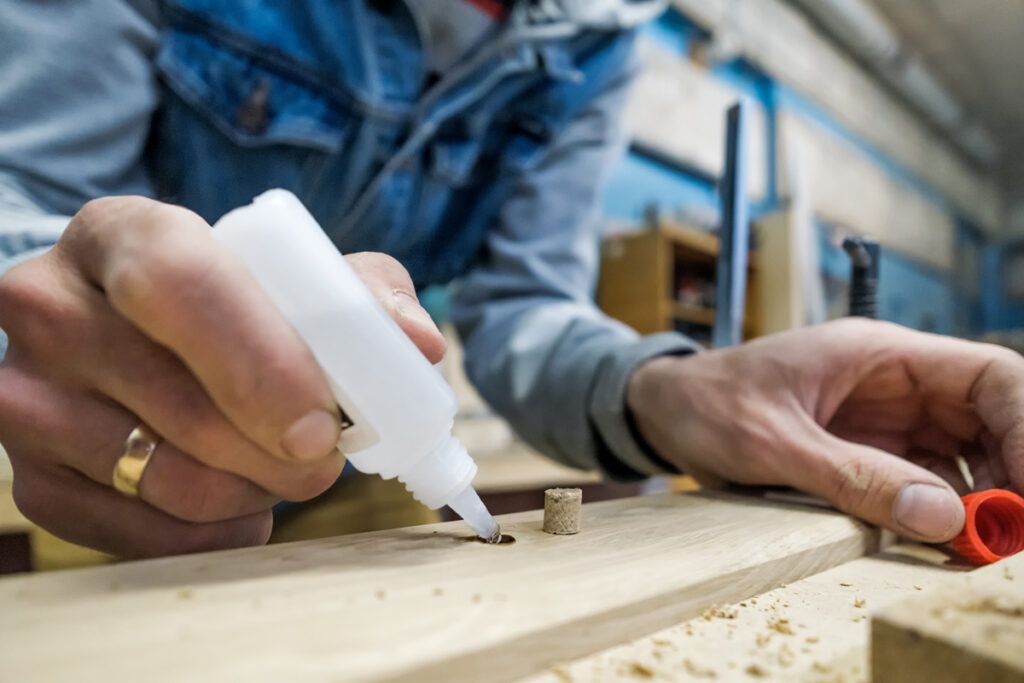
Superglue is composed of molecules known as monomers that easily combine with one another to form polymers (the names come from the Greek “one unit” and “many units”). All brands of generic superglue, whether the original Super Glue brand or competitors such as Gorilla Glue, Loctite, and many others, use the compound ethyl-cyanoacrylate as their primary active ingredient.
The presence of water acts as a catalyst, enabling the monomers to chemically bond with one another and form remarkably strong strings of polymers — microscopic chains that are exceedingly difficult to break. When superglue leaves its airtight, watertight container and is applied to one material, it fills in the tiny crevices on the material’s surface, as well as the surface of what that material is being pressed against.
Ambient moisture in the atmosphere has enough water to activate the monomers in the glue, which quickly create polymer chains connecting the two different surfaces — binding them with powerful ropes of molecules too small to be seen with the naked eye.
Because the polymer chains are so hard to break, ethyl-cyanoacrylate possesses incredible compression and tensile strength (how well it can withstand being pulled apart). For example, a 5-centimeter square coated with the adhesive could suspend a fully grown African elephant (please do not try this at home).
While superglue is particularly adept at binding together surfaces, it does have a few notable weaknesses. It’s remarkably brittle, so it will crumble from sudden impact or shear force, such as two parallel plates moving in the opposite direction. It also doesn’t bind with nonporous plastics, such as polyethylene and polypropylene, as there are no crevices for it to form sticky polymer chains. This is why companies store these strong adhesives in plastic containers (along with acid-based stabilizers that keep the glue from binding in the bottle).
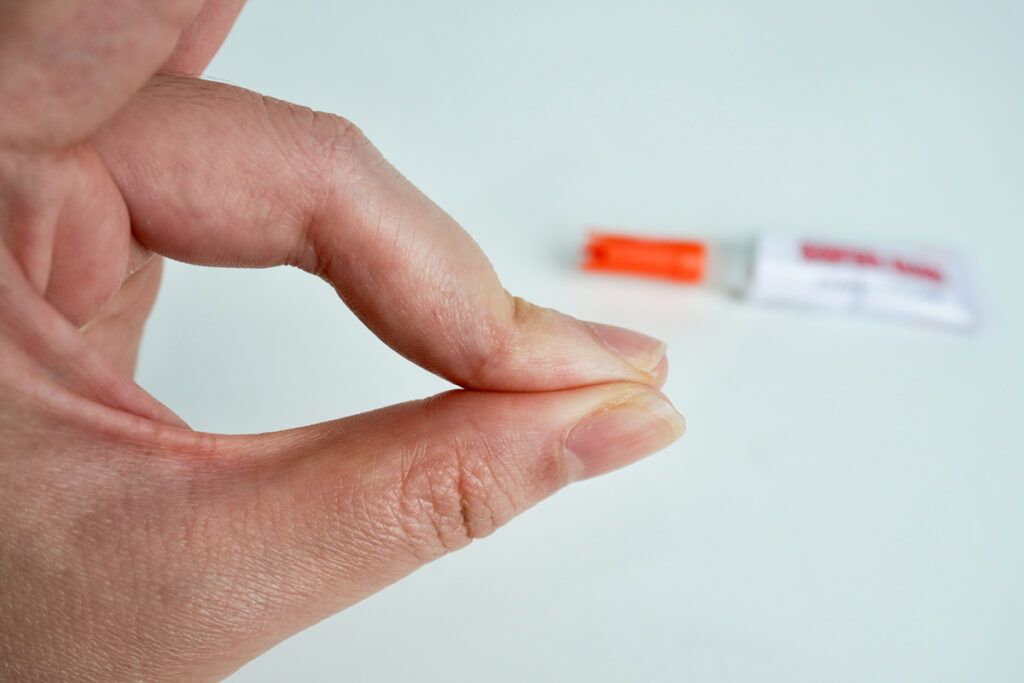
Of course, a glue that binds together porous materials in the presence of water makes superglue a nightmare for human skin, especially since washing your hands only makes the bond set faster. Companies make industrial-strength debonders specifically formulated for removing strong adhesives, which dissolve hardened glue into a softer, more pliable form that can be pulled and wiped away.
The best at-home solution, however, is acetone. Commonly found in nail polish remover, acetone breaks down polymer bonds in seconds, freeing your fingers from their sticky situation.
Sometimes, however, cyanoacrylate’s ability to bind with skin and other types of tissue is a feature, not a flaw. During the Vietnam War, field surgeons used superglue to treat wounds, and today, physicians use a less-toxic version of superglue to seal bleeding ulcers, improve wound healing on skin and other organs, and even rejoin veins and arteries during surgery.
While you might curse superglue’s strength when it’s stuck to your skin, you’ll be glad it’s so hard to break when it’s keeping your arteries together.
Superglue is composed of simple molecules that easily link up to one another, forming microscopic chains that are very hard to break due to their chemical bonds. When applied to two materials, the glue fills small crevices in the surfaces of each, and water (from moisture in the air around you) activates the molecules within, which quickly link both sides together. Though small, these microscopic chains (called polymers) can’t easily be pulled apart. However, acetone — commonly found in nail polish remover — can quickly break down these polymer chains if they happen to be linking two of your fingers together.
Short Answer