CULTURE
Why Are There Only 10 Unique Numbers?

You can write down any number, no matter how huge, with a combination of just 10 digits: 0 through 9. It doesn’t matter if it’s the number of months in a year (12) or the number of molecules in a drop of water (roughly 1,670,000,000,000,000,000,000) — just 10 digits cover it all.
That’s thanks to positional notation, also called place-value notation, a system in which each digit’s value is determined by not only what it looks like but also where it sits in a number. With this system, you don’t need 1.67 sextillion different symbols to represent every number from 1 to 1.67 sextillion. But how did we decide on using 10 digits specifically?
A Handy Numerical System
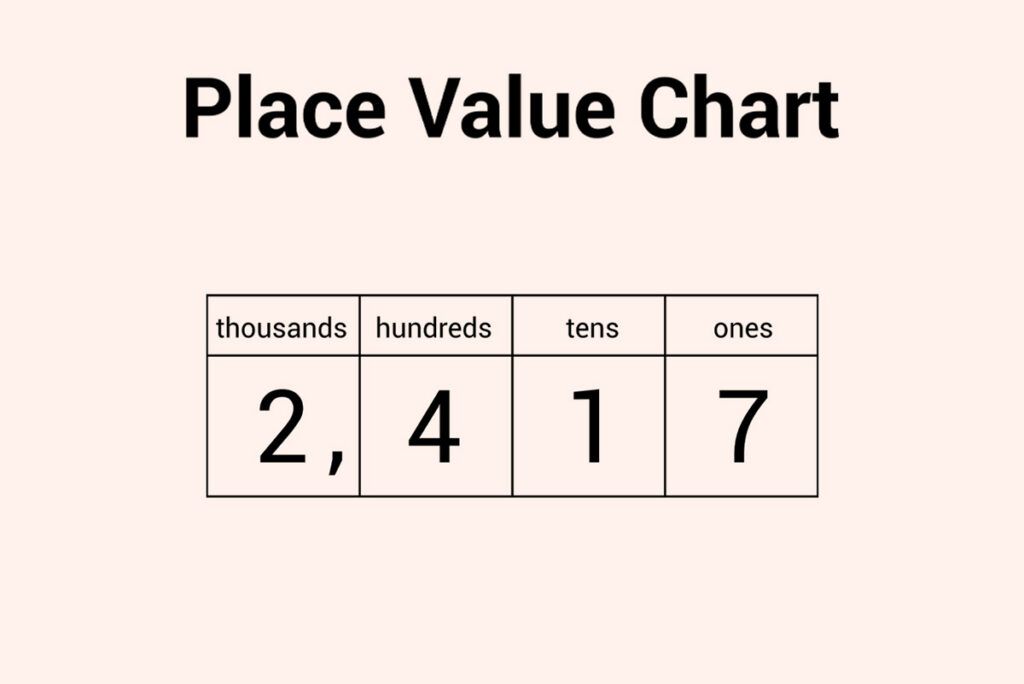
Think of a number as having columns, with one digit in each column. Each column represents a place value, and those place values increase by powers of 10 — ones, tens, hundreds, thousands, and so on — from right to left. In other words, each place value is worth 10 times that of the place value to its right.
Take the number 532. There are three columns, so from right to left, they represent ones, tens, and hundreds. Therefore, you have two ones (2), three tens (30), and five hundreds (500).
The term for a numerical system that uses 10 digits is base-10. But why 10? Believe it or not, math would work out the same if you only used six digits (0 through 5, or base-6) and only the symbols representing value would change.
In base-6, numbers “reset” and begin reusing digits after 5 rather than 9. In other words, 10 follows 5 — because there is no 6, 7, 8, or 9 used in this system — and 20 represents what we think of as 12, and so on. So if you had a bushel of 12 apples, you’d write that value as “12” in base-10, but “20” in base-6. The number of apples doesn’t change — just the way you notate that number.
It seems like such a system would be hard to use, but that’s because we’re unfamiliar with it. However, base-10 has an inherent advantage that other systems don’t have: our fingers.

Most people have 10 fingers, and early humans likely used them to count, eventually building a base-10 counting system.
Other early counting systems may have been based on five (counting on the fingers of one hand) or, in the case of the Maya civilization, based on 20 (counting on the fingers of both hands and the toes of both feet). It’s not a coincidence that we call these body parts our “digits.”
Ancient civilizations, including the Egyptians and Romans, did not use positional notation as we do, but they still used a base-10 system. (That’s why the rules of Roman numerals are different from ours, but the symbols still denote 10, 100, and 1,000.)
This numeral system we use today originated in India around the third century BCE, with the full place-value system developing around a thousand years later. In the ninth century, Persian mathematician al-Khwārizmi popularized the system, which is why 0 through 9 came to be known as Arabic numerals.
However, the numeric symbols that the Western world uses are different from the symbols used in parts of the Middle East today. So there are both Western Arabic numerals (1, 2, 3) and Eastern Arabic numerals (١،٢،٣). Either way, you can count all 10 symbols on both hands.
It’s believed early humans likely began counting using their 10 fingers. That led to a base-10 number system with 10 unique digits that could be strung together to represent any number, no matter how big.
Short Answer