NATURE
Why Is the Sky Blue?
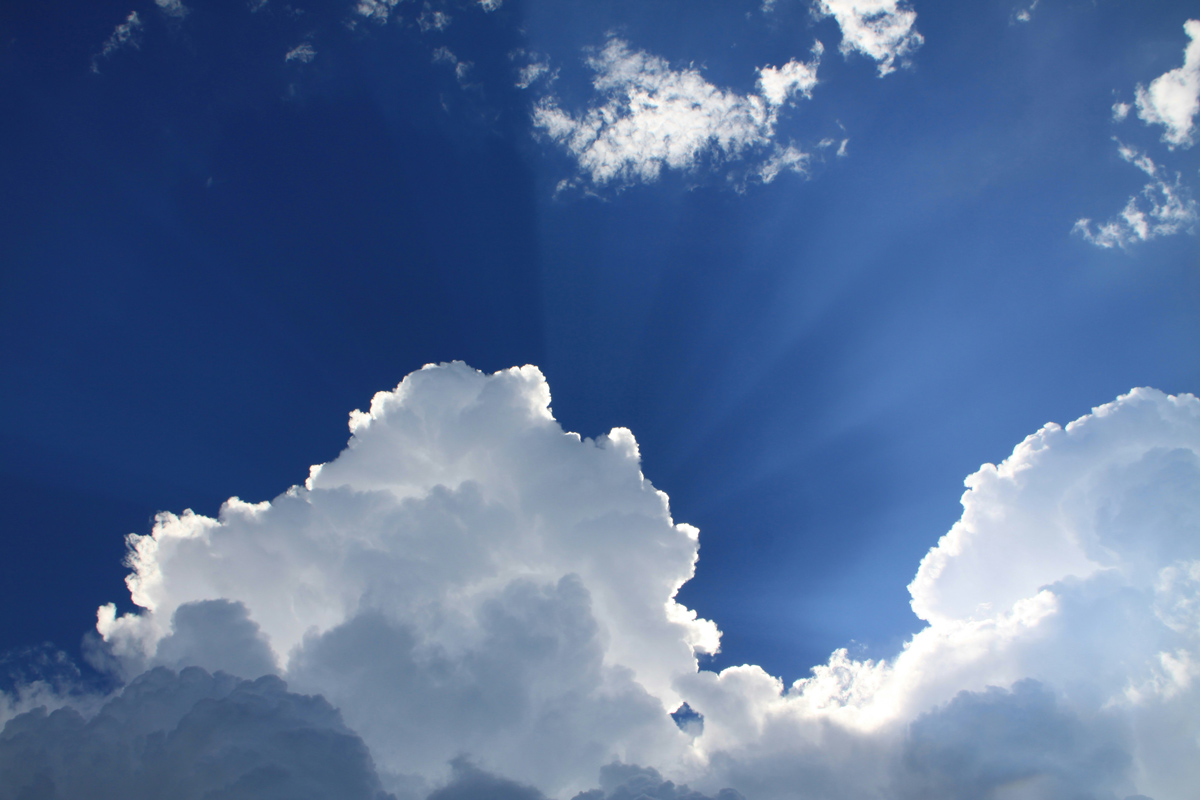

Asking why the sky is blue seems like something we should outgrow. After all, a blue sky is as ubiquitous as wet water, a hot sun, and spotty Wi-Fi. But sometimes it’s the most obvious questions that have the least obvious answers. If you still get stumped by this age-old puzzle, remember you only need three simple ingredients to make a blue sky: sunlight, Earth’s atmosphere, and your own two eyes.
High Noon, Peak Blue
Sunlight appears white to our eyes, but this light is actually made up of all the colors of the visible spectrum, ranging from red through violet. On its path through the atmosphere, sunlight is scattered, and much of the visible wavelengths is absorbed or reflected by particles and gas molecules in the atmosphere at different times of the day.
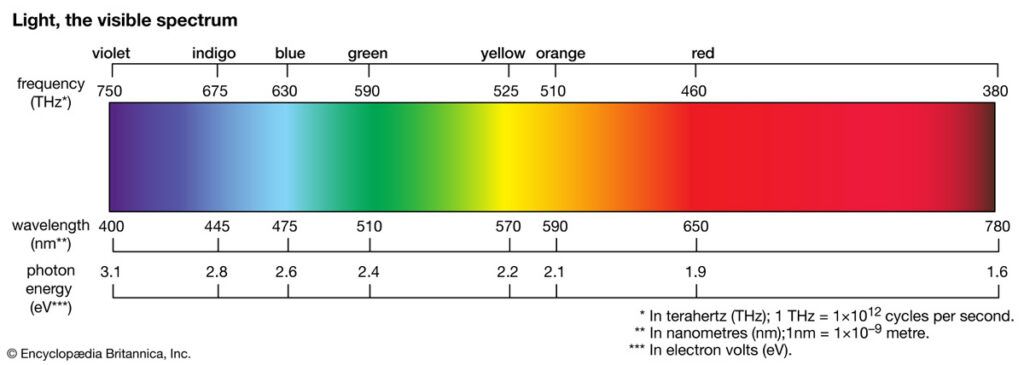
When the Sun is directly overhead at midday, incoming rays strike the atmosphere at nearly vertical angles. At this time, the shorter wavelengths that we perceive as violet and blue light are more easily separated. The net effect is that blue and violet are scattered throughout the sky away from the horizon. The midday sky, however, does not appear as a mix of blue and violet, because our eyes are more sensitive to blue light than to violet light. The remaining visible light made up of longer wavelengths (that is, from red, orange, and yellow bands in the spectrum) is still there, and the mix of these wavelengths create a whitish cast to the sky near the horizon.
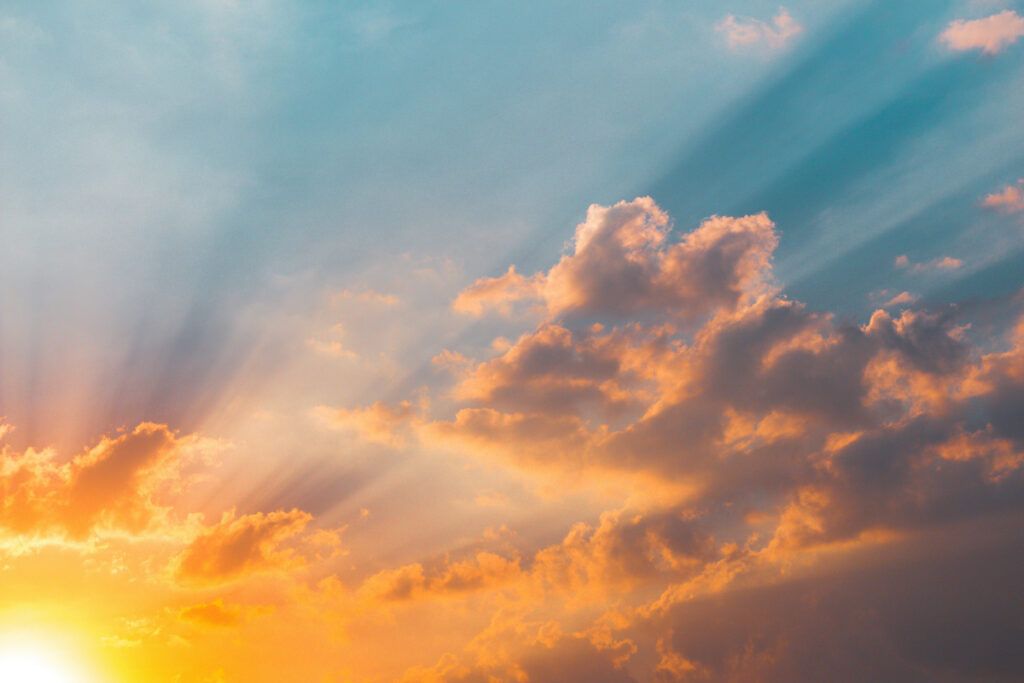
We also know that the sky doesn’t stay blue throughout the day. At sunrise and sunset, the Sun is closer to the horizon, and we are more likely to see a sky filled with reds, yellows, and oranges. During these times of the day, sunlight connects with the atmosphere at more-oblique (slanted) angles. Since sunlight needs to travel a greater distance through the atmosphere than it would at midday, longer wavelengths of light are more likely to strike and bounce off of oxygen molecules and other particles than they would at noon, whereas the blues and violets are mostly blocked by them and filtered out.
As the influence of shorter visible wavelengths diminish, the color of the sky changes, giving us those romantic sunsets to backdrop a long walk on the beach.
The sky’s color is the result of how incoming light from the sun interacts with the atmosphere. At midday, the shorter wavelengths of light we perceive as blues and violets are scattered throughout the atmosphere, while longer-wavelength reds, yellows, and oranges pass through, still appearing white. At sunrise and sunset, the blues and violets are mostly filtered out, while the reds, yellows, and oranges are scattered throughout the atmosphere.
Short Answer