NATURE
How Do Animals Know a Storm Is Coming?

The rain hasn’t started, but your dog is already pacing and the cat has taken refuge underneath the sofa. Meanwhile, the birds all seem to have fled, and the frog chorus sounds like it belongs to a rock opera.
What gives? These animals seem to have some kind of advance information, even without a weather app. Sometimes they even react before the meteorologist does. So what tips them off — and how do their warning systems work?
Reading the Signs
Scientists are still teasing out how animals’ advance warning systems work when it comes to inclement weather. One important clue is barometric pressure — basically, how heavy the air feels.
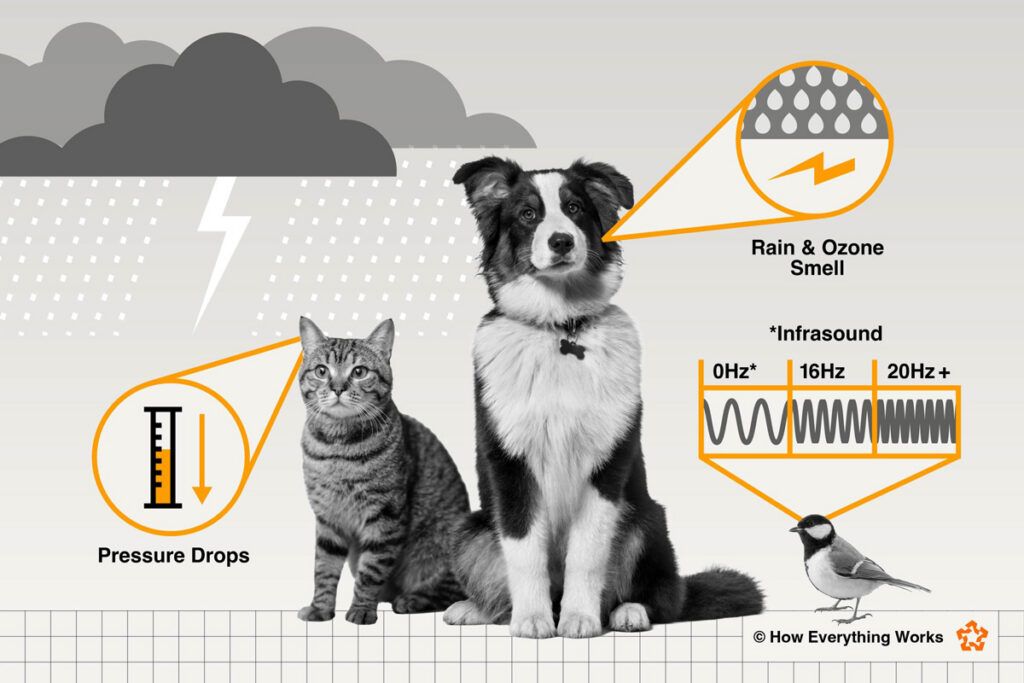
Air pressure often falls as a storm approaches. Animals that can detect this change — including cats, dogs, deer, cows, frogs, and other creatures — can respond before conditions become dangerous, whether by seeking shelter or even squeezing in an extra meal (which is relatable).
Scientists have tested this ability in white-crowned sparrows. Some populations breed in the Sierra Nevada, where spring snowstorms can suddenly cover their insect food source. In one 2013 study, researchers placed captive sparrows in a chamber and lowered the air pressure, mimicking an approaching storm.
The birds responded by pecking into their food dishes more often — perhaps a sign of trying to fuel up before the storm, much like how some humans run to the store to stock up on bread and milk. For a small bird, getting an extra meal before bad weather could make a big difference. Cold and wind increase the energy needed to stay warm, and feeding ahead of time can help build reserves.
Exactly how birds detect pressure is still being investigated. One candidate is the paratympanic organ, a small structure in the middle ear of birds and other animals that contains tiny sensory cells. Scientists have proposed that it works as a biological barometer, detecting pressure changes through mechanical movements within the organ. But its precise role hasn’t been definitively established.

Some birds may also detect infrasound — low-frequency sound below the usual range of human hearing — from distant storms, although its role as an early warning signal remains uncertain. Elephants and other creatures may also use infrasound as a warning of approaching bad weather, similar to how we can hear thunder rolling in the distance.
For dogs, several signals may work together. Veterinary behavior specialists describe how darkening skies, gusts of wind, and pressure changes can trigger fear before a thunderstorm arrives. Some dogs may also be able to hear the low-frequency rumbling of approaching thunder or smell approaching rain and ozone. A dog that has learned to associate these conditions with frightening storms may start pacing or hiding before its owner recognizes what’s coming.
Even garden insects can change their behavior as the weather shifts. In a 2013 study of beetles, moths, and aphids, falling pressure sometimes reduced courtship behavior. It seems that temporarily putting courtship on hold could reduce the chances of being caught out in heavy rain or strong winds. There’s nothing stopping these bugs from scheduling a rain date.
Responses like these aren’t perfect forecasts, and there’s nothing spooky about them. Every species experiences the world in a different way, so it’s not surprising that animals have ways of detecting environmental changes that we don’t. The smart ones respond by adjusting their behavior — sometimes well before we humans see a reason to reach for an umbrella.
Some animals can detect falling atmospheric pressure. They may also sense other physical cues that precede storms, such as darkening skies and low-frequency sounds. These signals can prompt birds to feed more, dogs to seek shelter, or insects to change their mating activities before bad weather arrives.
Short Answer