NATURE
Can Pets See What’s on Your TV?


When your dog growls at a television character or your cat locks onto a video of a darting bird, what exactly is happening? Pets can see images on screens, but what they experience varies from pet to pet, and even depends on the type of TV they’re watching.
Then there’s another question: If an animal can discern what’s happening in a movie, show, or other video, does it believe that action is really occurring right there in the room?
Since we (unfortunately) can’t just ask our pets what’s going on in their heads, researchers can only infer the truth from various experiments and studies. Here’s what experts think is actually happening when Fido or Princess joins you on the couch for reruns.
Through a Dog’s Eyes
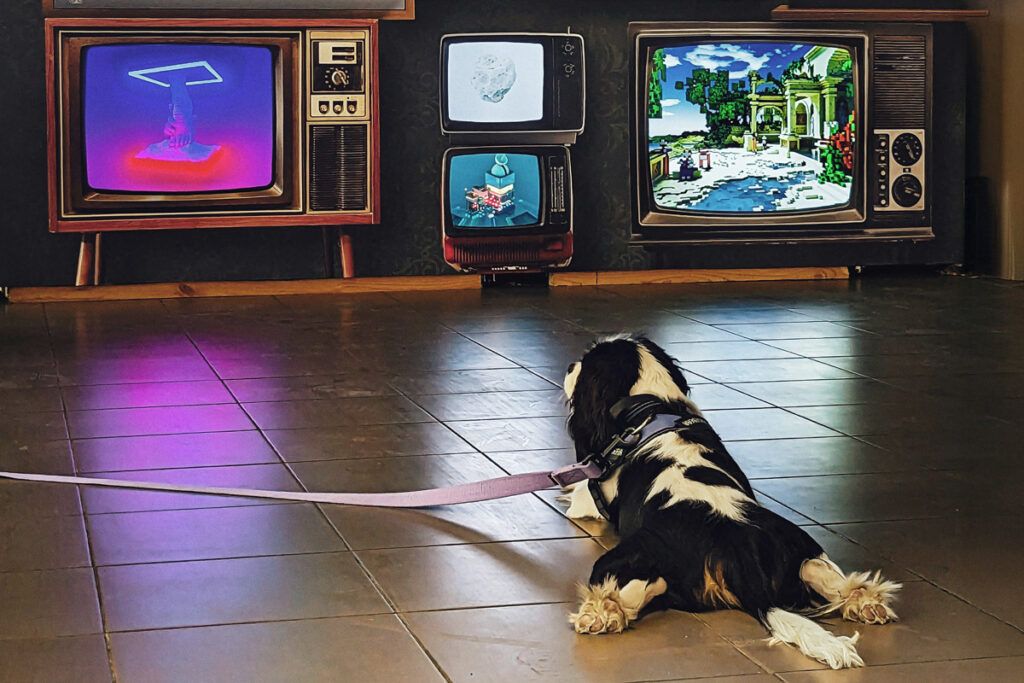
Like a film projector, television creates the illusion of continuous action by presenting images in rapid succession. Once those images change quickly enough, the action appears smooth. Most media has a frame rate between 24 and 60 frames per second (fps), which is the number of still images whizzing by each second.
TVs and computer monitors also have a refresh rate, which is distinct from a frame rate. Measured in hertz (Hz), or cycles per second, a refresh rate is how many times per second the entire display is updated (or “refreshed”). Something at 120 Hz is refreshing the pixels on the screen 120 times per second — even if you pause a movie on one individual frame.
For humans, smooth motion is usually perceived at around 55 hertz. At slower rates, humans see flickering in the image. You might sometimes notice a flickering TV in the background of a movie or show you’re watching — that’s because the appliance’s frame rate is often not in sync with the speed of the camera filming the scene.
That distracting flicker may be very similar to what dogs see on the living room TV all the time. Dogs can detect flickering at higher rates — experiments with beagles have placed the threshold at around 75 hertz, out of sync with many older televisions engineered for human eyes.
Modern flat-screen televisions form images differently than the old boxy CRT “tube” TVs you likely grew up with. In addition to having ultra-high resolution that allows you to see individual skin pores on an actor’s face, these newer displays may also be a big improvement for channel-surfing pups. That’s because many include innovations such as continuous backlight and motion smoothing technology, as well as higher refresh rates that together may produce steadier pictures for dogs.
In one eye-tracking experiment, dogs followed a Frisbee moving across a 60-Hz screen (the refresh rate of most modern TVs). After watching it travel between two people several times, they began looking toward the catcher even before it arrived, suggesting the dogs had a very clear understanding of what they were looking at.
Even then, dogs don’t see the same Technicolor production we do. Their vision is less sharp, and while not fully colorblind, they see less distinction between colors than we do. Humans typically possess three types of color receptors (called cones), but dogs only have two, so they primarily distinguish blues and yellows and lack the ability to see red.
That means motion, sound, brightness, and contrast probably matter more than vibrant hues and sophisticated color correction. (Needless to say, the dog Oscars would have entirely different categories.)
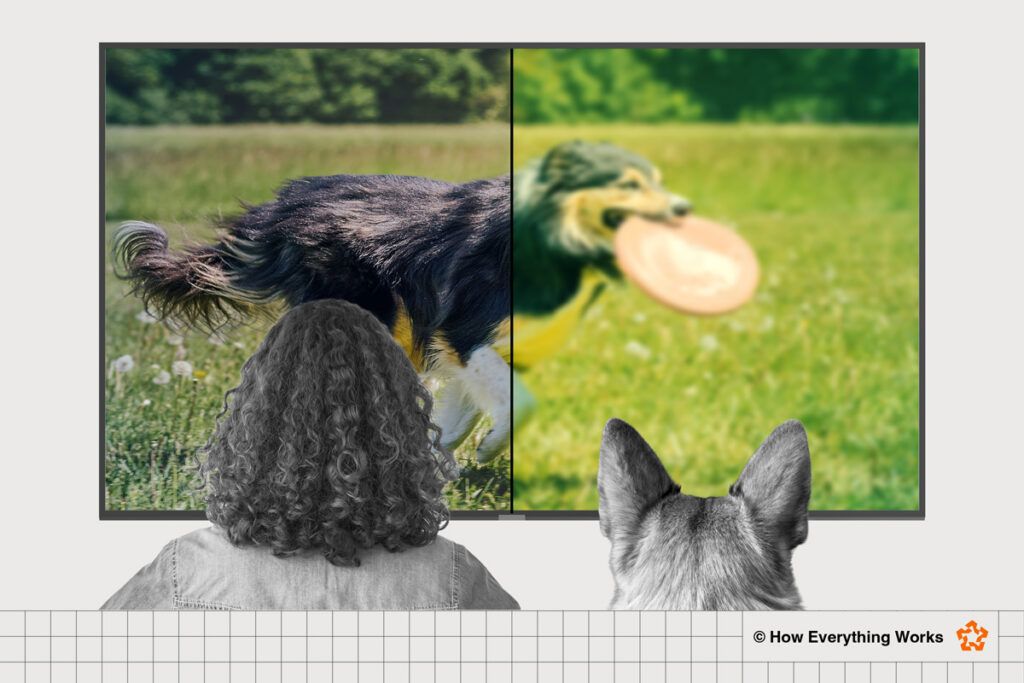
Dogs can nevertheless glean surprisingly specific information from screens. In one study of 32 pets, the pups were shown either a video of a dog paired with barking or a mismatched audiovisual pairing, such as a frog croaking over video of a dog. When an on-screen dog barked, the pets acted as if nothing was unusual, but they appeared surprised by mismatched sights and sounds, indicating that they recognized the on-screen canines as fellow dogs.
Another experiment found that dogs appeared surprised when a real ball rolled across the picture of a hole rather than falling into it, suggesting that shading and perspective can create an impression of depth for them, too.
Neither result means dogs mistake television for reality. Research suggests they don’t automatically treat two-dimensional images and three-dimensional objects as interchangeable. And since Smell-O-Vision never caught on, TVs don’t provide the many layers of scents dogs often use to perceive their environment, or other information supplied by an actual canine visitor.
Still, owners report that some dogs follow TV animals with their eyes or look behind the television after the on-screen creatures disappear, suggesting that the boundary can occasionally get fuzzy.
There is much less research on cats. In a study of 125 shelter cats, the animals watched television for only about 6% of the observation period. Moving animals and objects attracted more attention than people or a blank screen, but interest declined over time. Cats, it seems, are perfectly capable of getting bored with the programming — just like they can get bored with humans in general.
Parrots may be more discerning screen users. In one experiment, pet parrots learned to select other birds on a tablet and initiate video calls. A later study found that they initiated more live calls than prerecorded ones, suggesting that genuine interaction held a special appeal — the avian equivalent of preferring Zoom or FaceTime to television.
So if you own a parrot, you won’t have to fight over the remote, but you may have to shush them when your favorite show is on.
Dogs and cats can see television images, but color, sharpness, and motion look different to them — namely because TVs are designed with human vision in mind, and animals don’t see the world exactly the same way as us. Less research exists on cats, but dogs appear to recognize animals and follow action on-screen, although they don’t necessarily experience a televised object as identical to the real thing.
Short Answer