SCIENCE
Why Do Your Ears Pop When Flying?

Ear discomfort during a flight is a common annoyance, whether you’re a frequent flyer or generally try to avoid the airport. As a plane’s wheels lift off and the skyline tilts, suddenly your sense of sound feels muffled, as if you stuffed cotton balls into your ears.
Maybe you force a yawn. Maybe you chew a piece of gum. Then: sweet relief, as a small “pop” returns your hearing to normal. Where’d that pop come from? Come to think of it, why did your ears get clogged in the first place?
You might already vaguely know the answer: something to do with air pressure. But what does that mean? What exactly is going on inside your ears as you fly?
Meet Your Middle Ear
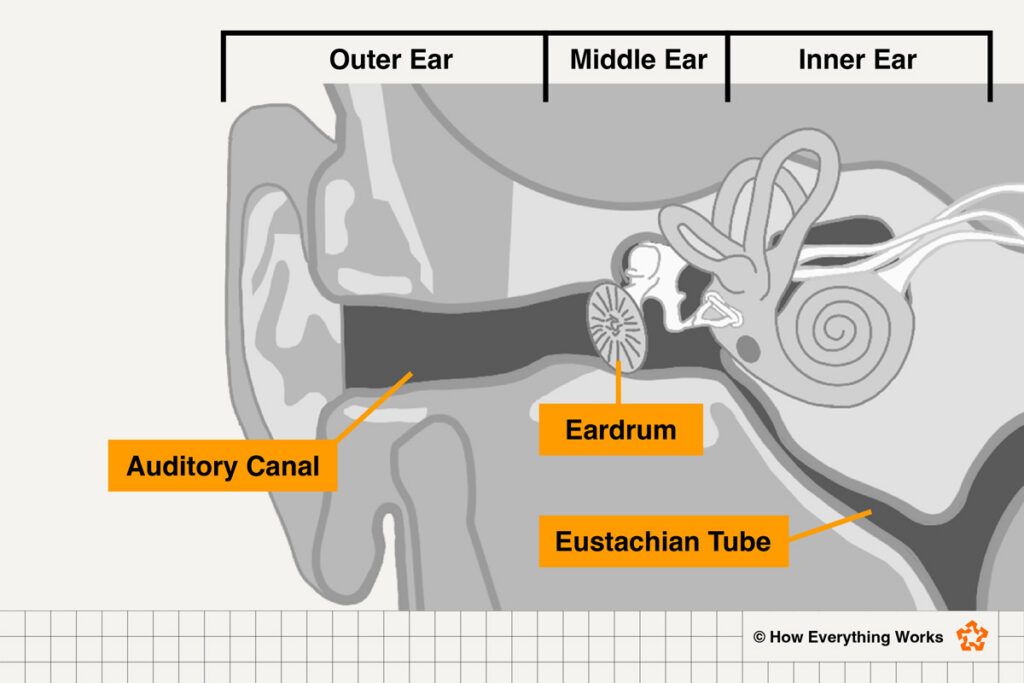
That popping sensation comes from air pockets in your ears working to keep the pressure around your eardrums equalized. Those air pockets — small chambers behind each eardrum, one in each ear — are part of your middle ear.
Unless you’re on a flight or winding through mountain roads at higher altitudes, chances are you don’t notice they exist. That’s because your middle ear is normally filled with air at the same pressure as the world around you. A narrow passage called the eustachian tube connects each middle ear to the back of your throat, and its job is to keep that pressure balanced.
Flying disrupts that balance. As the plane climbs in altitude, the air pressure in the cabin drops. Pressure goes hand in hand with how dense air is, i.e.how close its molecules are packed together. When air gets “thin” at higher elevations, it’s because there’s more space between molecules.
Molecules are pretty small, but they still have mass and weigh us down — we’re just used to it. When there are fewer of them — when the air is thinner — that pressure pressed down on us is lower.
Picture air molecules as M&M’s. One by itself isn’t very heavy, but you could tell the difference if you were holding 10 at once versus 1,000. Your hand will feel heavier with the denser concentration of 1,000 M&M’s because they’re exerting more pressure on your palm.
Instead of your hand, air molecules are pushing onto your entire body, and making their way into your ears. But as air pressure drops while your plane ascends, the air already in your middle ear remains at a higher, ground-level pressure. It’s denser and heavier with air molecules, so it pushes outward against your eardrum, which helps translate sound waves into vibrations for your brain, causing that muffled feeling and affecting your hearing.
While descending, the opposite occurs: Cabin pressure rises faster than the air in your middle ear can adjust, so the eardrum gets pushed inward instead. Whether you’re taking off or landing, your eustachian tube solves the problem by opening and allowing air to flow in or out of the middle ear, equalizing the pressure on both sides of your eardrum. That’s when you’ll get the (often satisfying) pop.
It’s like when you tightly press a lid onto a Tupperware container, trapping air inside and raising its internal pressure. The higher density of air bulges the plastic outward, where the surrounding pressure is lower. “Burping” the container by lifting the corner a bit acts like your eustachian tube, releasing the trapped air to equalize pressure with the kitchen.
Pop Science

For most people, the discomfort is brief, lasting between a few seconds and a couple of minutes, resolving on its own without lasting effects. Want to help the ear-popping process along? There are a few tricks that help. Yawning and swallowing activate muscles that open the eustachian tube; that’s why chewing gum or sipping water during takeoff and landing also works well, since both encourage you to swallow regularly.
Another method worth a try is the Valsalva maneuver. With your mouth closed, pinch your nose shut and gently blow, as if trying to exhale through your nose. It pushes enough air into the middle ear to encourage the eustachian tube to open.
That trick doesn’t guarantee success, though, especially if you’re sniffling from a cold or allergies. Congestion swells the tissue lining your nose and throat, which can block or narrow the eustachian tube.
That’s why a stuffy nose can turn a routine flight into an uncomfortable experience, and why frequent flyers with allergies may keep decongestants in their carry-on.
Your ears pop when flying because cabin air pressure changes faster than the air pressure in your ear can adjust. As the plane climbs or descends, that mismatch pushes against your eardrum, creating discomfort and muffled hearing. The pop happens when your eustachian tube — a small passage connecting your middle ear to your throat — opens and lets air flow through to equalize the pressure. Swallowing, yawning, and chewing gum can help trigger that release, though colds and allergies can make it harder by blocking the tube.
Short Answer