ENGINEERING
Why Do Some Vehicles Need Diesel?
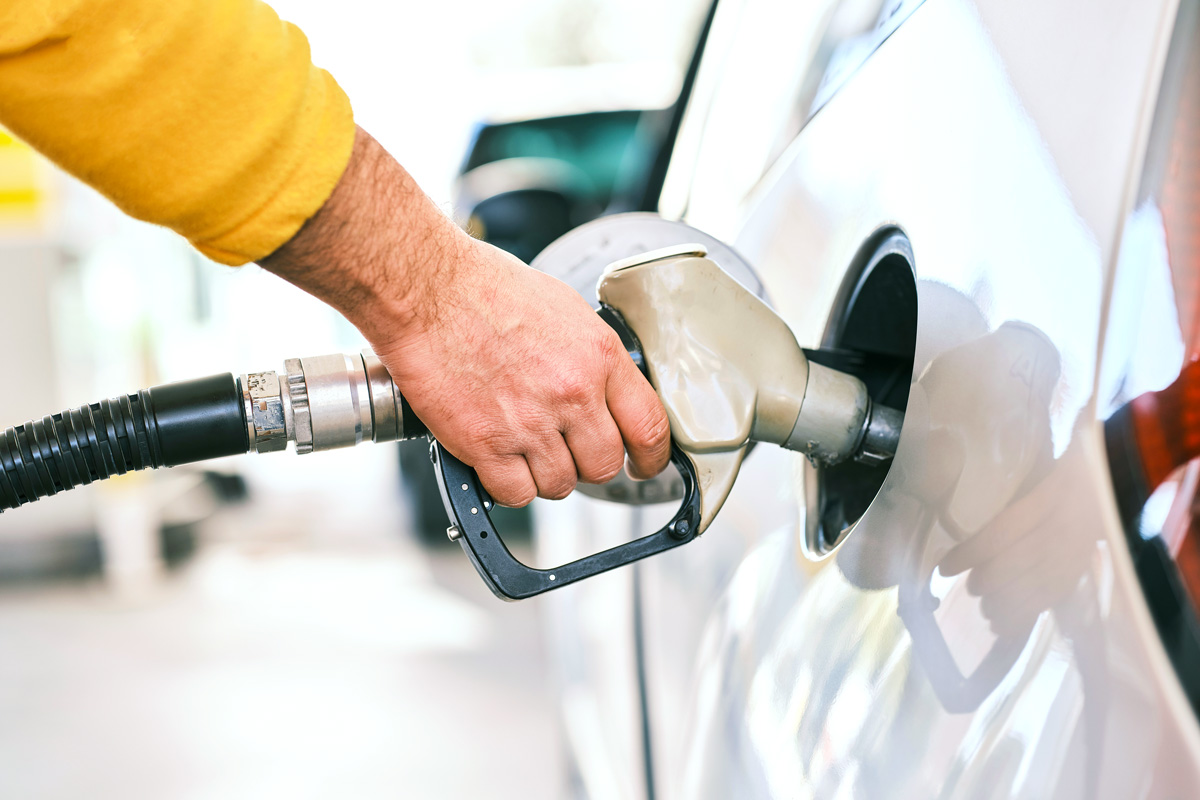

Pull into a gas station and you’ll face a few choices, such as regular unleaded, premium gasoline, or diesel. Unless you’re driving a school bus, big rig, or a heavy-duty pickup truck, chances are you aren’t filling up with diesel — and for good reason. Pumping diesel into a gasoline-powered engine can be an expensive mistake.
Both gasoline and diesel are derived from crude oil, and both power internal-combustion engines. But they’re not interchangeable. The key difference is less about the actual fuel and more about how each engine sets that fuel on fire.
Spark or Squeeze?
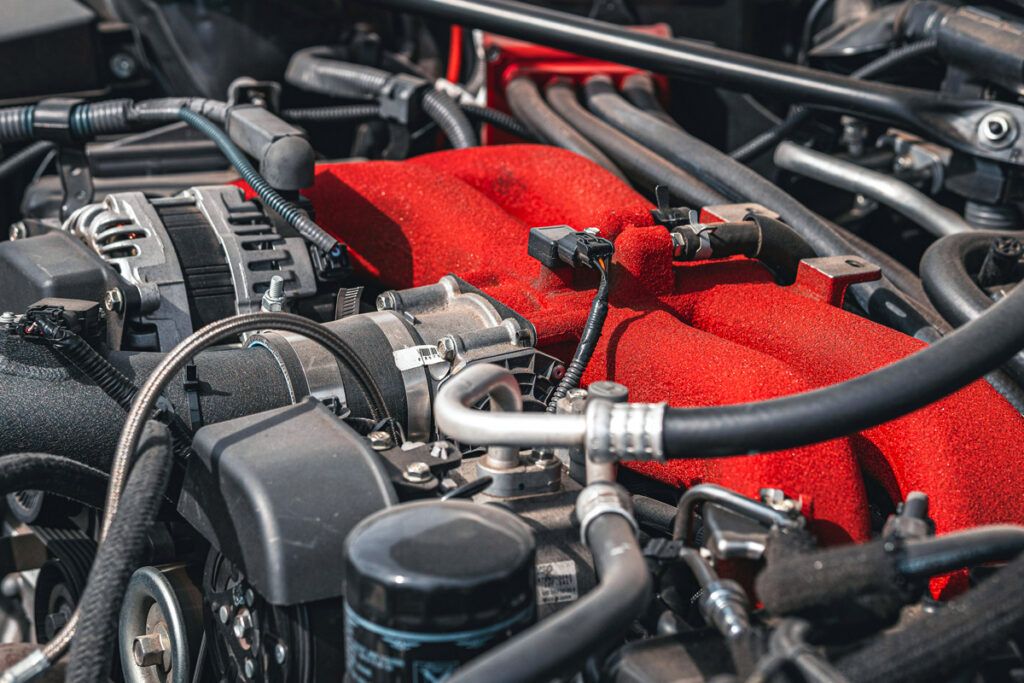
Gasoline engines rely on a spark, while diesel engines use heat created by compression. A gasoline engine draws in air and fuel, compresses the mixture, and ignites it with a spark plug. A diesel engine skips the spark plug entirely. Instead, it pulls in air alone, compressing it much more tightly, then injects diesel fuel directly into the hot, squeezed air.
Compressing air heats it up. You know how sharing body heat with someone else can warm you as you hold them close? Air molecules work kind of the same way — the closer they are, the hotter things become. Compressed air is just that — air molecules being squeezed together. That’s why a bicycle pump can become warm as you inflate a tire.
In a diesel engine, the temperature of the compressed air becomes high enough — upwards of 1,300 degrees Fahrenheit — that the injected fuel ignites on its own (diesel can autoignite at 410 degrees Fahrenheit). This is called compression ignition.
Gasoline can’t be used this way. Both gas and diesel are hydrocarbons, but their molecular makeup is much different — diesel is made from longer, heavier chains of molecules. This changes chemical properties, such as boiling points, and it’s why gasoline evaporates more easily and ignites readily. Because of this, squeezing the air too hard would make gasoline fire too early.
This can cause engine knock, a damaging pinging or rattling sound inside the cylinder. To compensate, gas engines are limited to compression ratios of roughly 8-to-1 to 12-to-1, while diesel engines commonly run 14-to-1 or higher. Compression ratios refer to how much air the pistons of an engine are squeezing — you can think of a piston like a syringe that uses a plunger mechanism to push out medicine.
Diesel fuel is thicker, oilier, and less volatile than gas. Those properties make it well suited to being injected into that hot, compressed air. That tighter squeeze pays off. Diesel engines are generally more efficient, and a gallon of diesel holds more energy than a gallon of gas. The U.S. Energy Information Administration lists approximately 137,381 British thermal units or Btu (a unit of heat energy) per gallon for diesel fuel versus 120,214 Btu for motor gasoline — about 14% more energy by volume.
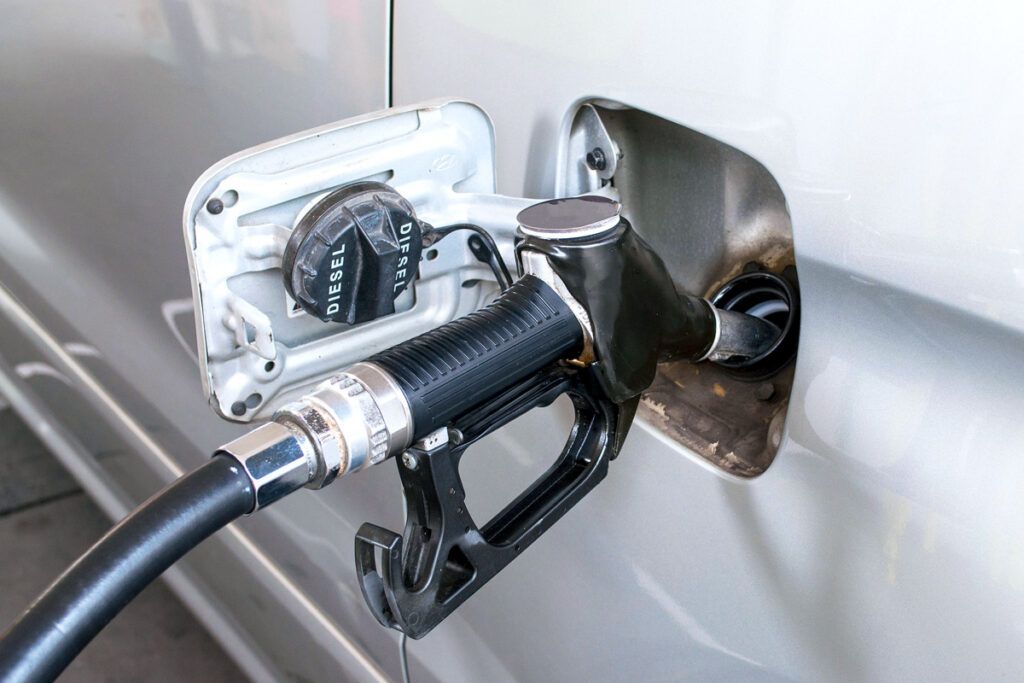
Diesels also excel at torque, the twisting force that gets heavy loads moving, especially at lower engine speeds. Think muscle, not speed. That’s why diesel powers semitrucks, school buses, tractors, locomotives, cargo ships, and pickup trucks built for towing.
There are tradeoffs, though. Diesel engines must be built heavier to withstand the high cylinder pressures, which makes them costlier. Their exhaust also requires more cleanup, including a filter to trap soot and diesel exhaust fluid (DEF) to reduce nitrogen-oxide emissions.
These tradeoffs are why you don’t see passenger vehicles use diesel, despite the higher efficiency. (Also, diesel engines are louder and vibrate more, which would make modern cars a harder sell.)
Mixing up the fuels can be a pricey mistake — and not just because diesel is typically about $2 per gallon more than gas. Diesel in a gas vehicle can cause misfires, power loss, or stalling, and may damage the fuel system, leading to costly repairs. Gasoline in a diesel can be even more serious because diesel fuel lubricates parts of the fuel-injection system, and gasoline can’t do that job, leaving the engine dangerously unlubricated.
On top of that, the gas will ignite much earlier than it’s supposed to. If you realize your mistake at the pump, don’t start the engine. Diesel nozzles are often larger — a fail-safe measure so they won’t fit most gas-guzzling cars’ tanks — but a gas nozzle can still fit many diesel tanks. Diesel engines compress air until it’s hot enough to ignite injected fuel, while gasoline engines use a spark plug to ignite gas. Diesel fuel is chemically suitable for that high-pressure approach, which makes diesel engines efficient and strong at moving heavy loads. That’s why trucks, buses, and other big vehicles use it. The lighter chemical structure of gas means it can’t work with diesel engines (and vice versa). Gasoline is cheaper to produce, has easier-to-control emissions, and requires less noisy, vibrating engines, which is why it’s used for passenger vehicles despite being less energy efficient.
Next time you’re filling up your tank, remember that diesel isn’t just souped-up gasoline. It’s fuel for an engine that works on a completely different principle.
Short Answer