NATURE
These Animal Eyes Look Completely Different — Here’s Why
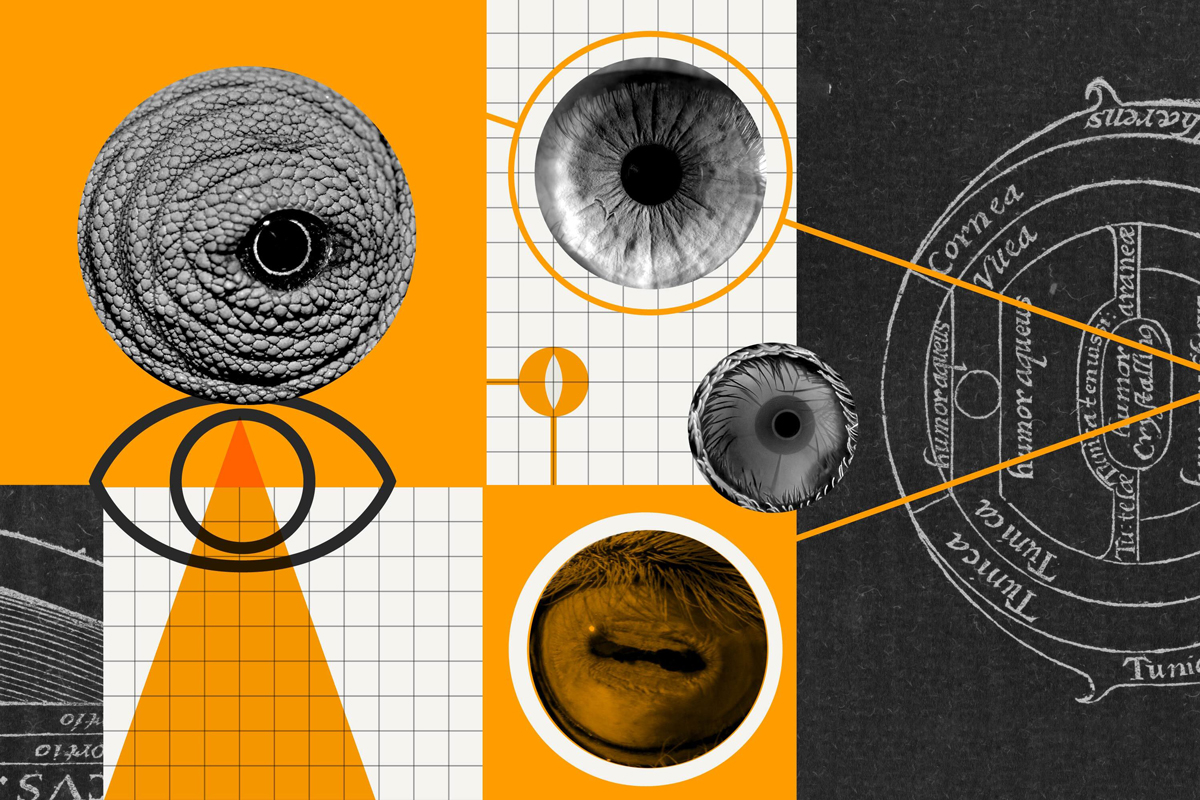

Eyes come in a wide variety of color, shape, and size — and that’s just among humans. Widen your gaze across the animal kingdom and you’ll find a stunning diversity of eye design.
Eyes have evolved multiple times across very different animal types, and the various ways they took shape show us the different ways vision can be put to use. Here is just a sampling of some of the prettiest and most puzzling peepers Mother Nature has to offer.
Humans
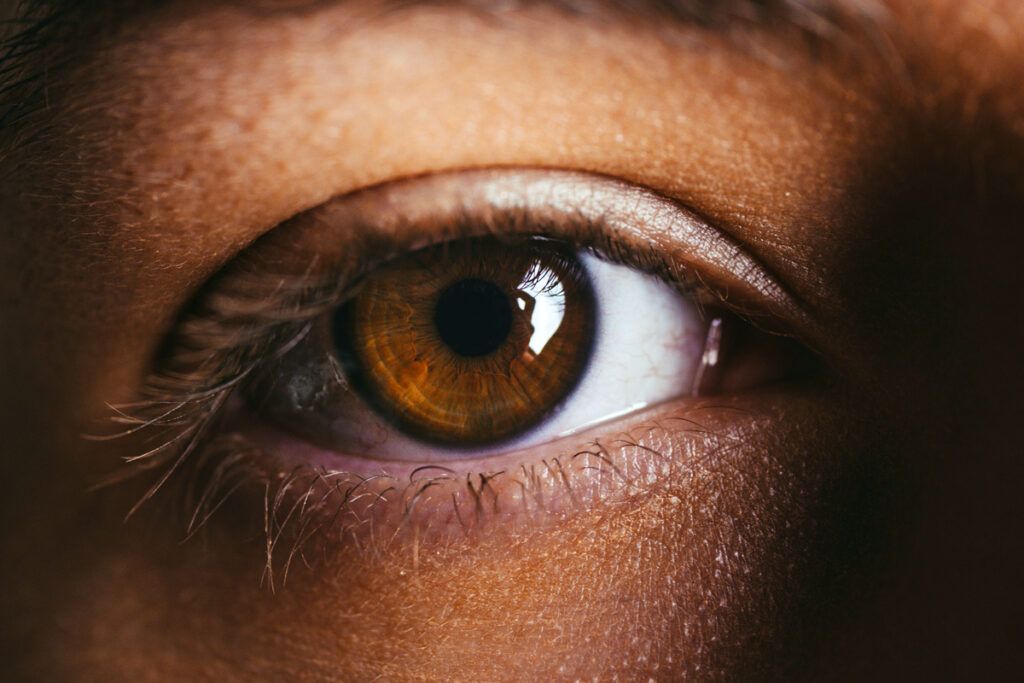
Human eyes are distinct in the animal kingdom, not just because of the wide variety of colors, but also because of our sclera — the whites of our eyes. Biologists believe we evolved prominent sclera to aid in distance communication, as they make eyes easier to read, whether for interpreting emotions (such as alarm) or following another human’s gaze.
Humans and other primates are also unique among mammals because we are trichromats. This means our eyes possess three types of pigment, as opposed to two pigments, which is what dogs, cats, and many other animals have. The additional pigment allows us to see a wider spectrum of colors, which may have evolved in early primates to help them determine when fruit was the perfect ripeness.
Lemon Sharks
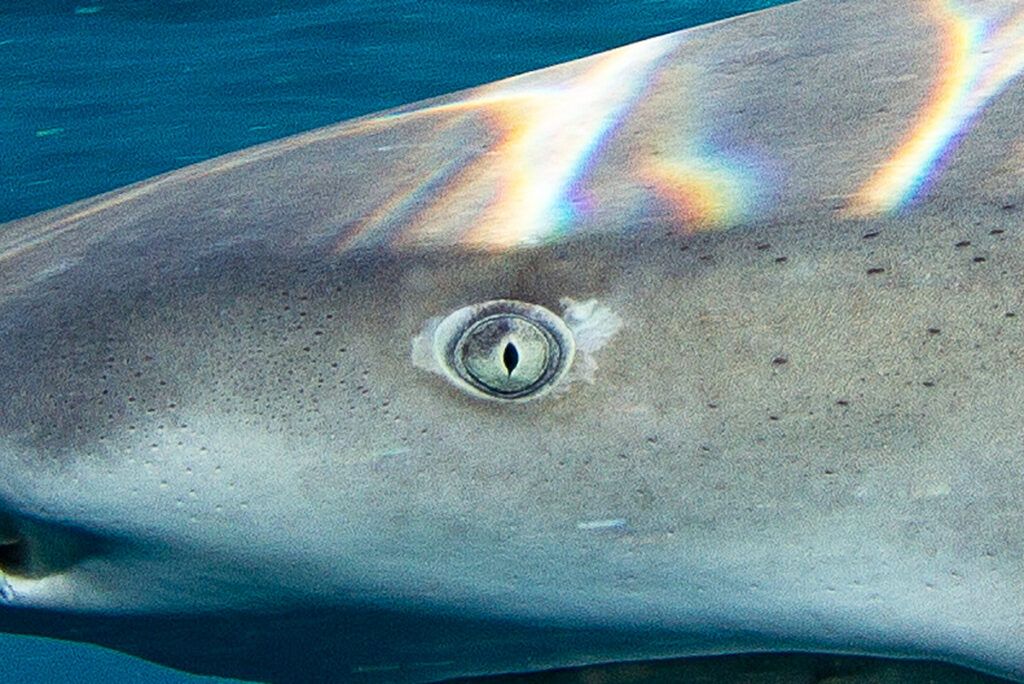
We could devote an entire article to the variety of shark eyes, which come in many shapes, sizes, and colors. But perhaps the most unique are those of lemon sharks, which have catlike vertical pupils. While your kitty relies on its eyes for excellent depth perception, the physics of marine environments is a little different, so biologists are still debating why lemon sharks evolved this trait. One argument is that vertical pupils afford them precise control over how much light hits the retina — a useful tool for a shallow-dwelling species that still relies on sunlight.
Jumping Spiders
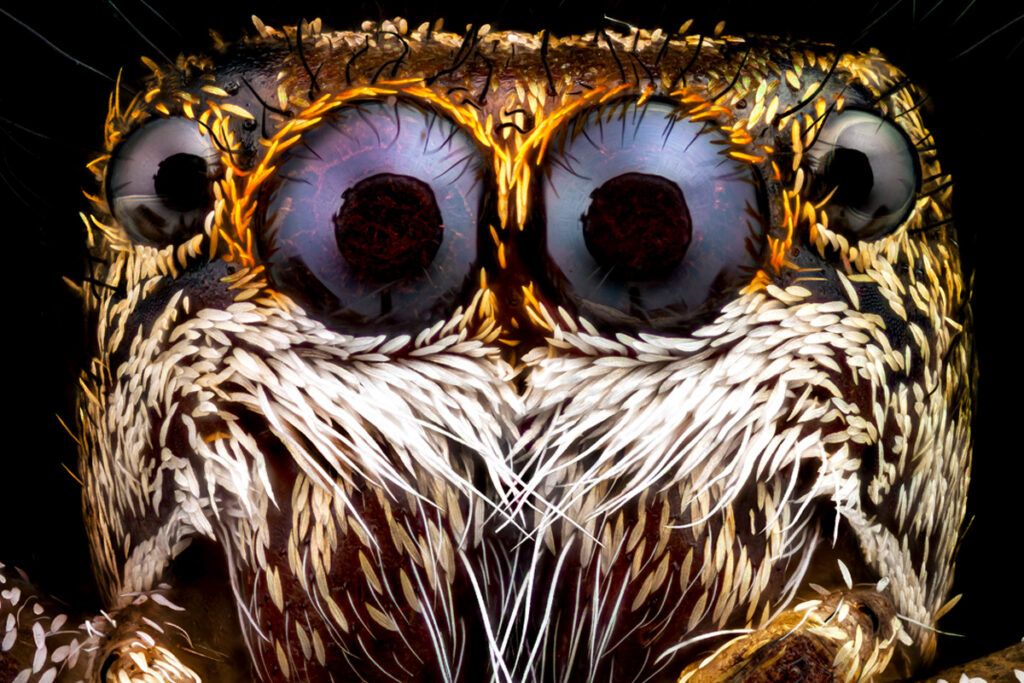
Jumping spiders are fuzzy little dancers and as close as arachnids get to cute. They have colorful coats and two expressive primary eyes. (Like most spiders, jumpers have eight eyes in total.) These tiny ambush predators can see in color and have arguably the best vision of any arthropod (which includes invertebrates such as arachnids, crustaceans, and insects).
This impressive vision is thanks in part to jumping spiders’ set of four tightly packed, forward-facing eyes that they use to zero in on prey. Rather than each eye having the same capabilities, they have evolved to take on different responsibilities. Two small lateral eyes sense motion, triggering a jumping spider’s principal eyes to home in on the target and pounce.
Wedge-Tailed Eagles
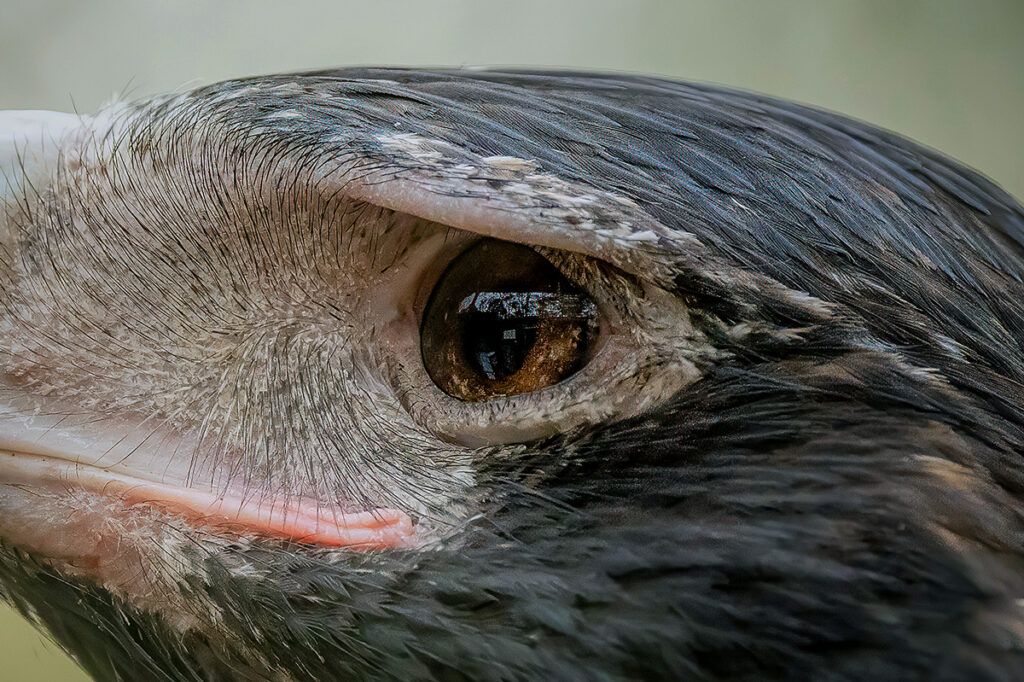
If you’ve ever been called “eagle-eyed,” it means you never miss a thing. The term refers to the unparalleled telephoto vision of eagles and other birds of prey, such as hawks and falcons. Every raptor (the name for a carnivorous bird of prey) can pass an optometry exam with flying colors, but the keenest peepers of this branch of the animal kingdom may belong to the wedge-tailed eagle.
These Australian predators have an average 7.5-foot wingspan, eyes as large as a human’s, and they can spot prey from more than a mile away. The incredible visual acuity is largely owed to the wedge-tailed eagle’s wide field of vision and its double fovea — two pits in the retina where vision is sharpest. (The human eye only has one fovea.)
Big-Eyed Conch Snails
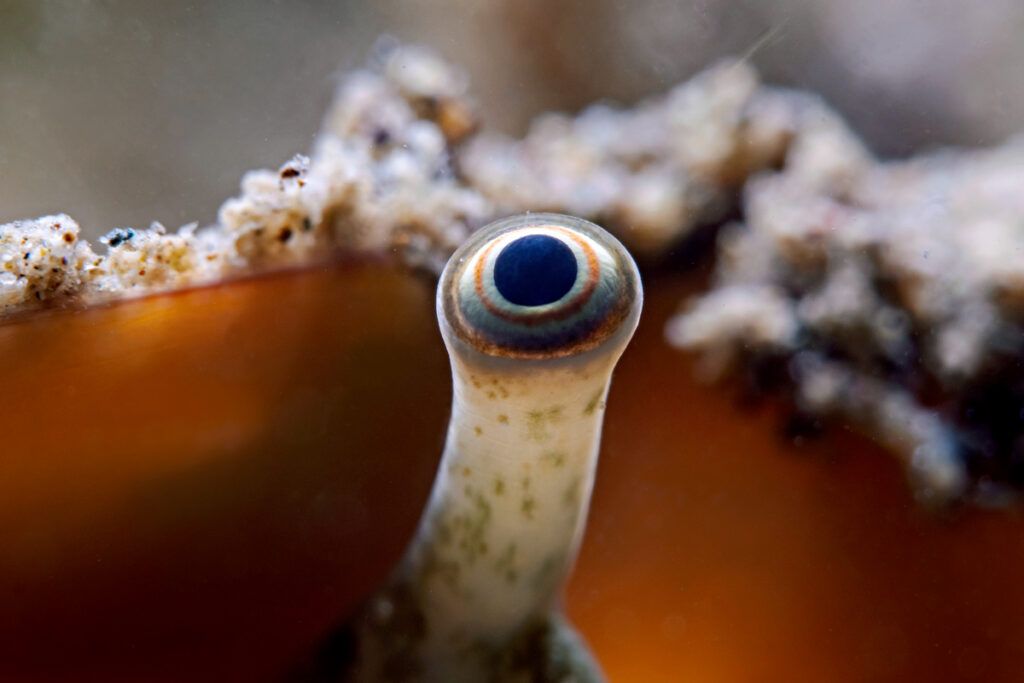
Most snails have beady little eyes that periscope from their heads on fleshy, mobile stalks. But big-eyed conch snails possess stalked eyes that are 10 times larger than those of their terrestrial cousins, providing them vision that’s on par with that of certain vertebrates. This likely evolved because of their habitat — big-eyed conch snails graze on algae in shallow, tropical waters, where they are especially vulnerable to predators.
Big-eyed conchs differ from other mollusks in that they don’t just withdraw into their shell when danger looms. If they spot a predator with those powerful peepers, these acrobatic snails will literally leap out of harm’s way.
Chameleons
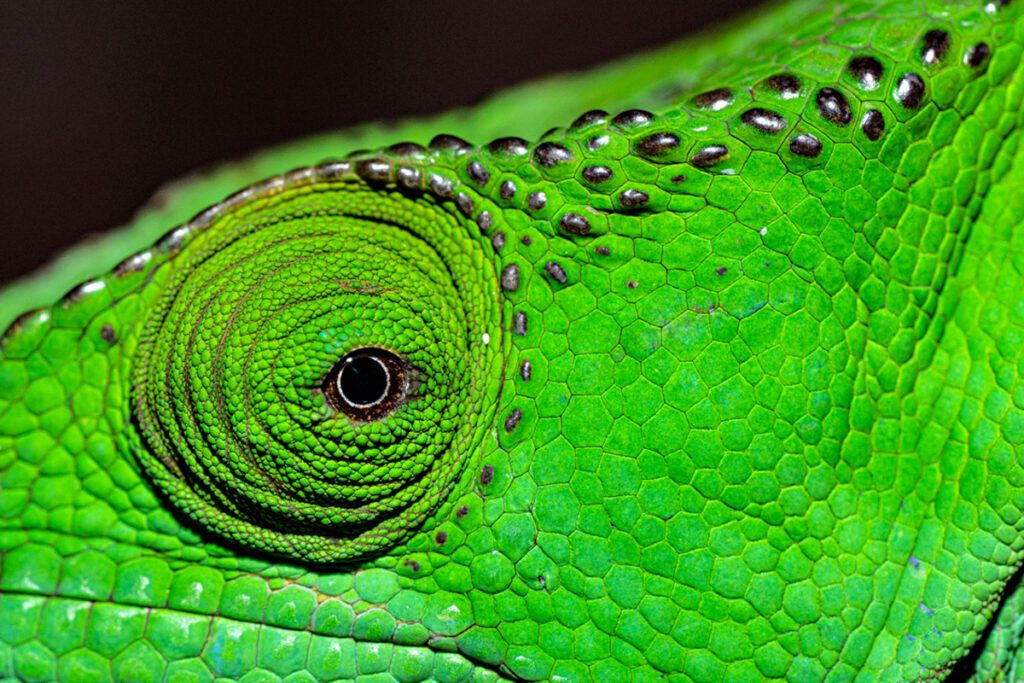
Chameleons are known for a number of strange physical characteristics, such as their oven-mitt hands, projectile tongues, and dazzling ability to change colors, as well as their alien turret eyes. These diminutive lizards can point their eyes in two different directions at once, providing them with a nifty 360-degree view of their surroundings.
This superpower is owed to long, coiled optic nerves shaped like telephone cords, which give chameleons the slack necessary to move their eyeballs from point A to point B. Third-grade teachers who claim to have eyes in the back of their heads could only dream of such anatomy.
Swordfish
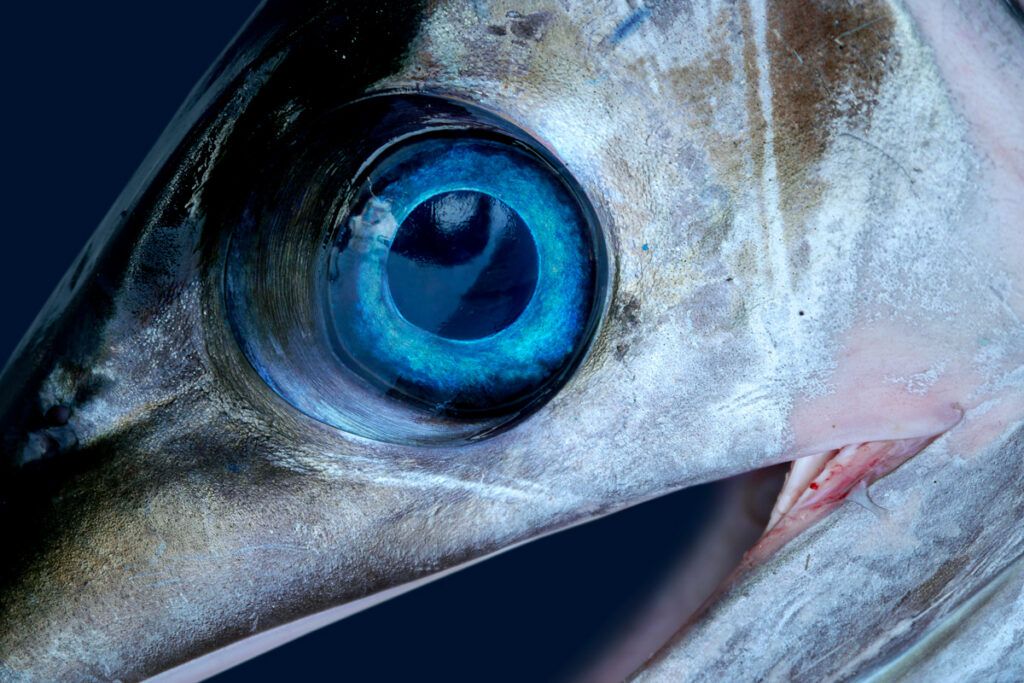
Swordfish have the largest eyes of any teleost, or ray-finned fish. These highly visual predators possess massive, tennis-ball-sized orbs that span 3.5 inches in diameter. Like most teleosts, swordfish have round pupils and spherical lenses adapted for seeing underwater. A “fish-eye” lens is spherical because its purpose is to bend light, and light bends differently in water than in air.
But the most remarkable thing about swordfish isn’t their pupil shape — it’s their temperature. Swordfish are cold-blooded, but their eyes maintain a warm temperature. This adaptation allows swordfish to see better while hunting in the frigid depths of the ocean.
Goats
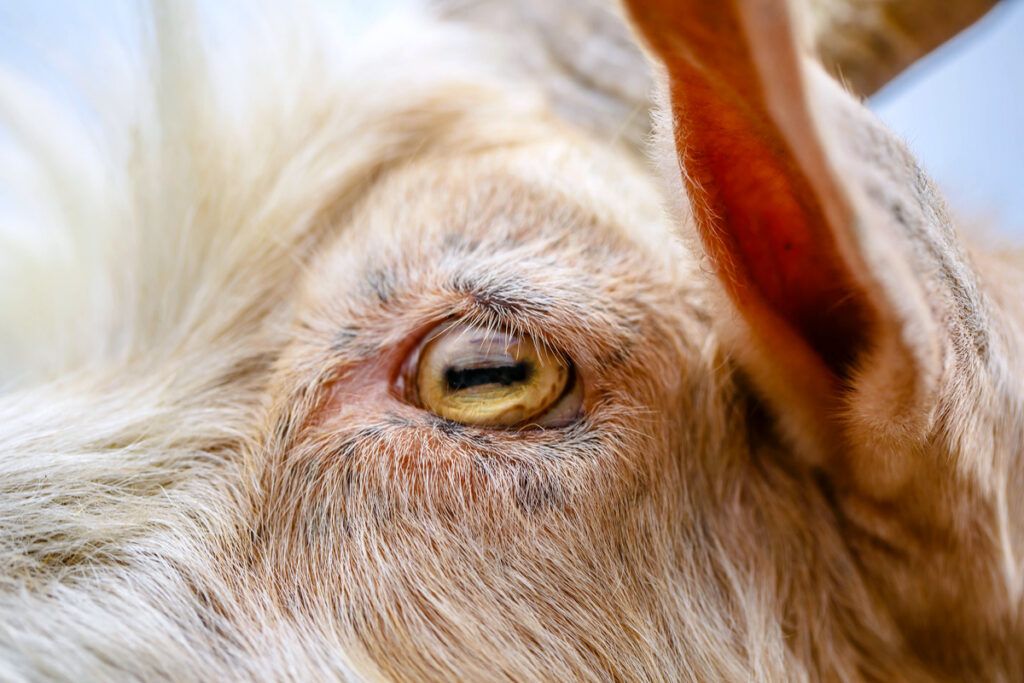
Don’t stand too close to a goat or you could become distracted by those creepy eyes long enough for it to start eating your shorts. Goats and other ungulates such as sheep, cows, and horses have eyes on the sides of their heads rather than in the front, with horizontal pupils designed for scanning flat landscapes.
Ungulate eyes are also exceptional in that they rotate in the socket as the animal lowers its head for browsing, maintaining the pupil’s horizontal orientation at all times. This gives goats and their prey-animal cousins a leg — or hoof — up in spotting predators.
Praying Mantises
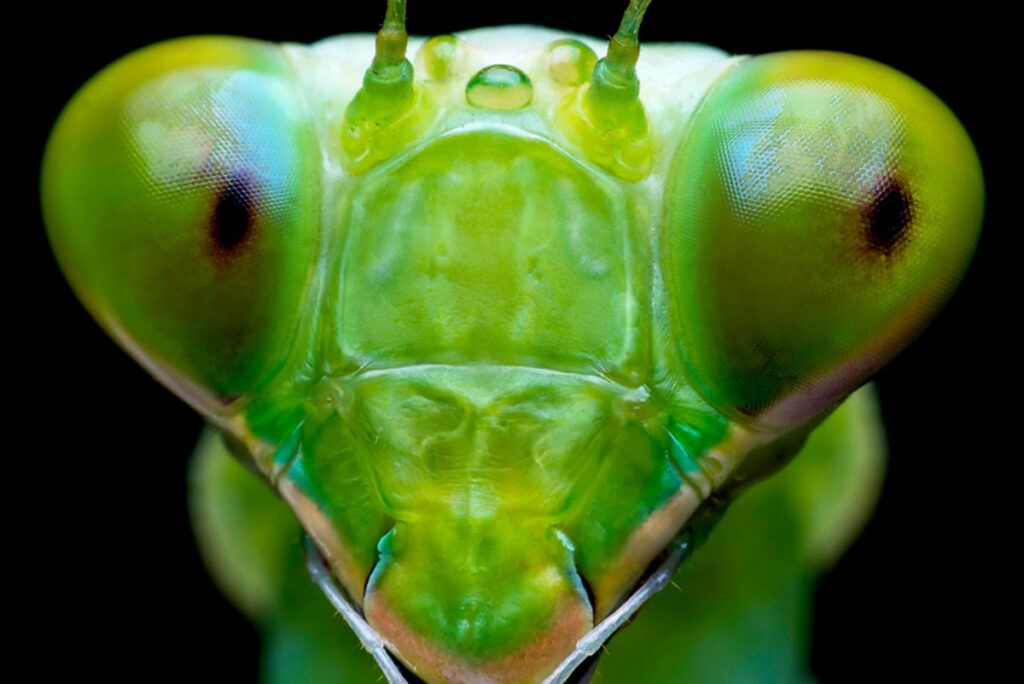
Praying mantises are known for scythe-like claws, bloody mating rituals (female mantises bite the heads off their male suitors post-coitus), and those cartoonish googly eyes. Like most insects, they have compound eyes, which are made up of tiny independent photoreceptors called ommatidia. Ommatidia produce thousands of images of the world, which are then stitched together into a single visual by an insect’s brain.
This allows them to track movement more easily and quickly. Praying mantises look distinct because they seem to be looking back at you with big, inquisitive pupils. But those dots aren’t pupils at all — they’re pseudopupils. Pupils are actual holes in your eyes that light enters through, but pseudopupils are an optical illusion.
The entire praying mantis eye is covered with ommatidia, with no holes or gaps. Ommatidia absorb light when you look at them head-on and will appear black, while the rest will reflect light and look colorful. But as you change your viewing angle, the ones that look black and the ones that reflect light will change (from your perspective), even though they’re all the same. This gives the creepy effect of a praying mantis’ eyes following your every move.
Bluespotted Ribbontail Rays
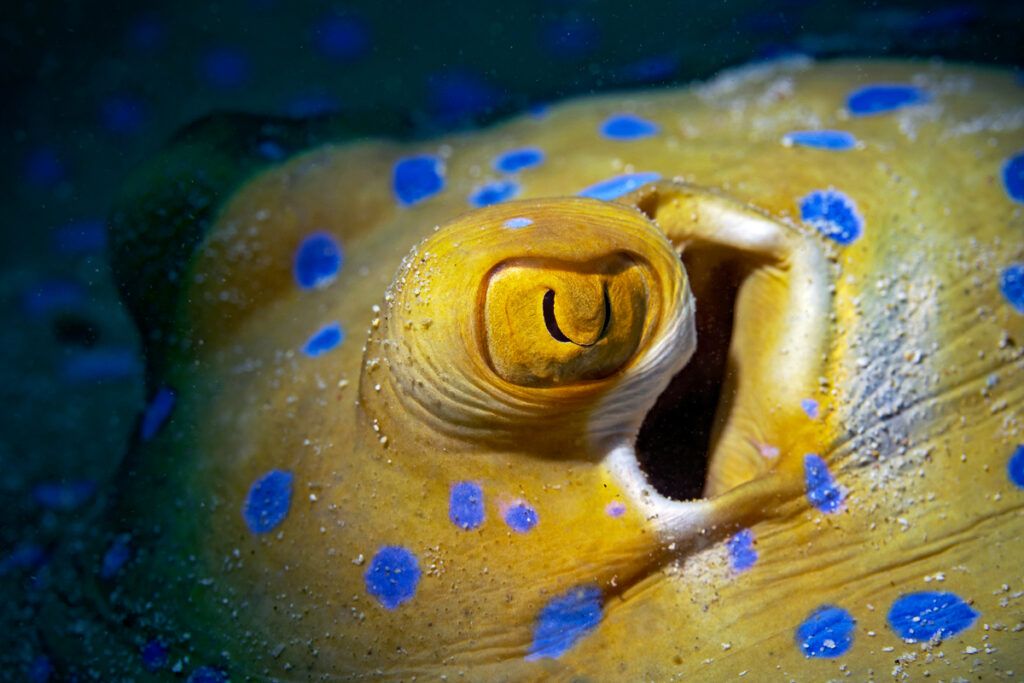
The eyes of the bluespotted ribbontail ray are almost as bizarre as its pancake-shaped body. In low-light conditions, the pupils appear round. But in brighter conditions, the pupil contracts into a distinct crescent shape. The bluespotted ribbontail and other rays are able to change their pupils thanks to a flap called the operculum pupillare, which extends over the pupil as brightness increases.
Biologists believe the crescent-shaped pupils help bottom-dwelling rays navigate the harsh visual conditions of shallow, sandy areas by eliminating light from above, similar to throwing your visor down when driving on a sunny day.
Cuttlefish
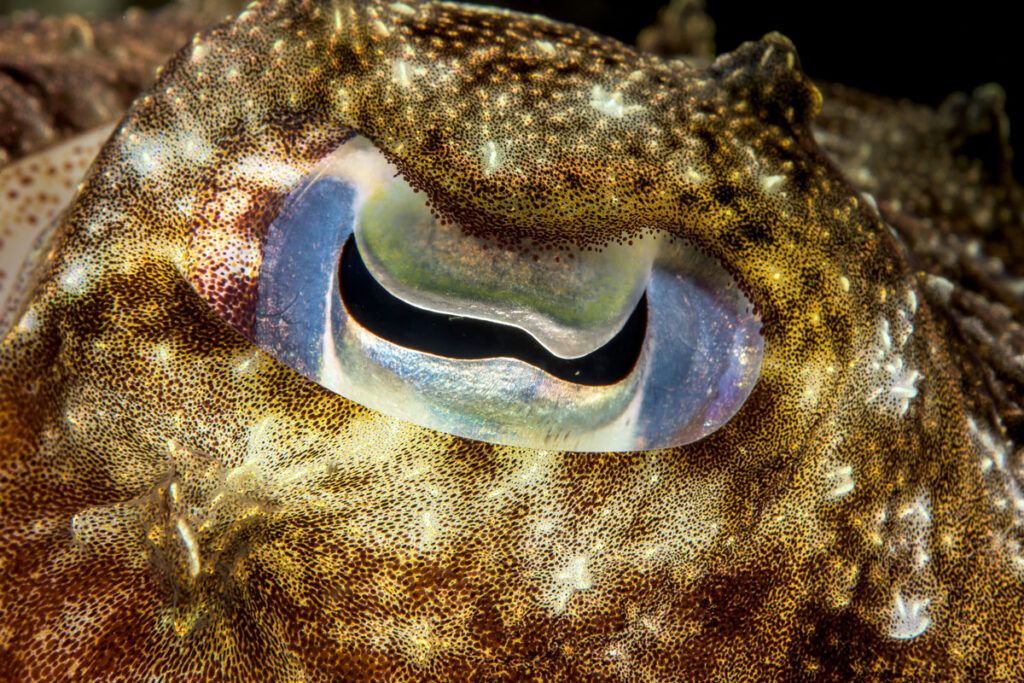
Cuttlefish are highly intelligent, shallow-dwelling members of the cephalopod family. They’re capable of dazzling color displays, but it’s their eyes that really stand out. They don’t have round pupils, nor do they have catlike slits. Instead, cuttlefish have “W”-shaped pupils.
Similar to the crescent-shaped pupils of rays, the “W” shape helps reduce glare from overhead sunlight. This makes it easier for cuttlefish to spot danger equally from above and below — while also giving them some of the most unique-looking eyes in the animal kingdom.