ENGINEERING
What Is the Strongest Shape?
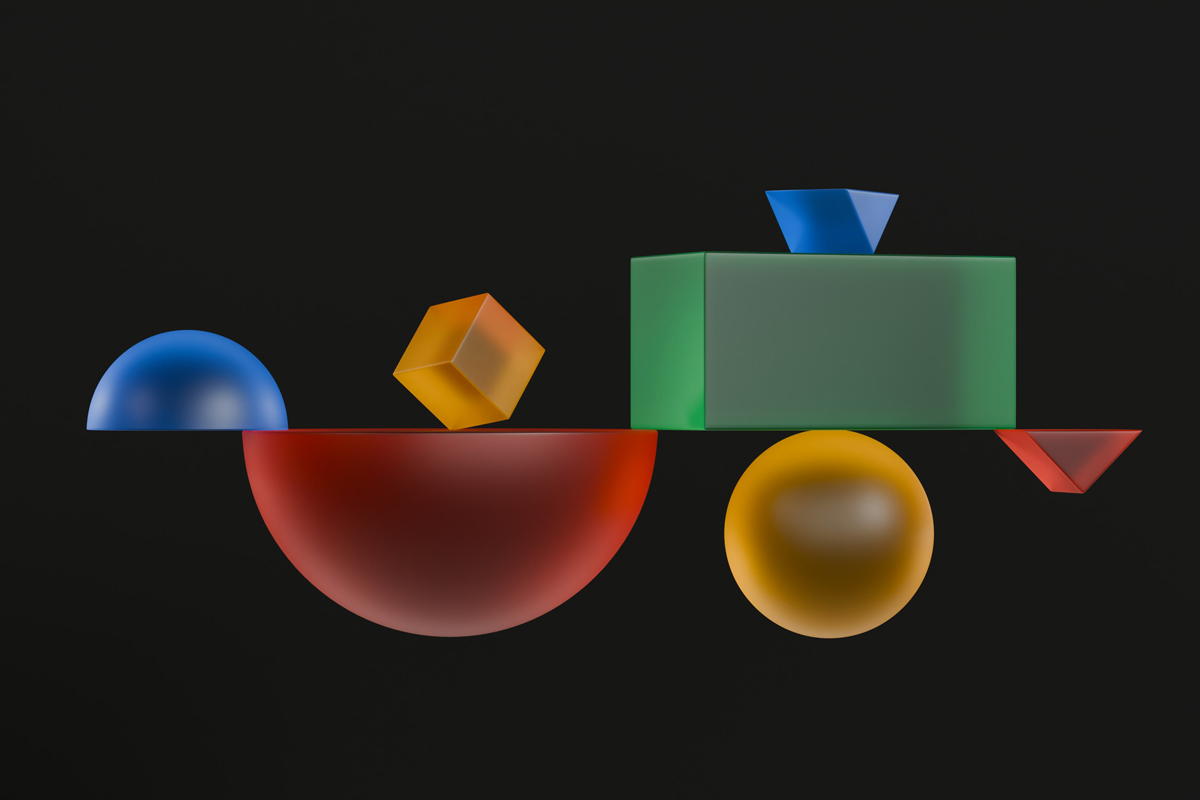

If The Three Little Pigs taught us anything, it’s that in construction, materials and methods matter if you don’t want your house to collapse under a strong wind. But shapes do, too, which is why certain ones are frequently used when building buildings, bridges, tunnels, and other structures.
Some shapes are ideal for distributing weight evenly, while others are better able to withstand external or internal pressures. Some get used in more than one form, such as how you can find circle architecture in domes, spheres, and cylinders. Here are some of the best shapes employed by engineers and what makes them so great for construction.
Triangle
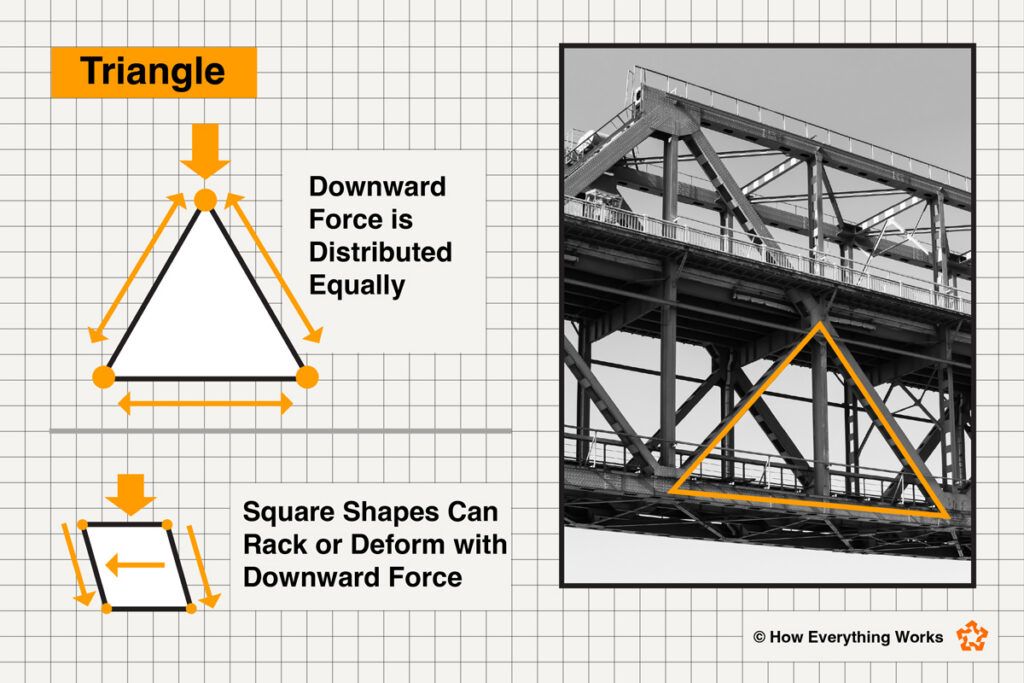
It’s not a coincidence that the pyramids have been around for thousands of years. Triangles are commonly considered the strongest shape, making them a mainstay of supporting structures in architecture and engineering. So what’s a triangle have that a square or rectangle doesn’t?
Imagine a square or rectangular box. Now, imagine pushing on one of its sides. With enough force, the corners will give and the box will flatten. A triangle, however, is structurally rigid, meaning its shape is determined by the length of its sides and can’t change unless one of those sides bends or breaks first.
So when force is applied to a triangle’s joint, the weight, or load, can only be distributed down either side, causing compression (the force is squeezing them together) in the sides and tension in the bottom (the force is pulling it apart).
Because of this, triangles are frequently used in supports. For example, bridges, which have to bear the weight of many vehicles, often rely on triangular trusses. The Eiffel Tower’s legs are built from iron lattices, forming triangles throughout that allow the famous landmark to withstand wind.
However, a triangle is less efficient at enclosing or spanning a large space, since the shape comes to a narrow point — hence why we don’t all live in triangular houses.
Arch
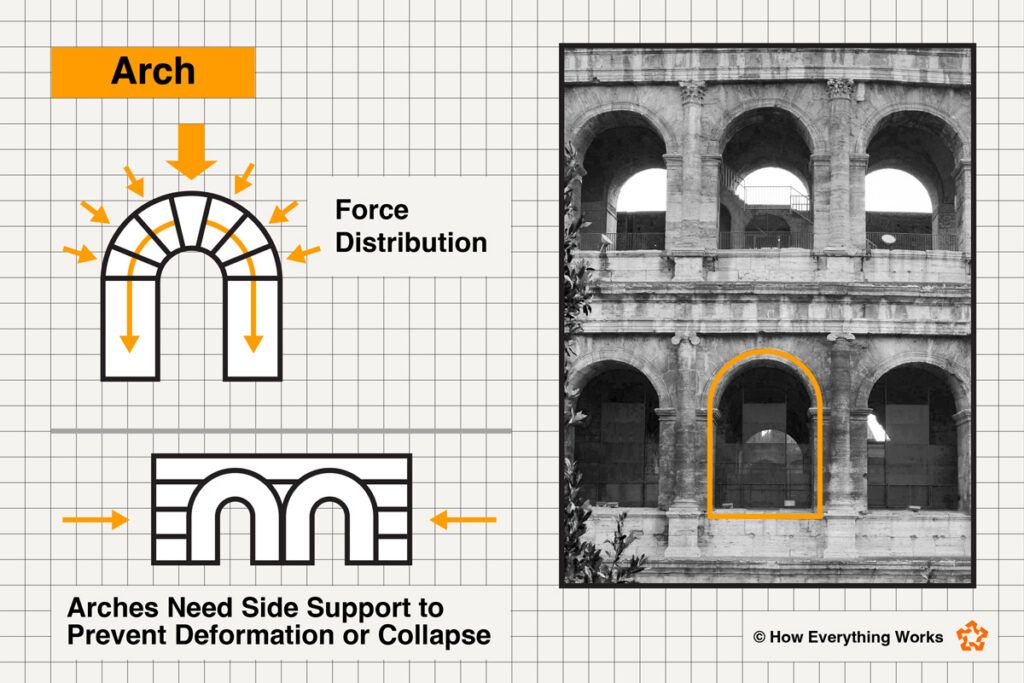
Arches are capable of holding weight through compression, making them one of the strongest (and utilized) shapes in engineering. In an arch, the load pushes down on its highest point, which is the keystone in the middle.
The keystone distributes weight along each side of the arch and down to the ground. Much like the two sides of a triangle squeezing together, the wedge-shaped pieces of the arch, called voussoirs, squeeze into one another, creating a stable structure — sometimes even without glue or anything else holding them together.
For the best support, arches do need supporting walls, buttresses, or a series of connected arches. Without them, an arch will exhibit thrust. This means it pushes outward, eventually spreading its feet and causing the arch to collapse. (Imagine pushing down on two books leaning against one another in an inverted “V” shape.)
In ancient Rome, arches were commonly used in bridges, aqueducts, and even the Colosseum — and some survive to this day. They were often made of stone or brick, a material that resists compression well. Today, you’ll still find them in bridges and architecture, often made of steel and concrete.
Domes, Spheres, and Cylinders
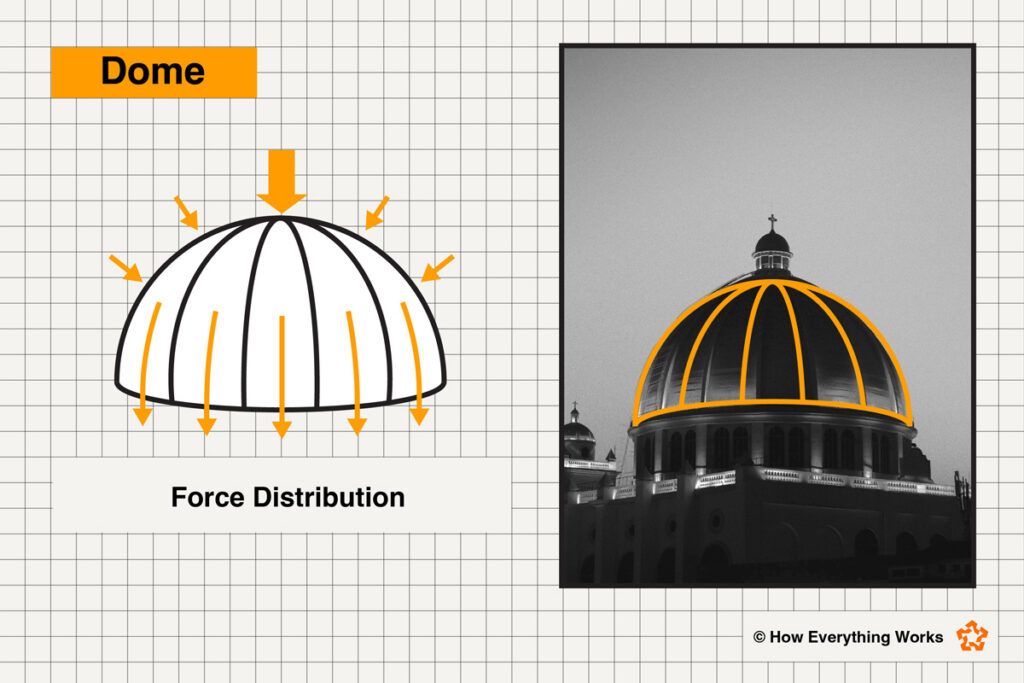
Domes are often used to form ceilings or, in some cases, complete structures. Whether a dome can stand on its own with thin walls or needs support depends on how weight is distributed across its surface. A dome ceiling or roof can spread weight evenly, but because it will exert thrust all around its perimeter, it requires strong supporting walls, much like an arch.
An exception is the geodesic dome, which is made up of triangular or polygonal facets that allow the structure to distribute stress within itself and therefore requires light or no walls.
Like a dome, a sphere has no corners or flat surfaces, meaning it evenly distributes stress across its entire surface. Cylinders have two flat end caps, but no corners. Their curved walls can spread stress evenly around their sides. This makes both shapes especially handy as vessels in high-pressure environments or as containers for high-pressure gases or liquids.
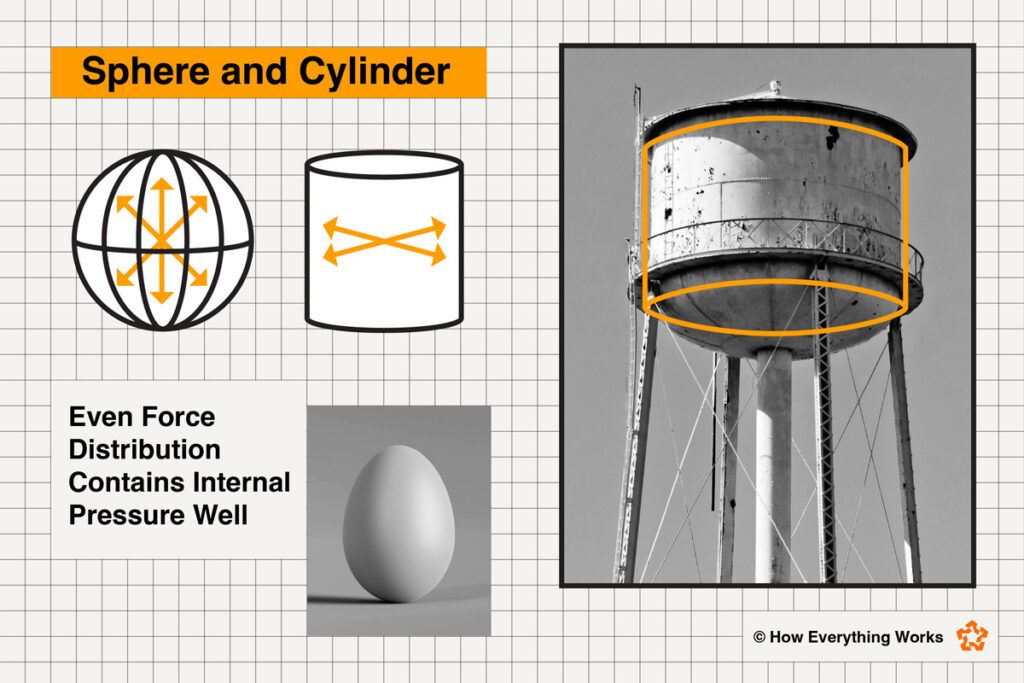
For example, you’ll notice that fire extinguishers and diving tanks, which must hold pressurized air, are cylindrical — not rectangular or triangular. So are propane tanks, in which propane gas is heavily pressurized to the point where it becomes a liquid. Soda cans are another example, holding carbonated beverages under pressure.
In nature, eggs present a similar benefit, but in reverse: Though delicate by our standards, their curved shape allows a mother hen to sit on them without them breaking, as her weight is distributed around the shell instead of concentrated at any point.
What spheres don’t do is stack or pack efficiently, which is why rectangular and square boxes are far more practical as containers for storing everyday items. The shape also makes it harder to use land efficiently (or furnish in the case of circular-shaped rooms), which is partly why most homes and buildings have boxier shapes than round ones.
Hexagon
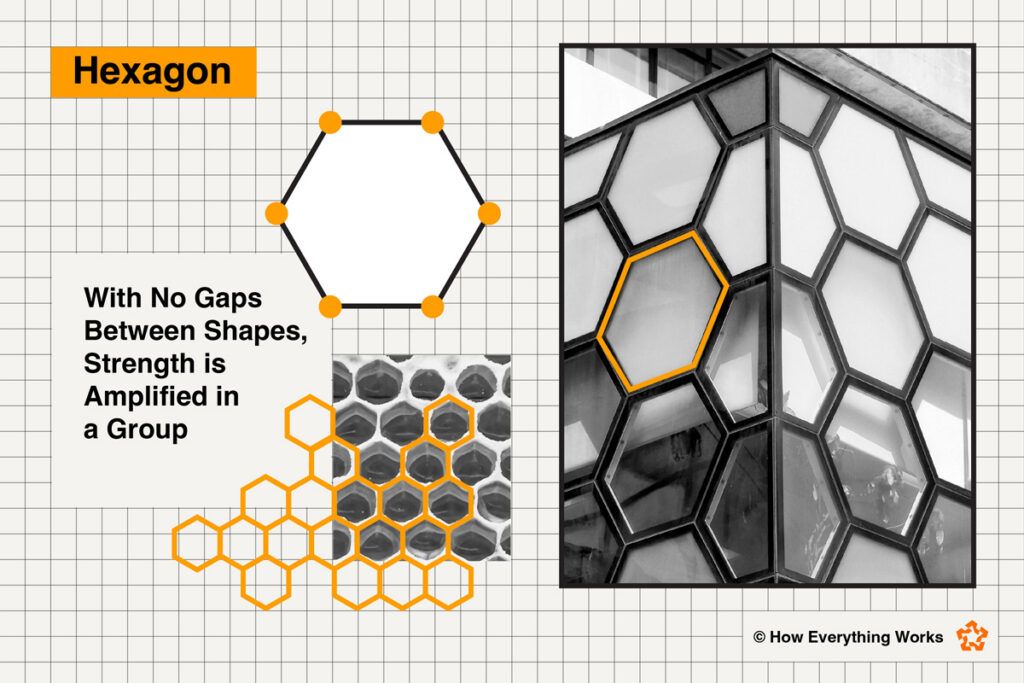
By itself, an equilateral hexagon (a shape with six equal sides), isn’t the strongest shape. It’s not rigid like a triangle, and, unlike a circle, its six corners can still collect pressure.
But what a hexagon does have going for it is the ability to tessellate (arrange together in a repeating pattern) with no gaps in between, while using less material than a square or triangle would when accounting for the same area. If you were laying down new tile over your bathroom floor, you’d need about 7% less grout to connect hexagon tiles than you would for square ones, because the shape has a shorter perimeter (edge) overall.
When tiled hexagons face pressure, they’re able to split that load evenly along all six sides, in every direction. You can see this in nature in a honeycomb. Each hexagon in a honeycomb fits perfectly with its neighbors, creating several equally sized pockets for bees to store honey.
Do bees inherently know hexagons are more compact and require less wax to build, at scale, than any other shape? Probably not. Current theories suggest bees may have evolved to build honeycombs or that it’s a matter of physics. Bees start by building circular cells, which flatten into hexagons as their body heat warms the wax.
Because less material means less weight, we’ve borrowed the bees’ design for lightweight honeycomb composite panels. These get sandwiched between outer panels in spacecraft, aircraft, or other applications where maintaining a low weight is critical, and some geodesic domes employ a mix of hexagonal and triangular panels.
This goes to show that engineers don’t always reach for whichever shape is strongest. Other qualities — including weight, stackability, and practicality — also play important roles in the structures we build.