SCIENCE
Does Fossil Fuel Really Come From Dinosaurs?
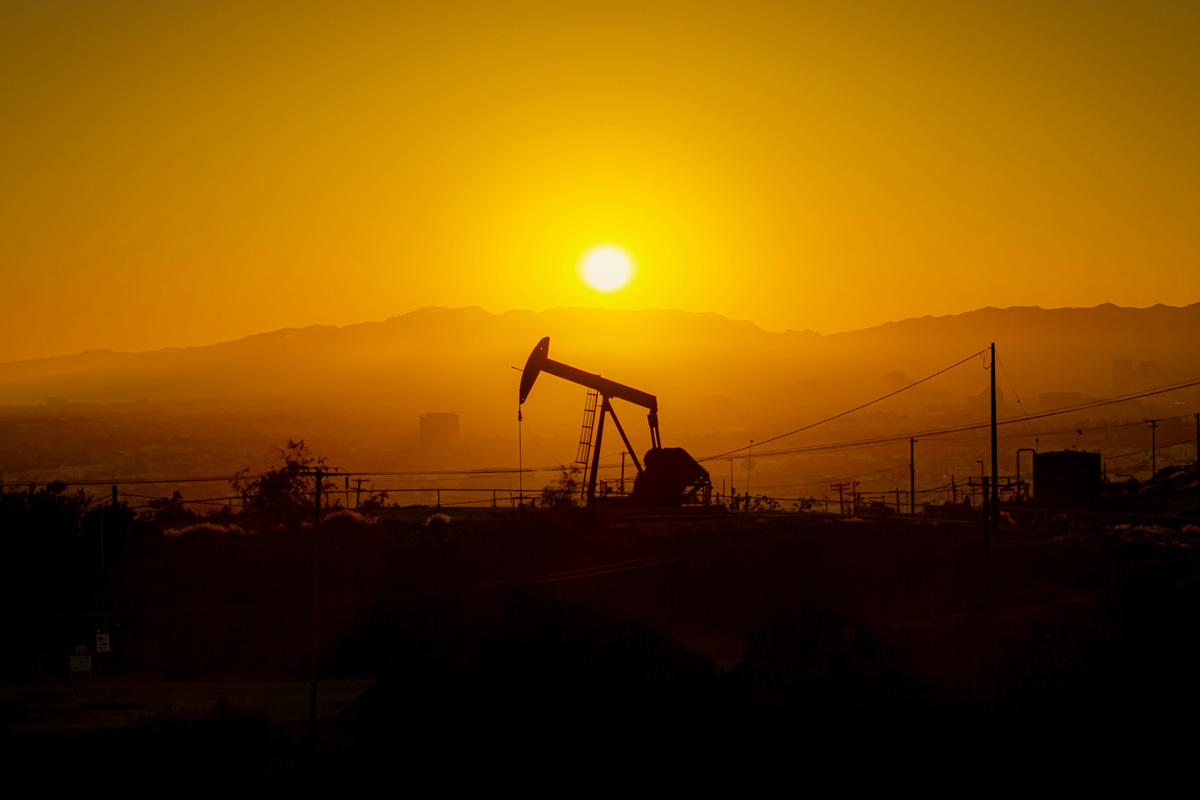

The term “fossil fuel” might have you picturing the remains of a T. rex or Brachiosaurus decomposing into the unleaded you pump into your car. But, the process doesn’t generally involve the kinds of fossils found in museums. No dinosaurs were harmed in the making of your gasoline (probably).
In fact, most of the fuel that powers our modern civilization doesn’t come from animals at all. Fossil fuel is technically solar power, because it originates with the sun. Here’s how.
What Lies Beneath

Fossil fuels (coal, oil, and natural gas) generally aren’t made from fossils, at least not in the usual sense of preserved bones or shells or traces in rock. Instead, they’re formed primarily from the remains of ancient plants, algae, bacteria, and plankton.
These organisms had something valuable in common: They captured energy from sunlight. Through photosynthesis, they used that solar energy to turn carbon dioxide and water into carbon-rich organic matter that became the basis of modern fuels.
Normally, when an organism dies, decomposers break down that material, returning much of its carbon to the atmosphere. But under certain conditions, some carbon-rich remains escape that fate.
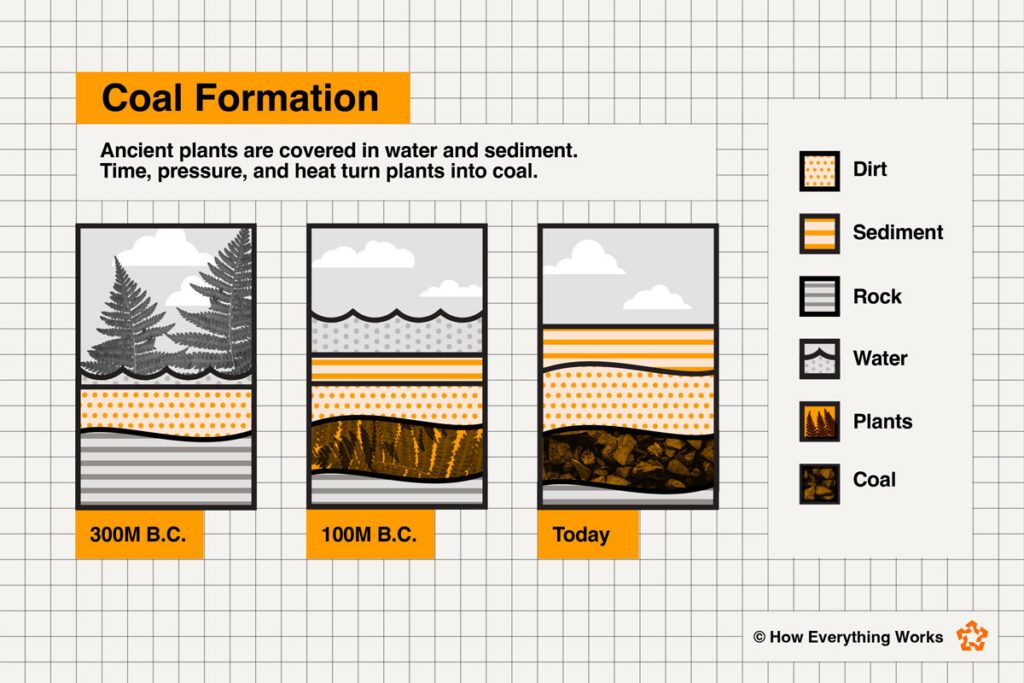
Coal began forming largely from plants that died in ancient bogs and swamps. Waterlogged, oxygen-poor conditions slowed decomposition, allowing layers of partially decayed vegetation to accumulate as peat. As sediment piled on top, the peat was buried more deeply.
Increasing heat and pressure (think of all that rock crushing the sediment from above) gradually squeezed out water and other substances, concentrating the carbon and transforming the peat into coal.
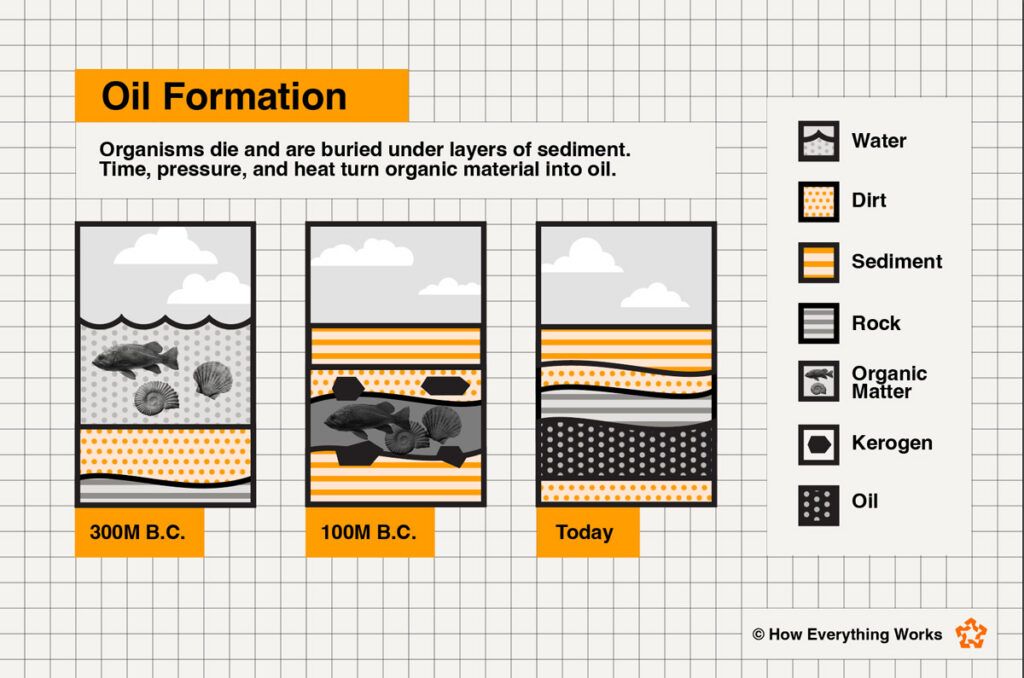
Oil and natural gas followed a different route. Much of their raw material came from tiny marine organisms such as plankton, which died and sank to the bottoms of ancient oceans. Buried beneath layers of mud and sediment, the remains were cut off from oxygen and partly broken down by microbes. Over time, chemical reactions turned this material into a waxy substance called kerogen.
Burial over the eons pushed the kerogen deeper into Earth, where rising heat and pressure continued to alter its molecules. Under the right conditions, kerogen became liquid hydrocarbons — crude oil (also called petroleum). At even higher temperatures, it produced smaller, lighter hydrocarbons, including methane, the main component of natural gas.
Carbon and hydrogen are particularly potent together, as their atoms form tight chemical bonds with one another. These bonds contain high amounts of chemical potential energy, which is why hydrocarbons make such a potent fuel source. When coal, oil, or gas burns, its hydrocarbons react with oxygen, releasing the potential energy as heat. That ancient energy, which originally came from the sun, can then warm a house, power a car, or spin turbines to generate electricity.
How Much Oil Is There?
Oil and gas don’t necessarily remain where they form. Because they are less dense than the surrounding rock and water, they can seep upward through tiny pores and cracks. When they encounter an impermeable layer of rock, however, they become trapped beneath it and accumulate in underground reservoirs. Drilling into one of these reservoirs releases material that may have been confined there for millions of years.
It’s estimated that no more than 6 trillion barrels of oil (a barrel is 42 gallons) currently reside somewhere in the ground. That supply is called the “oil in place,” but only about a quarter of that is considered to be part of the world’s “proven reserves,” which are the fossil fuels that we are at least 90% confident we can actually mine and use.
In 2024, the world used roughly 100 million barrels per day. At that rate, we’d consume the 1.7 trillion-barrel supply of proven oil reserves in less than 60 years, sometime in the early 2080s. Commercial oil drilling began in the 1850s, which means that modern civilization will have burned through Earth’s entire supply of usable fossil fuel, which took hundreds of millions of years to form, in less than 250 years.
Fortunately, we don’t have to sit around in the dark for millions of years waiting for new fossil fuel. The original source of energy that gave oil its kick in the first place — the sun — is readily available and isn’t going anywhere anytime soon.
Fossil fuels come from the remains of ancient plants, algae, bacteria, and plankton buried in oxygen-poor environments. Over millions of years, these remains are transformed by heat and pressure into coal, oil, or natural gas. Burning these fuels, known as hydrocarbons, releases energy stored in the bonds between their hydrogen and carbon atoms, which originated from the sun.
Short Answer