HEALTH
Why Do Doctors Shock the Heart?
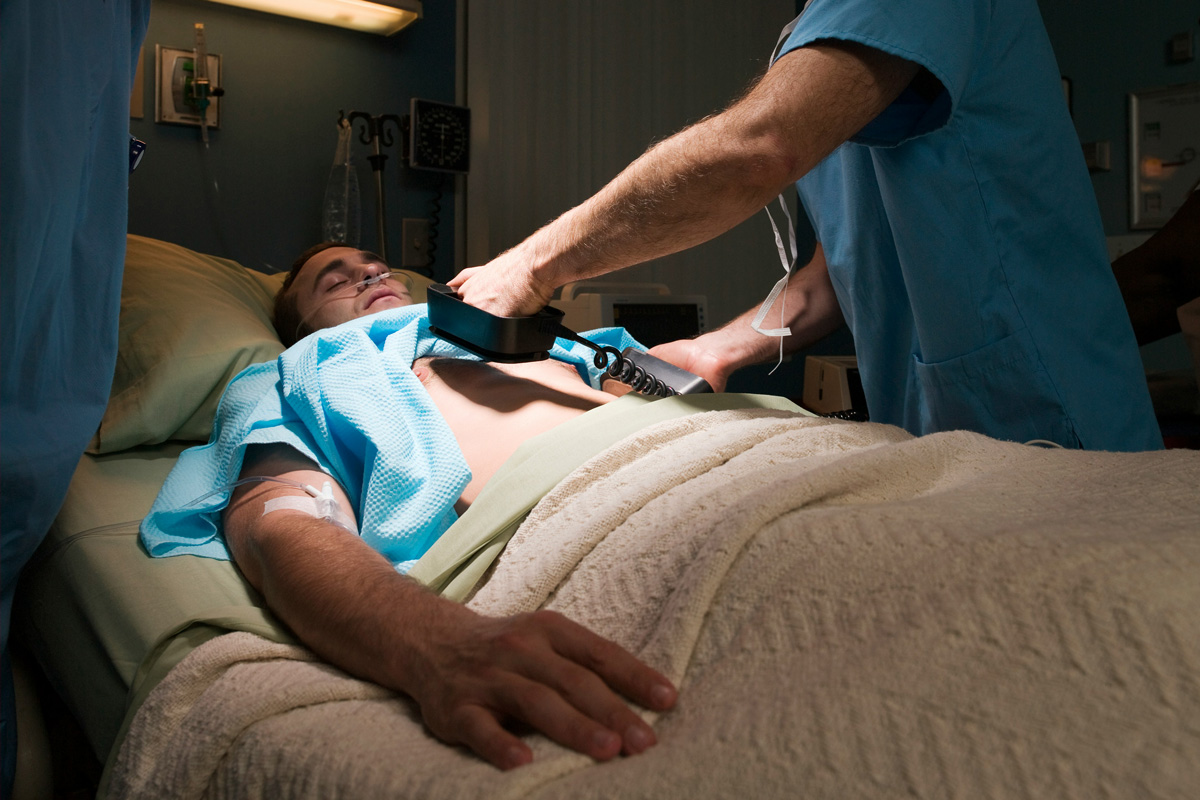

You’ve probably seen the scene in a medical drama: A patient’s heart monitor flatlines, a doctor presses two paddles against their chest, someone shouts “Clear!”, and a jolt of electricity makes the patient’s body jump. A moment later, the monitor begins beeping normally again.
The real-life procedure, called defibrillation, is less theatrical. And — despite the way it’s depicted on television — doctors don’t actually shock a flatlining heart. Instead, thanks to the unusual way the heart keeps its own beat, electricity can save the day another way.
And the Beat Goes On
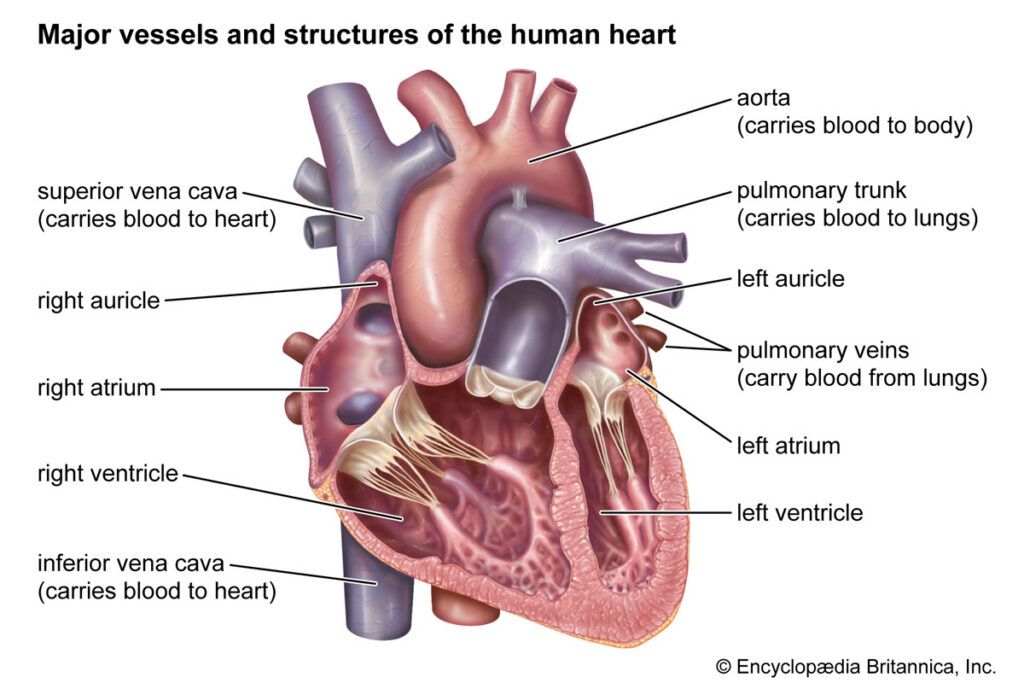
Though we aren’t robots, we do, believe it or not, run on electricity. Each heartbeat begins with an electrical signal created by a group of cells in your heart’s sinoatrial, or SA, node. Often called the heart’s natural pacemaker, the SA node sends the signal through the heart’s upper chambers and then down into its lower chambers, prompting them to contract in an orderly sequence.
This coordination allows your heart to fill with blood before pumping it throughout the body. At least, this is how it normally works. Sometimes, that orderly electrical system is thrown into chaos by an irregular or abnormal heartbeat, known as an arrhythmia. That’s when the heart is beating too fast, too slowly, or too erratically.
Imagine a rowing crew pulling their oars in rhythm, propelling their boat forward with a single unified stroke. Without a coxswain coordinating the team by yelling “Stroke!” with each beat, rowers would pull their oars at different times, banging into one another and dragging to the point that the boat stalls in the water.
The electrical signal guiding different chambers of the heart is like the coxswain, and if its rhythm becomes irregular, you can get a type of arrhythmia known as ventricular fibrillation (V-Fib). The disorganized signals race through the heart’s lower chambers, called ventricles, causing different groups of muscle cells to contract at different times.
Instead of producing a strong, coordinated squeeze, the lower two chambers, known as ventricles, merely quiver and can’t pump blood effectively. Just like a boat when its rowers aren’t in sync, the heart stalls out. Cardiac arrest occurs, a serious emergency in which the brain and other organs are rapidly deprived of oxygen.
Intervention as soon as possible is key to saving a life in this situation. A defibrillator is designed to stop the electrical free-for-all. The device stores energy in a component called a capacitor and then rapidly releases it through electrodes placed on the chest.
The current passes through the heart and causes a large number of its muscle cells to depolarize — essentially, to activate — at the same moment. Afterward, those cells enter a brief recovery period in which they cannot immediately fire again.
This synchronized pause interrupts the chaotic signals. If the shock succeeds, the SA node or another natural pacemaker can resume control and establish an organized rhythm in the heart. In that sense, defibrillation is less like jump-starting a car and more like yelling “Quiet!” to silence a room full of people who are all shouting at once, giving one designated speaker the chance to be heard again.
You Can’t Shock a Flatlining Heart
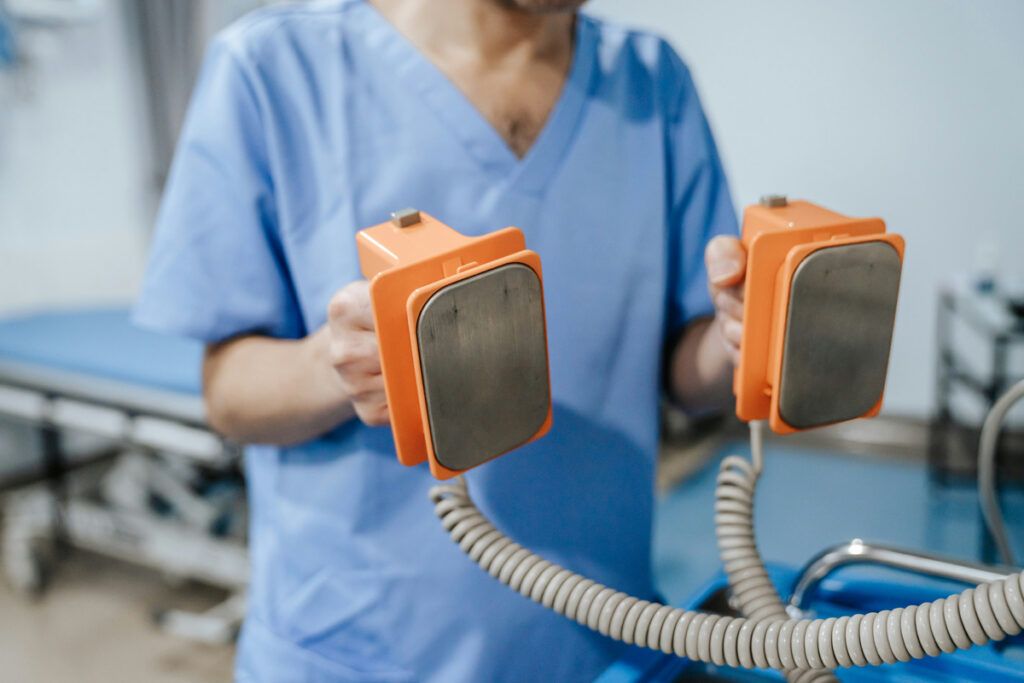
The “Clear!” signal is to ensure nobody is touching the patient and gets accidentally shocked, since electricity can travel from one person to another. The charge delivered by a defibrillator is carefully controlled, but there is no single perfect dose for every person.
An automated external defibrillator (AED) is programmed to use set energy levels, and it can increase the energy if another shock is needed. But defibrillators can’t correct every cardiac emergency.
During V-Fib, the most common cause of cardiac arrest, electricity is still traveling through the heart, even if it’s doing so irregularly. A flatline, medically known as asystole, is different: It means the heart has no detectable electrical activity whatsoever.
Because there is no chaotic rhythm to reset, shocking it will not help, just as flipping your circuit breakers won’t turn the lights back on if there’s no electricity coming into your home. If a patient is flatlining, CPR can temporarily move blood through the body while medical professionals use medications, such as epinephrine, to try and treat whatever has caused the cardiac arrest.
Even then, fewer than 11% of patients who completely flatline at the hospital ultimately survive (and only 2.3% of those who flatline elsewhere make it). Defibrillation, on the other hand, has survival rates as high as 50-70% when administered immediately to a patient who still has a heartbeat that can be shocked back into rhythm.
So the next time you’re watching a medical drama and see someone yelling “Clear!” while a patient is flatlining, you can let everyone in the room know that the doctor has no idea what they’re doing.
When the electrical signals that coordinate the pumping of the heart become irregular and chaotic, cardiac arrest occurs. A defibrillator delivers a controlled electrical shock that overwhelms and interrupts the erratic signals. That brief pause may allow the heart to reset and restore a coordinated rhythm. Contrary to what’s seen on TV, shocking the heart will not work if no electrical signals are present (flatlining).
Short Answer