HEALTH
The 4 Types of Human Teeth — and What They’re For
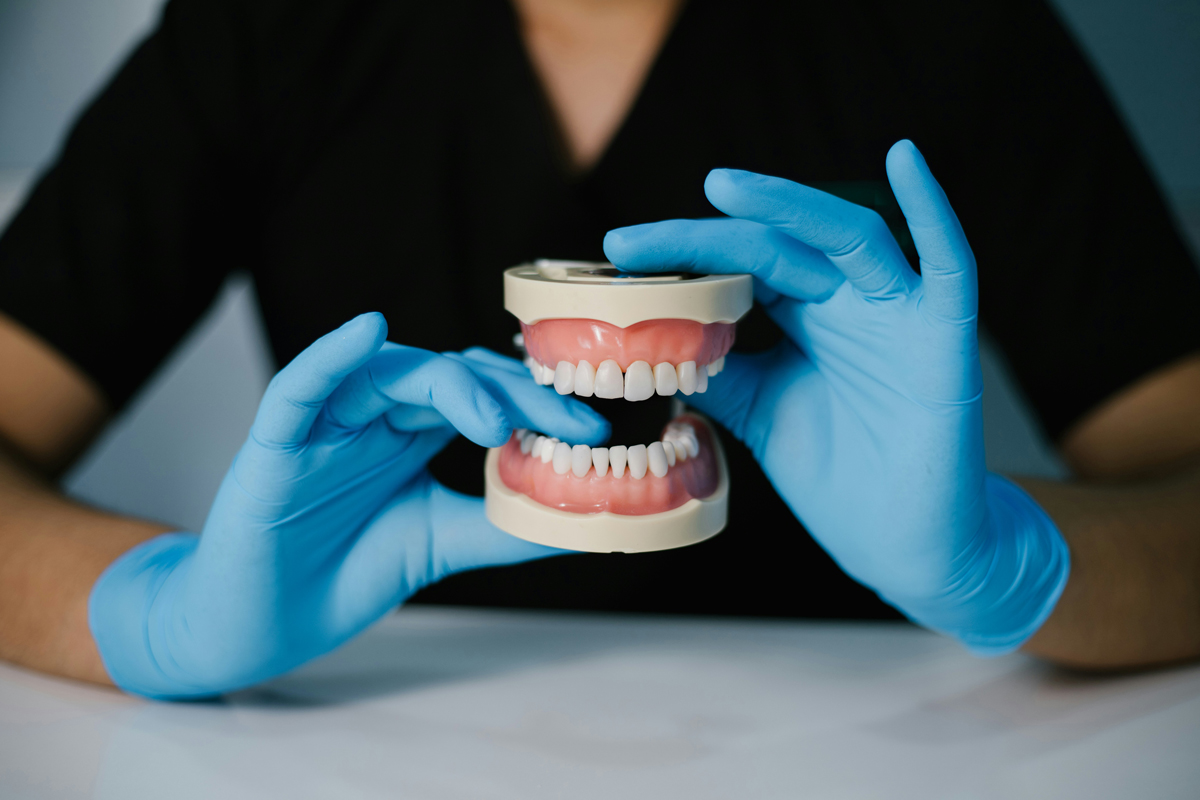

A distinct feature of a typical skeleton is its permanent, pearly smile — with everything else stripped away, teeth look indistinguishable from bone. But human teeth aren’t bone.
They have a different composition, made from enamel, dentin, and pulp, which allow them to be extra robust. The downside to that is they can’t heal like a broken bone, and we can’t regrow them, meaning once they’re gone, they’re gone.
So let’s appreciate these 32 individual teeth, as they’re the only ones you’re ever going to get. Each has its own role to play — there are four main types that serve a particular purpose when it comes to chewing and eating, and some are even crucial for human speech. Here’s a closer look at what our different types of teeth are for.
Incisors
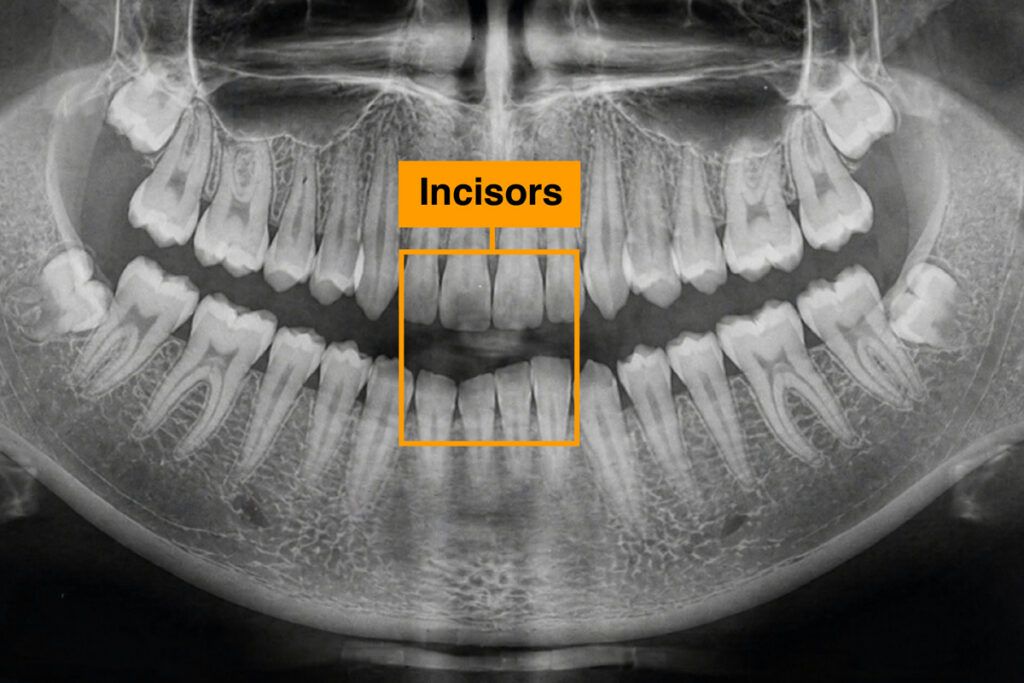
The front eight teeth are arguably the most important ones, known as incisors. With four located on the upper (maxillary) jaw and four on the bottom (mandibular) jaw, the primary function of incisors is to cut and tear into food.
Picture taking a big bite out of an apple. Now imagine trying to eat one without your incisors. It’s pretty much impossible, right? Incisors are shaped like wedges, which make them perfect for biting into food before offloading some of the tearing and grinding to the other teeth.
Unlike most of our other teeth, incisors also play a huge role in human speech, and are absolutely vital for forming sounds such as “th,” “v,” “f,” “s,” and “z.” Try saying the sentence “thinking of very fun zebras” without your front teeth touching your tongue or lips. Yeah, not easy.
Canines
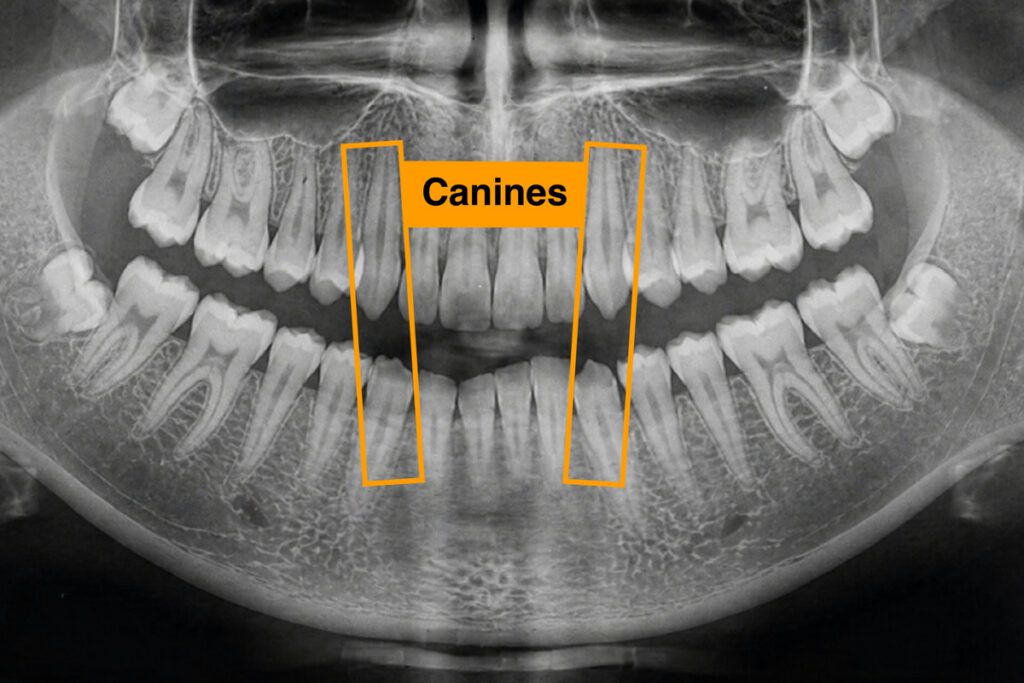
The four canines, also known as cuspids (“cusp” refers to the peak-like biting surface), are the most visually distinct of all human teeth. There’s just one in each section of your mouth — top left, top right, bottom left, and bottom right. As their name suggests, these teeth have a sharp, fang-like appearance similar to that of wolves and dogs (and vampires, though bats aren’t canines). The shape makes them perfect for gripping and tearing into tough food, including meat.
However, compared to the teeth of other carnivores, human canines aren’t particularly adept at the job, and scientists actually theorize that they’re partly an evolutionary leftover from our past. Like other primates, we may have originally employed our teeth for displays of dominance or even as handy weapons in a pinch. But over millions of years, humans (and other species of hominins) evolved smaller teeth, including canines, as we increasingly used tools to cut and tear our food for us.
Molars
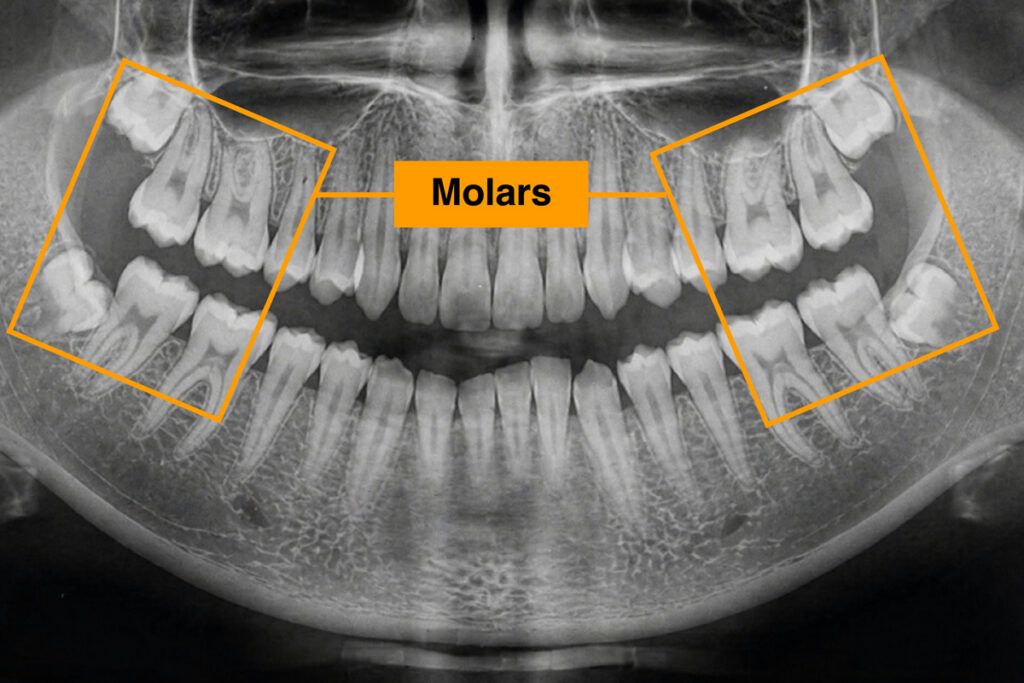
Molars’ primary role is providing a grinding surface for food to be mashed into tiny bits before swallowing. These teeth are farthest back in your mouth, so you can see why you wouldn’t use them to tear food but instead crush and grind it.
Most adults swallow food measuring roughly 2-4 millimeters on average, so those molars need to get to work ensuring food bits can safely pass through your throat without getting stuck. To handle the hard work of all that biting pressure, molars have more roots than your front teeth, which help anchor them firmly in the jawbone.
Molars are the largest group of teeth in number — most adults have 12, so they make up more than a third of all your teeth. However, four of them — known as wisdom teeth — are often surgically removed, leaving adults with just 28 teeth total.
The reason for this peculiar rite-of-passage dentistry is that our biology hasn’t caught up with our evolved diet, making wisdom teeth vestigial structures (no longer necessary) similar to your appendix or tailbone. As modern humans eat more soft, cooked food, the size of our mouths has decreased and we simply don’t need so many teeth anymore.
Wisdom teeth are the third set of molars and the last to grow, so when they do finally arrive, they often find that there’s no room — not much different than trying to squeeze onto a packed train during rush hour. To avoid overcrowding, around 85% of adults have their wisdom teeth removed at some point.
Premolars, aka Bicuspids
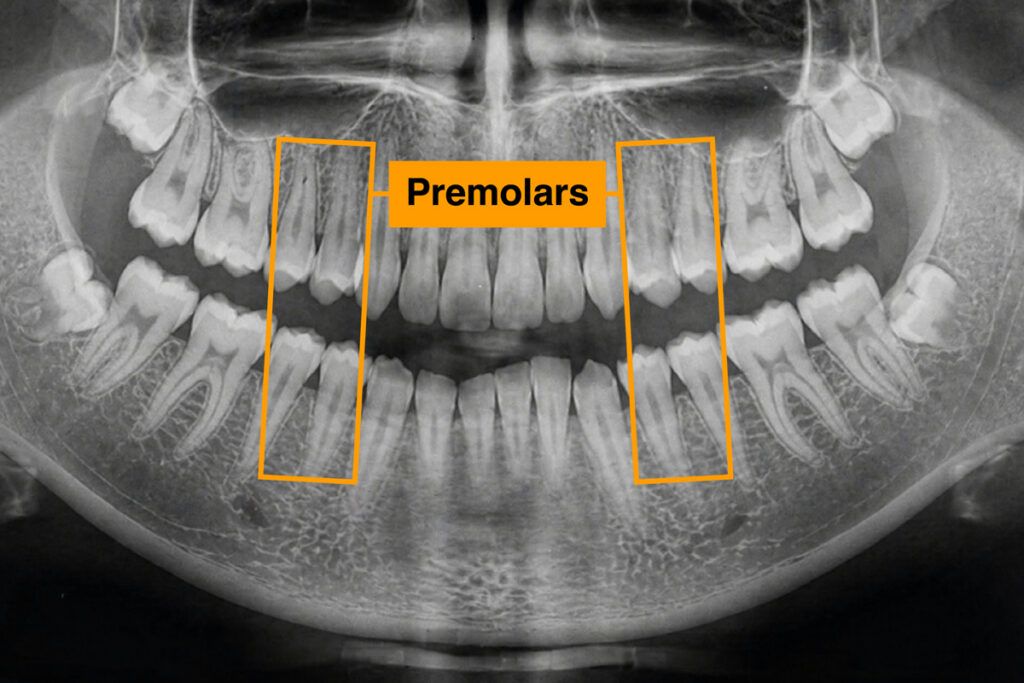
A pair of premolars sits between each set of canines and molars, for a total of eight. With their transitional position in the mouth, premolars move food from the biting and tearing teeth toward mashing and grinding ones, as if what you’re eating is moving down an assembly line toward the back of your throat and into your stomach.
Another name for these teeth is bicuspids, meaning “two peaks,” but premolars could just as easily be called post-canines because they possess features of both types. They’re flat like molars but feature two sharp points that continue the tearing work of the canines.
Baby Teeth
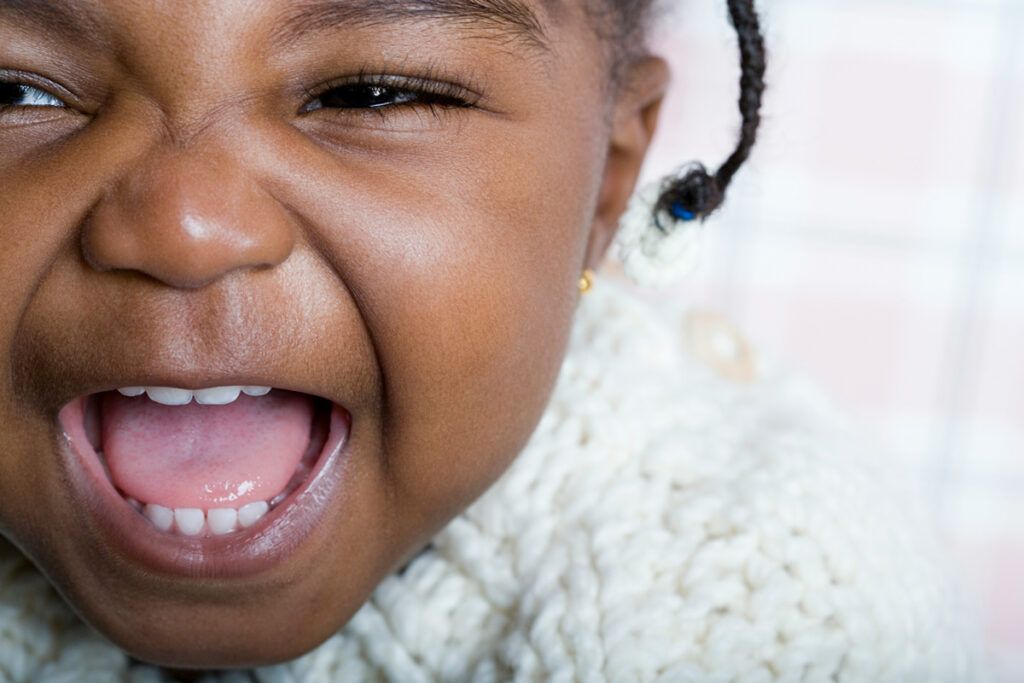
The adult mouth contains four primary teeth groups, but we can’t forget our first set of chompers — baby teeth, otherwise known as deciduous or primary teeth.
Because the mouth of a toddler doesn’t hold enough space for all 32 teeth, these 20 primary teeth sort of act as “reserved” signs at a theater, saving space in the mouth for when those permanent teeth are ready to emerge. As with adult teeth, baby teeth also help children learn to speak, serving the same structural role for forming the basic phonetics that make up language.
Given such an important role baby teeth play in our development, we might need to up the Tooth Fairy’s asking price.