SCIENCE
Why Does the Moon Look Bigger on the Horizon?
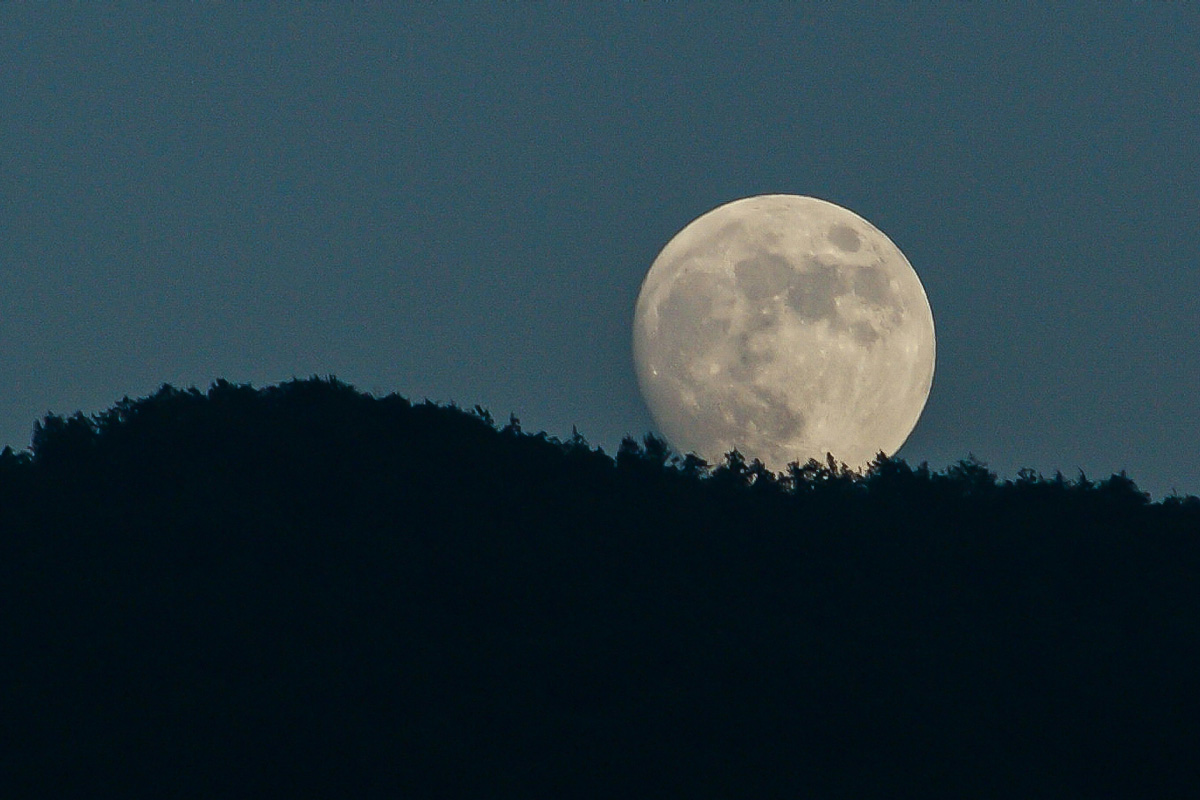

A full moon rising over a mountain or peeking between buildings can look enormous — big enough to make you stop and stare, mouth agape. But a few hours later, that same moon looks much smaller as it hangs high in the sky.
What’s going on here? Is the moon actually closer to us when it first rises? Is it a trick of the light — or, as Aristotle thought more than 2,000 years ago, of the mist? As it turns out, the answer has nothing to do with Earth’s lunar companion itself. Instead, it involves an even more impressive item in the known universe: the human brain.
Sizing Up the Moon
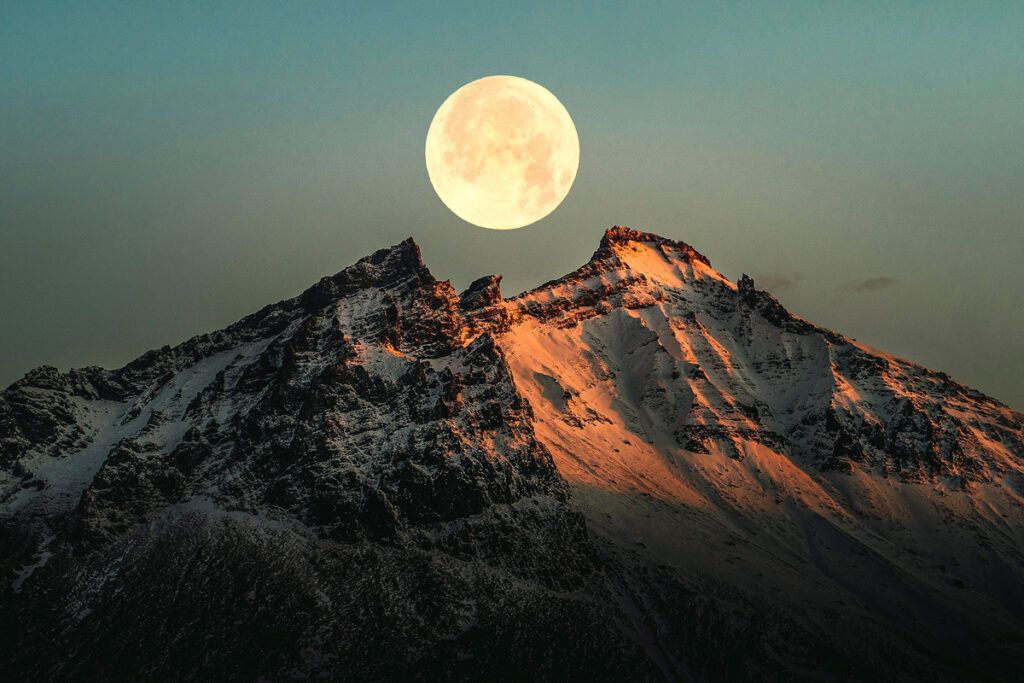
The phenomenon of the moon looking so swollen on the horizon and smaller later on has its own name: It’s called the moon illusion. It’s an illusion because the moon hasn’t changed size in our night sky at all.
You can test this with a camera: Photograph the moon near the horizon, then again when it’s higher in the sky, keeping the zoom settings the same, and its width will be essentially unchanged in both pictures. The moon hasn’t ballooned and shrunk; rather, the way you see it has changed.
Though Earth’s atmosphere is sometimes suggested as the cause of the illusion, acting as some kind of magnifying glass, it’s not to blame. In fact, atmospheric refraction — the bending of light as it passes through air — can actually squash the moon’s appearance slightly.
Nor is the rising moon actually physically closer to you. Compared with a moon directly overhead, it’s actually about 1.5% farther away, thanks to Earth’s curvature. Instead, the moon illusion arises from how our brain processes visual information. But believe it or not, even after considering the question since antiquity, we don’t actually know exactly how this illusion trips up the brain.

One leading explanation involves the relationship between size and distance. Ordinarily, an object takes up less of your field of view as it moves away. Yet you don’t think a friend walking down the street is physically shrinking. Your visual system uses distance cues to help you recognize that your friend remains the same size.
That useful adjustment may go awry with the moon. According to the apparent-distance theory, cues in the landscape lead your visual system to treat the horizon moon as farther away than the elevated moon. Because it still occupies essentially the same angle in your field of view, you perceive it as larger.
A similar effect occurs in the Ponzo illusion. Picture railroad tracks converging in the distance — the tie beams that horizontally cross the tracks are all the same size, but each one appears smaller than the last as the tracks recede into the distance. If you draw two identical horizontal bars across or beside the tracks, the bar nearer the vanishing point will look longer, because your brain assumes something that looks the same size but is farther away must be larger.
Similarly, familiar objects near the horizon such as trees and buildings trigger your brain to see the moon as larger because you intuitively know it’s nowhere near the same size as they are. When it’s alone higher in the sky, with nothing to compare it to, it “shrinks” back down to its “normal” size.

A 2000 study using artificial moons superimposed on views of the landscape and sky supports this theory. But the case isn’t closed. Other researchers have challenged the distance explanation, pointing to experiments in darkness and possible effects of how our eyes focus and align. NASA also notes that astronauts in orbit experience the illusion, without any foreground trees or buildings. There’s still no universally accepted explanation.
Meanwhile, you can catch your own visual system in the act. Besides comparing photographs, try looking through a paper tube at the moon, blocking the surrounding view. The moon may suddenly look less grand.
Then again, there’s really no reason to ruin the illusion — a giant moon on the horizon is a striking sight to behold, whether it’s real or not.
The moon looks bigger near the horizon because of a perceptual illusion, though scientists haven’t settled on precisely how it works. One theory is that it’s related to the way your visual system interprets size and distance, with objects on the horizon — such as trees and buildings — distorting your sense of how far away the moon is. Your brain compensates by making the moon appear larger than it does when it’s alone and higher in the sky.
Short Answer