NATURE
How Can Parrots Talk?
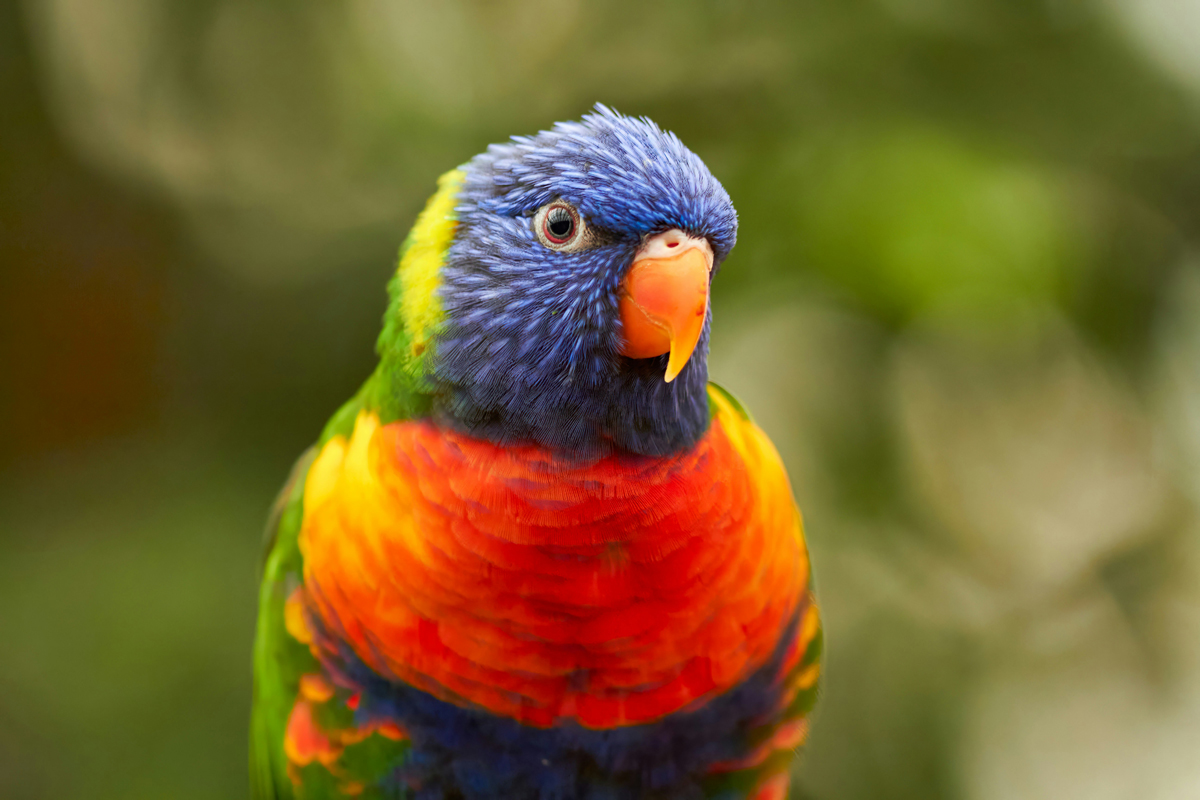

Who can resist approaching a parrot and saying, “Polly, want a cracker?” Humanity has been fascinated by these chatty birds for millennia — the earliest evidence of captive parrots dates to a 5,000-year-old cave painting in Brazil. These colorful avians come in a variety of shapes, sizes, and shades, but we relate to them because they seem to relate to us through our own language.
But why are parrots able to talk while our closest relatives, gorillas and chimps, are relegated to sign language? Because these birds are not so bird-brained.
Birds of a Feather Talk Together
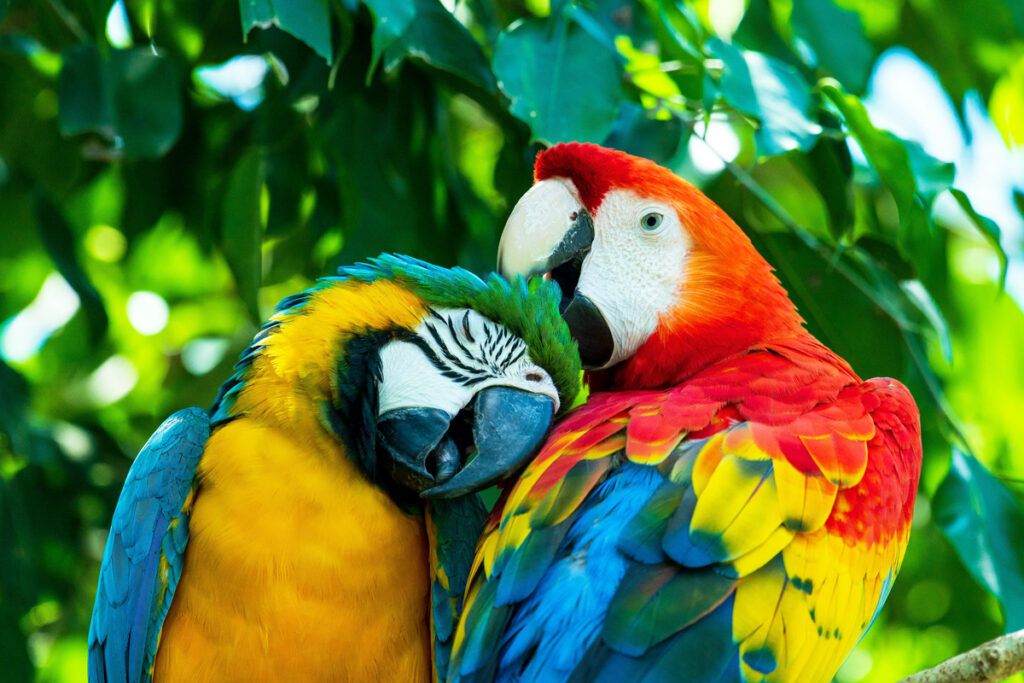
Parrots’ knack for communication stems from their highly social nature. Wild parrots live in flocks, where they use a complex system of vocalizations to coordinate flight, find food, and warn each other about danger. By using unique brain nuclei dedicated to advanced vocal learning, chicks learn to communicate in the nest by imitating mom and dad — just as human babies do.
Some researchers suggest that certain parrot species use “signature contact calls” to identify each other, in the way that humans use names. This may have evolved because most species are monogamous. You know the story. Two parrots meet. Fall in love. Raise a couple of chicks together.
But unlike many of their human counterparts, parrots mate for life. And given the fact that parrots are long-lived — some species reach their 50s and beyond — it’s no wonder that parrot couples tend to develop a shorthand by mimicking each other, just like spouses who seem to invent a shared language. And this naturally evolved skill seems to have translated from the wild to captivity.
Pet parrots mimic their owners to bond with them. But how does an animal with no lips and a rigid beak exclaim, “What’s up, Doc?” when you walk into the room? Parrots (and other birds that mimic humans, such as certain corvids, starlings, and mynahs) seem to defy anatomical physics with their linguistic talents. Our closest monkey relatives likely possess the physical physiology to speak human language, but lack the brain power to do so (don’t tell King Louie).
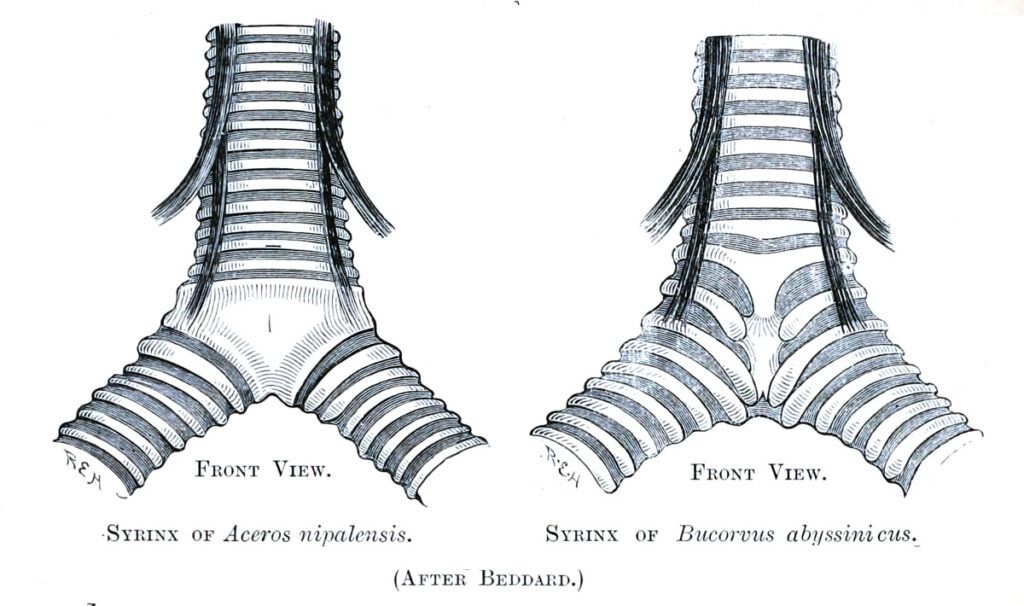
The avian talent for mimicry is enabled by a special organ called the syrinx, which is similar to the human larynx. The syrinx is a highly effective voice box that allows birds to make a wide variety of sounds, from singing to quacking, screeching, and trilling. Couple that syrinx with a bird’s advanced vocal learning abilities, and the next thing you know, Polly’s barking like a dog to taunt your cat.
Of all the birds that can mimic human speech, parrots are best at it thanks to their unique intelligence. They possess a highly developed region called the medial spiriform nucleus, which may act as a superhighway between the cortex and cerebellum. This pathway is similar to the pontine nuclei, a neural circuit in primates related to motor skills and intelligence.
Parrots are as brilliant as they are beautiful (have you ever seen a Rainbow Lorikeet?), but do they actually know what they’re saying? Historically, scientists have said no. But one particularly intelligent African grey named Alex could associate words with objects and other concepts.
Alex (short for “avian language experiment”) understood more than 100 words, could count to six, and was able to use simple adjectives such as colors and “smaller” or “bigger” to describe things.
So if you ask Polly if they want a cracker and they say yes, you better have some crackers on you!
Parrots are able to talk because they possess advanced vocal learning abilities evolved in the wild to mimic each other for bonding and communication. They are able to form human words thanks to the syrinx, a specialized voice box that allows birds to make a wide variety of sounds. The science is still out on just how much parrots understand what they are saying, though.
Short Answer