HEALTH
Why Do Astronauts Get Taller in Space?

There’s a myth that suggests hanging from a bar can make you taller by decompressing your spine. While there are many benefits to this “dead hang” exercise, including improved posture and grip strength, any height gains are temporary.
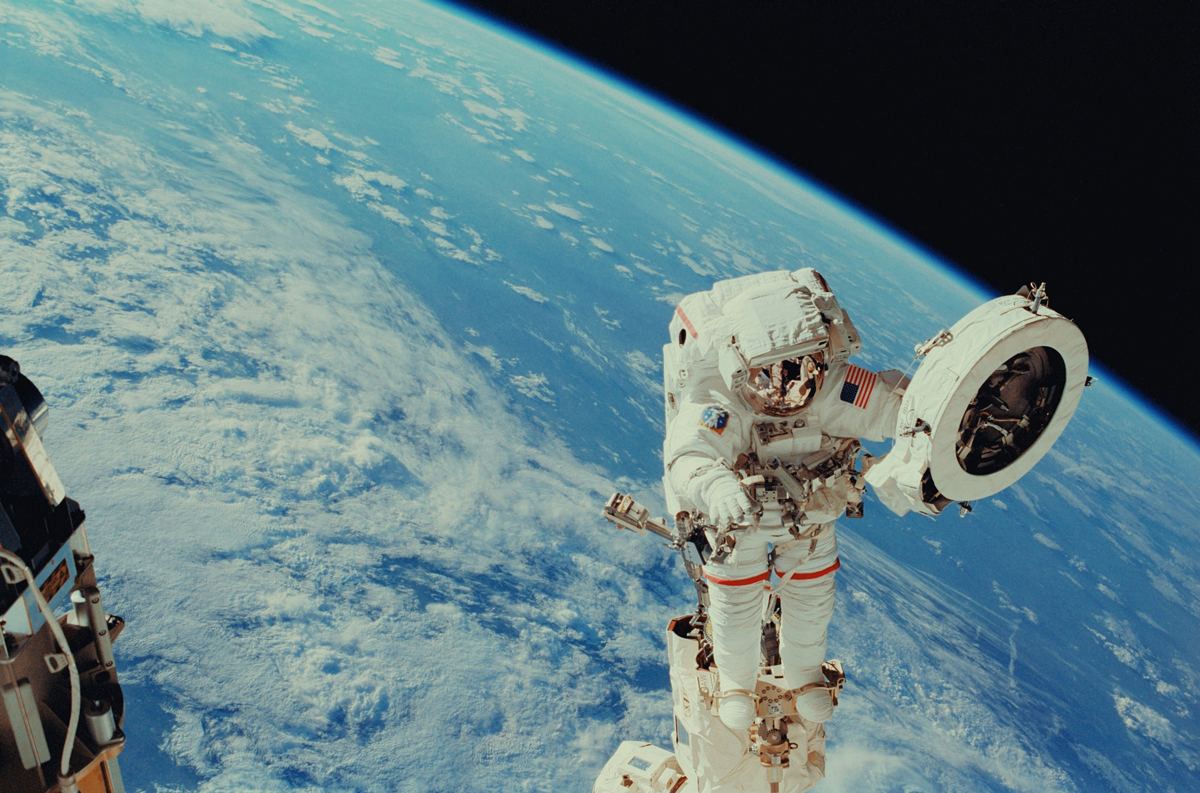
Yet there is one group of people who grow a couple inches every time they go into their unusual office: astronauts. Here’s what zero gravity does to their spines.
To New Heights
In space, astronauts experience microgravity (Earth is still pulling on them a little bit), a condition in which they seem to be weightless. Everything they do must be modified to account for the fact that without gravity, they float.
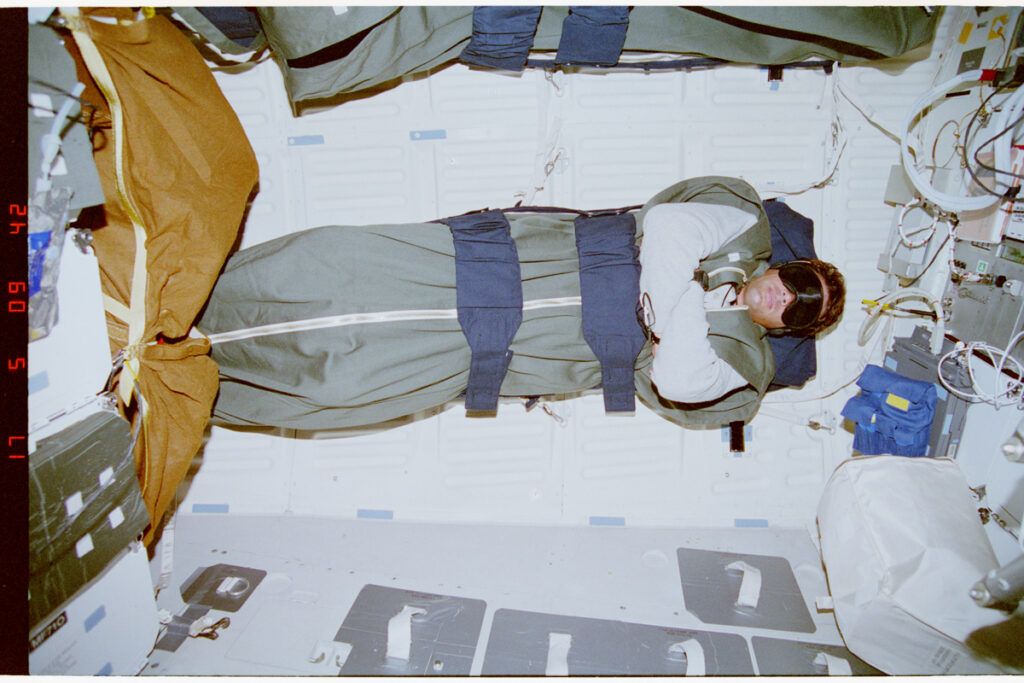
Aboard the International Space Station, crewmembers sleep in pods with sleeping bags tied to the wall, and navigate by using handrails and gently pushing off walls. To work, they must strap themselves in or they’ll drift away.
That same lack of gravity also changes the human body. With no force pressing down on the spine, it decompresses when the spongy discs between the vertebrae expand and relax. Picture your spine, which is essentially a string of alternating bone and cartilage, stretching out like an accordion (though not nearly as dramatically).
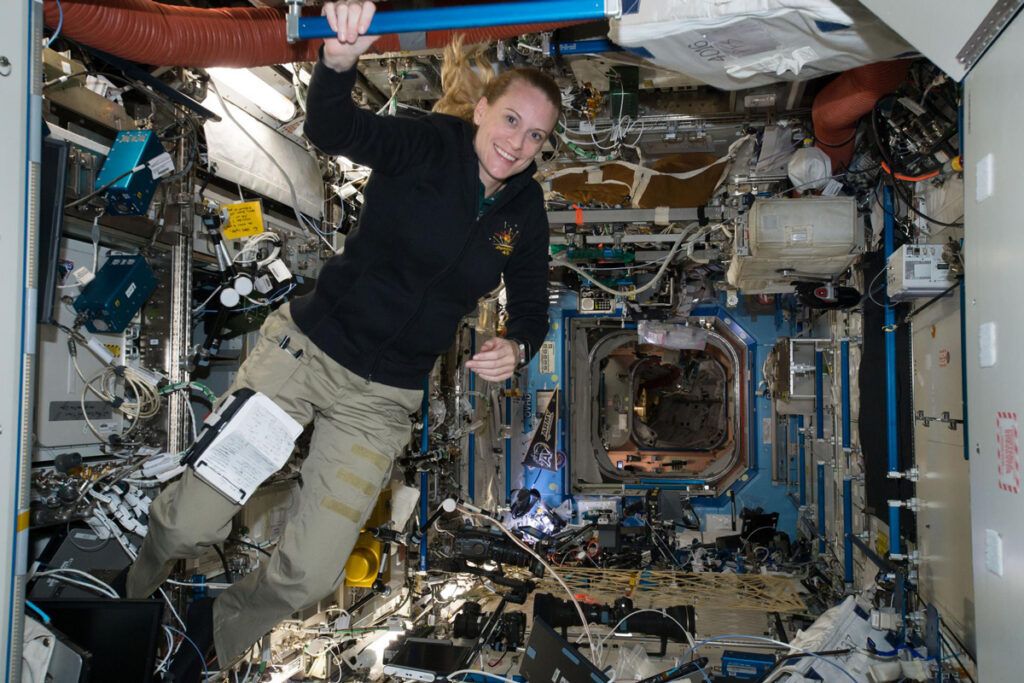
This results in a height bump of about 3% over the first 3 to 4 days spent in space. NASA astronaut Kate Rubins measured 5 feet, 6 inches tall on Earth, but grew to just over 5 feet, 7 inches tall in space. An astronaut who was 6 feet tall would gain about 2 inches.
Because most of this increase is concentrated in the spinal column, the astronaut’s standing and sitting height changes, as well as their shoulder height. Their arms are farther from the ground, letting them reach objects positioned higher up.
But just like dangling from a bar, this change doesn’t last forever. Once they return home, astronauts’ spines compress and bring them back to their “Earth” heights.
Growing Pains
While it might seem like becoming temporarily taller is a fun perk of going to space, microgravity can be harmful to the human body. When astronauts don’t have to bear weight while standing, sitting, or walking, they lose muscle mass. Their bones weaken, losing an average of 1% to 1.5% of their mineral density for every month in space. Bodily fluids also shift up and into the head, putting pressure on the eyes.
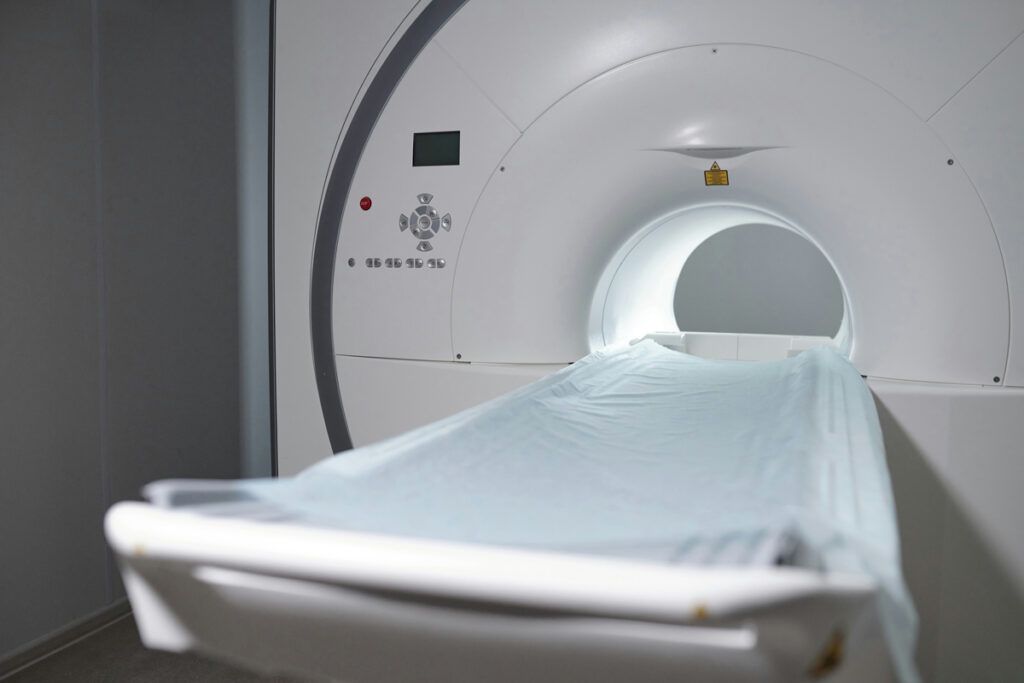
About 70% of astronauts report back pain after a few days in space, and roughly half experience it back on Earth. One study conducted MRI scans of six NASA astronauts’ spines before their missions, immediately after they returned to Earth, and again one to two months later. The astronauts had all spent four to seven months in microgravity aboard the ISS.
All six had experienced atrophy of the lean, functional muscle that supports the spine, and recovered only two-thirds of that loss one to two months after returning to Earth. They also faced four times the normal risk of a herniated disc.
This is why NASA and other space agencies continue to study and find ways to counter the effects of microgravity on the human body. For example, compression cuffs can help keep blood in lower extremities, similar to wearing compression socks on long flights.
Specific exercises can also help maintain bone and muscle strength. This is especially important as humans consider even longer missions and extended stays in space, and if we ever hope to reach Mars and other more distant destinations.
After all, we don’t want to take any small steps or giant leaps if it means throwing out our backs.
Astronauts can grow up to 3% taller in space within just a few days, as the lack of gravity allows the spine to decompress and stretch. It’s temporary, as they’ll return to their “Earth height” shortly after coming home, while microgravity poses potential health issues such as back pain and bone density loss.
Short Answer