HEALTH
How a Cut Heals Itself, Step by Step
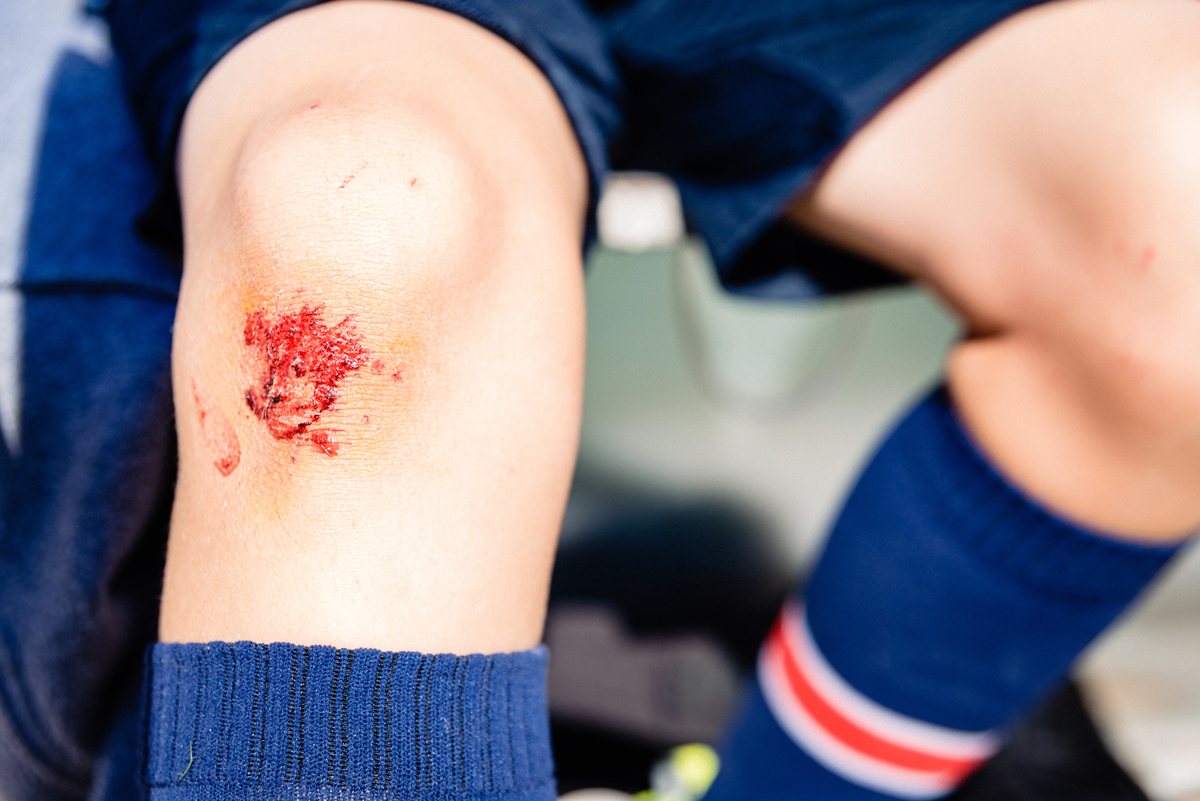

Whether it’s the sharp sting of a papercut or a deeper slice from a knife slip while chopping veggies, you’ve undoubtedly had a few cuts in your lifetime. But unless a wound is serious enough to require stitches or a trip to the doctor, we rarely stop to consider how a cut goes from bleeding to healed, almost like magic. So how does the body pull off this impressive repair?
The process is actually quite complicated, biologically speaking. For a wound to heal, it goes through four distinct phases, including hemostasis, inflammation, growth and rebuilding, and strengthening. These steps require cells, proteins, and other nutrients to work together to keep out infection, rebuild the site of the wound, and repair tissue until it’s fully healed.
Here’s what’s happening behind the scenes after you reach for the Band-Aid.
Step 1: Hemostasis
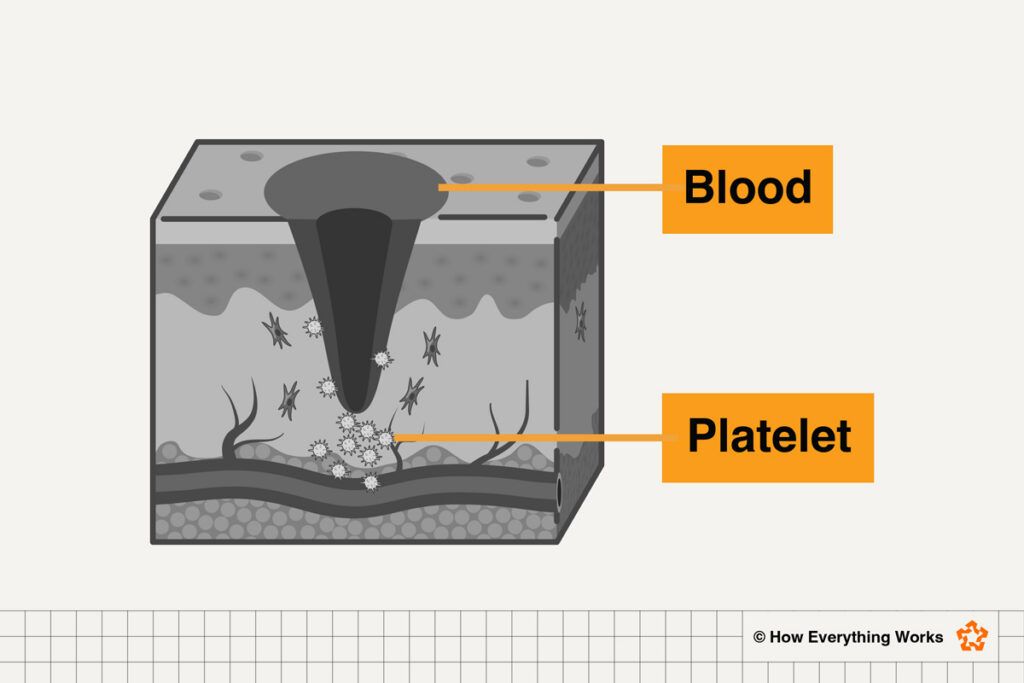
When a cut on your skin occurs, it will likely start bleeding, even if it’s just a shallow papercut. Almost immediately, your body springs into action. When blood begins to flow, blood cells called platelets gather right away, forming a clump to clot your blood and stop additional bleeding. Eventually, when the clots dry and harden, they will turn into scabs.
Scabs contain fibrin — a protein created from fibrinogen that flows in plasma (the liquid part of your blood) — which weaves a sticky mesh that stops the flow of blood. Together with the platelets, fibrin covers the wound and helps hold the scab in place.
Step 2: Inflammation
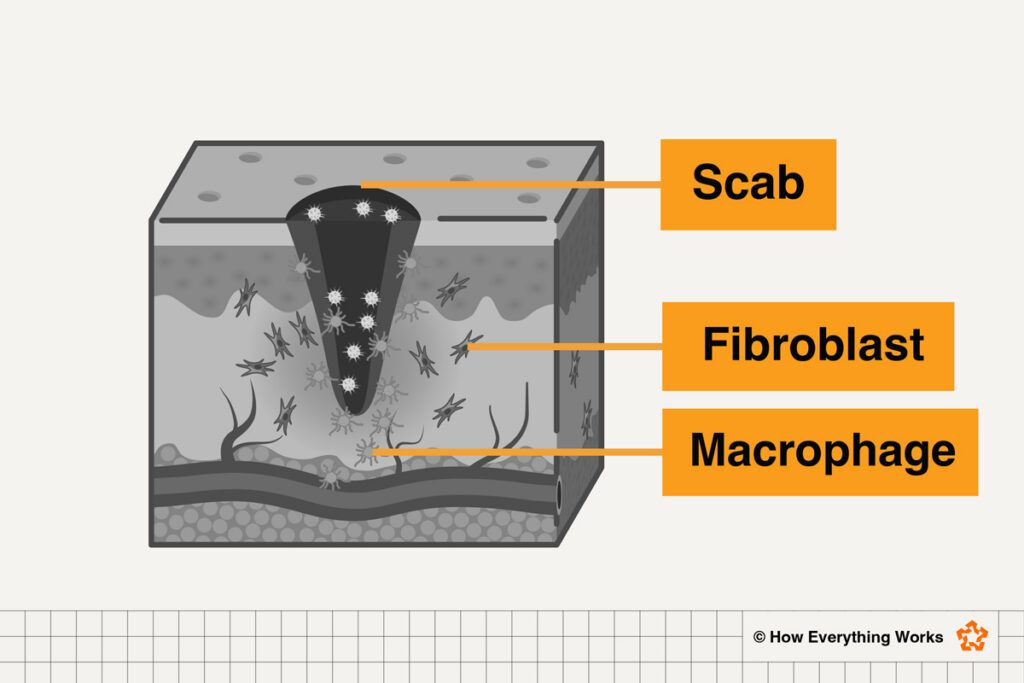
After the blood has clotted and a scab is formed, your blood vessels expand so that oxygen and other nutrients can easily flow to the area. Getting just the right amount of blood-borne oxygen to the site of the wound is a critical part of the process, and it can be disrupted if there’s too much or too little.
At the same time, macrophages (immune cells) act like a microscopic cleanup crew. They trigger inflammation to fight off germs or any infections from the wound while controlling the response so that the healthy tissue isn’t damaged. Macrophages also work to get rid of any dead cells from the wound site, and then repair the tissue.
Step 3: Growth and Rebuilding, aka Proliferation
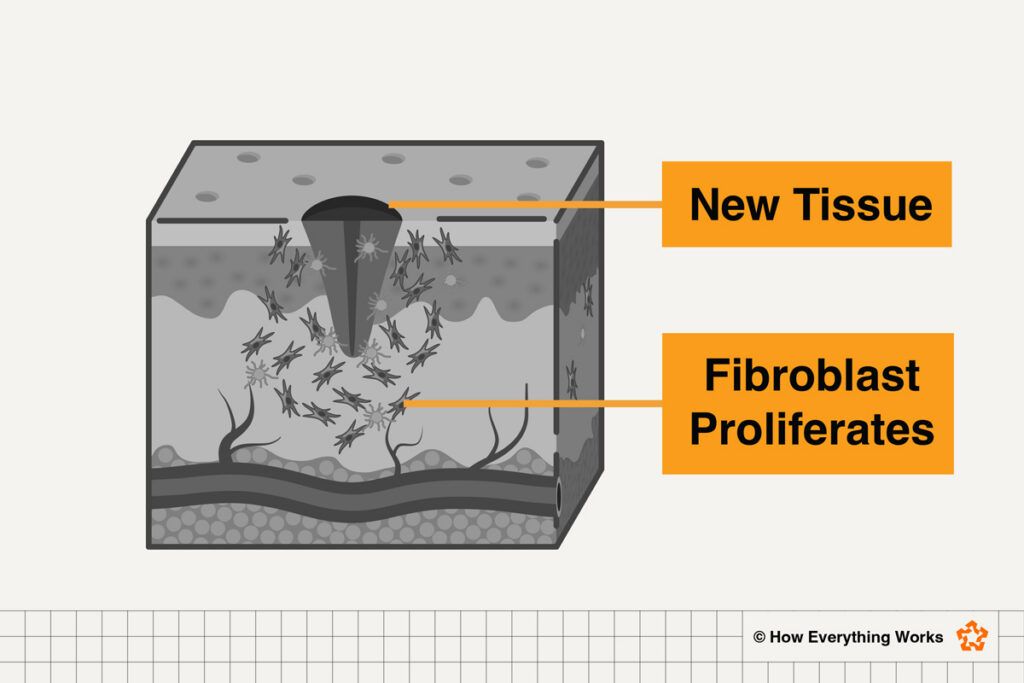
The next step involves rebuilding the wound and is often referred to as the proliferation phase. Here, new tissue begins to form as your skin knits itself back together, beginning at the edges of the cut. New blood vessels are also formed during this phase, and fibroblasts (another type of cell) create collagen and proteins to support newly formed tissue. Additionally, other types of cells will move across the surface of the wound and cover it to form a protective layer. Finally, the edges of the cut will contract to begin closing the wound.
Step 4: Strengthening, aka Remodeling
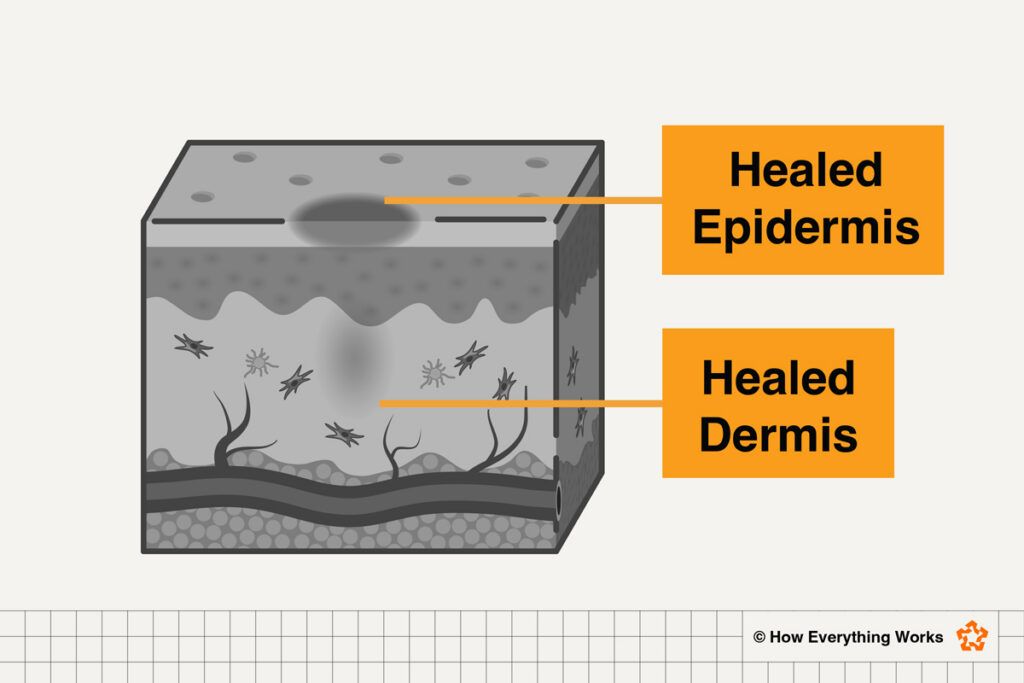
The last phase of wound healing is strengthening, or remodeling, and it’s how your body builds the skin back up to face whatever slipping kitchen knife comes its way in the future. At this point, collagen and proteins are still working to strengthen the injured tissue. The proteins also support the structure of the wound and will continuously remodel as it changes throughout the healing process. The wound will continue to contract until the tissue is fully closed, and as the tissue matures, it will gain elasticity and strength.
Scars may also form after a wound has completed healing, even if it went through all four phases without interruption. (Healing can sometimes be slowed or stopped by issues such as a lack of blood supply to the wound or infection.) A wound’s size, location, and your own genetic factors can affect the size and appearance of the resulting scar. But no matter how large or noticeable it is, the scar tissue that’s formed will feel less flexible and slightly firmer than the surrounding skin.
Whether a cut leaves a faint mark or fades away completely, that new layer of tissue is proof of a quiet biological marvel.