NATURE
How Do Erasers Make Things Disappear?


If you’ve ever taken an important test such as the SAT, you know just how valuable a pencil eraser can be. Without one, you’d be stuck with an answer you quickly realized was incorrect, or perhaps a multiple choice bubble you’ve filled in by mistake.
It’s easy to take the little nub on the end of your pencil for granted until you need it and realize it’s broken off (or perhaps been chewed off) at some point. But have you ever stopped to wonder how it works? Unlike the delete key on your computer, it’s not a simple “opposite” action undoing the first. The rubber on one end of a pencil is a completely different material than the graphite of the tip.
Why would one remove the other, making pencil strokes and smudges vanish like they were never there? Here’s the science behind erasing pencil — and pen — marks.
Mistakes Happen
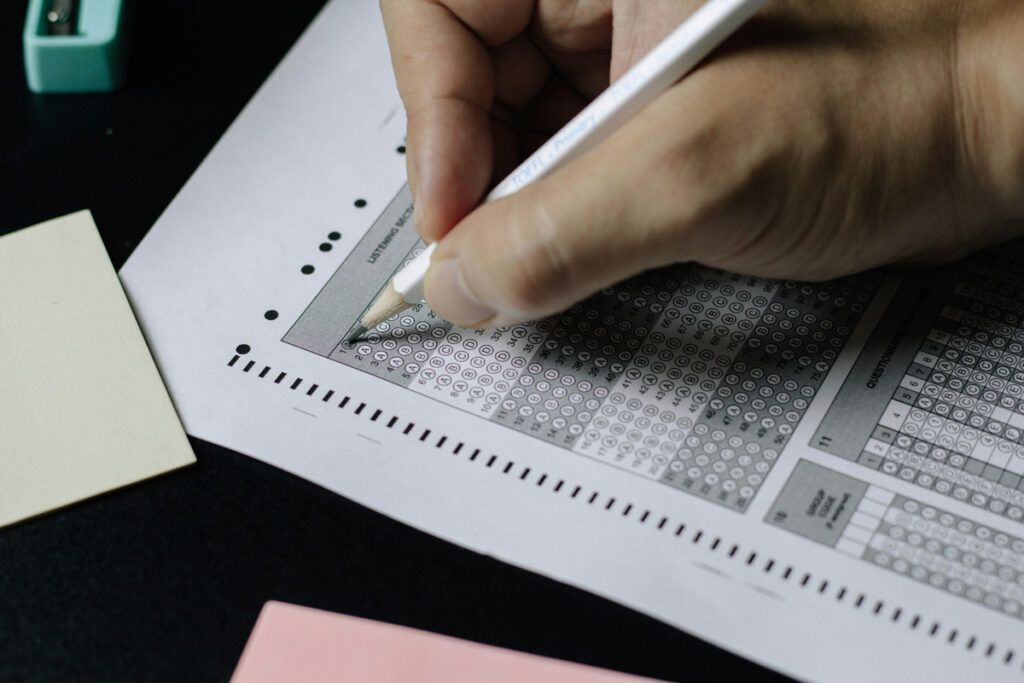
Let’s start with pencils. As you may know, modern pencils aren’t actually made with lead, but rather with graphite, a soft form of carbon, mixed with clay. When you write, microscopic flakes of graphite chip off from the tip and get trapped within the paper’s fibers, leaving the marks that you see.
The graphite flakes stay on the paper because of a chemical attraction called van der Waals force. Think of it as the “glue” of the universe, binding molecules together thanks to positive and negative charges that attract each other.
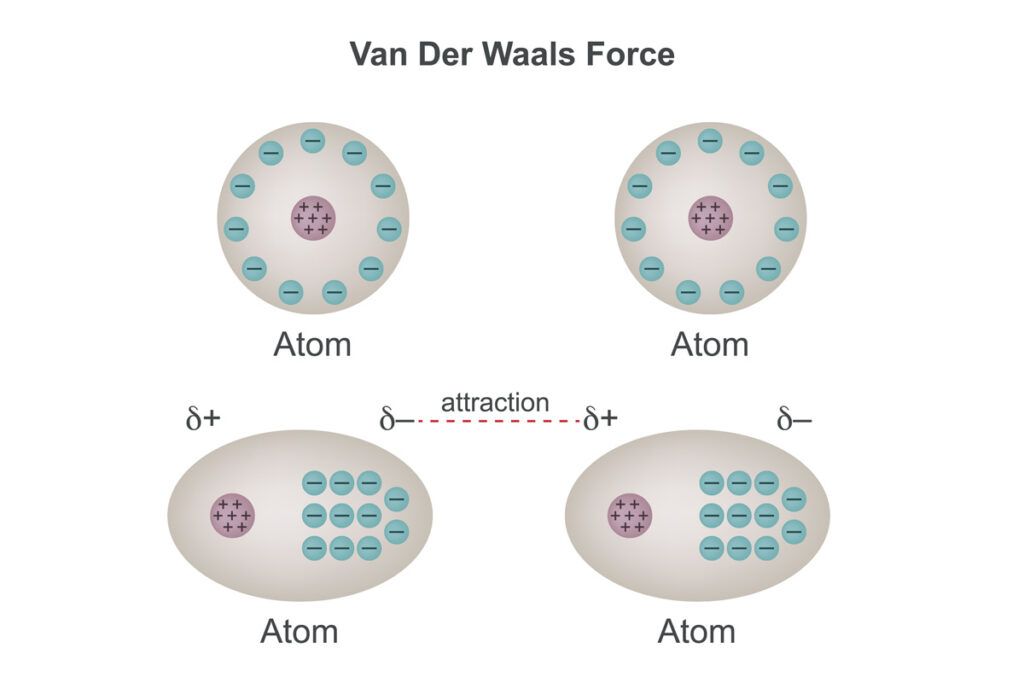
The bond that graphite particles make with the paper isn’t very strong, which is helpful when you need to erase a mistake. As you rub your eraser across the paper, the mechanical friction upsets the atomic attraction between the graphite and paper, and those pencil marks end up sticking to your eraser. Basically, the graphite switches partners midway through a dance, leaving the paper for the eraser.
Rubber makes a great eraser material for a couple of reasons. For one, it’s soft and nonabrasive, so you can safely rub it against your paper, unlike using, say, steel wool. What’s more, rubber and graphite are both nonpolar, or neutral — so they naturally attract. This makes it easy for pencil marks (and your mistakes) to not only escape the paper but also adhere to the eraser shavings, which can then be quickly brushed away.
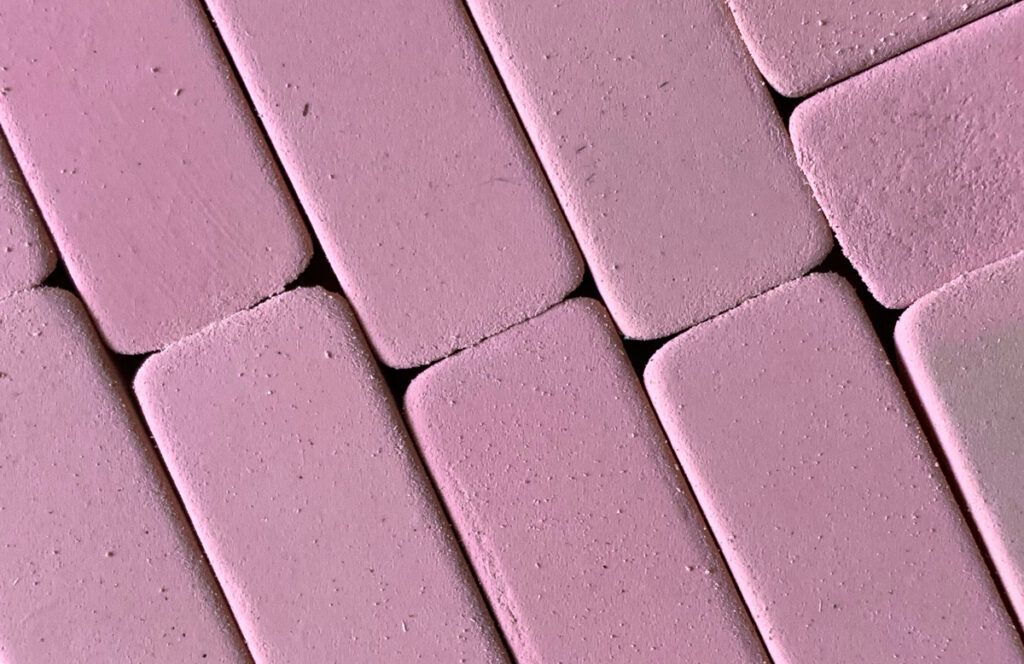
Gum erasers are also made of rubber, but they’re even softer on paper (though more delicate and shorter-lasting), which is why they’re often used by artists. Kneaded erasers are made of even softer, synthetic rubber, and are often used to remove charcoal in addition to pencil marks.
Instead of breaking off, a kneaded eraser holds what it removes in one piece, like a glob of Silly Putty. These erasers need to be cleaned, but they don’t leave behind a mess of eraser shavings. Vinyl and plastic erasers are also available — they erase very cleanly, but can be tough on paper.
Can You Erase Pens?
EraserMate, one of the first commercial erasable pens, came out in the late 1970s. It wasn’t just an eraser tacked onto a pen, though — to make the pen erasable, the ink needed to be different. It incorporated rubber cement, which made it work similarly to the graphite in pencils, keeping the ink from absorbing into the paper. Because the ink just sat on top, it could be rubbed off with an eraser.
Modern erasable pens work quite differently. Most now use thermochromic ink, which becomes invisible when it gets hot. Friction causes heat (think: rubbing two sticks together to start a fire), so rubbing an eraser over thermochromic ink heats it up, essentially making the words “disappear.”
Because it’s invisible and not gone, you can try making the ink reappear by sticking your paper in the freezer. Apparently, some mistakes can never be undone.
Erasers work by using friction to break the weak molecular bond between pencil graphite and paper. Once the bond is broken, the graphite sticks to the rubber on an atomic level since their molecules both have neutral charges, attracting them to one another. Some erasable pens use ink laced with rubber cement for a similar removal process, though newer ones use thermochromic ink that becomes invisible when heated from the friction of an eraser.
Short Answer