TECHNOLOGY
How Do Smoke Detectors Detect Smoke?
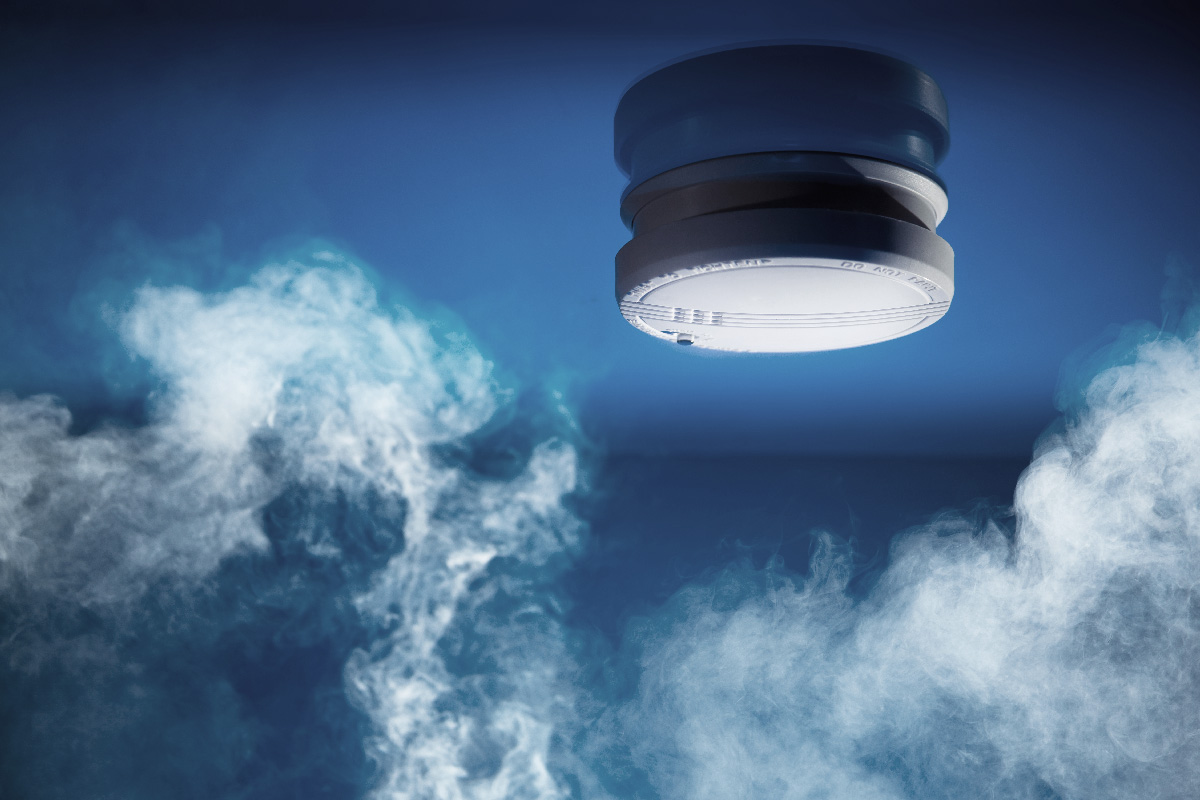

Nothing is more sensitive than a smoke detector. Well, at least it seems that way when a blaring alarm triggered by slightly overcooked onions rudely interrupts you as you’re trying to cook dinner.
While waving a kitchen towel at the ceiling for the second time in a week might leave you tempted to remove the device altogether, knowing how smoke detectors work — and how vital they are to your safety — may make you appreciate their sensitive side.
Modern smoke detectors are equipped with some pretty impressive technology designed to sense different types of smoke. Here’s how they work.
Two Ways of Sensing Smoke
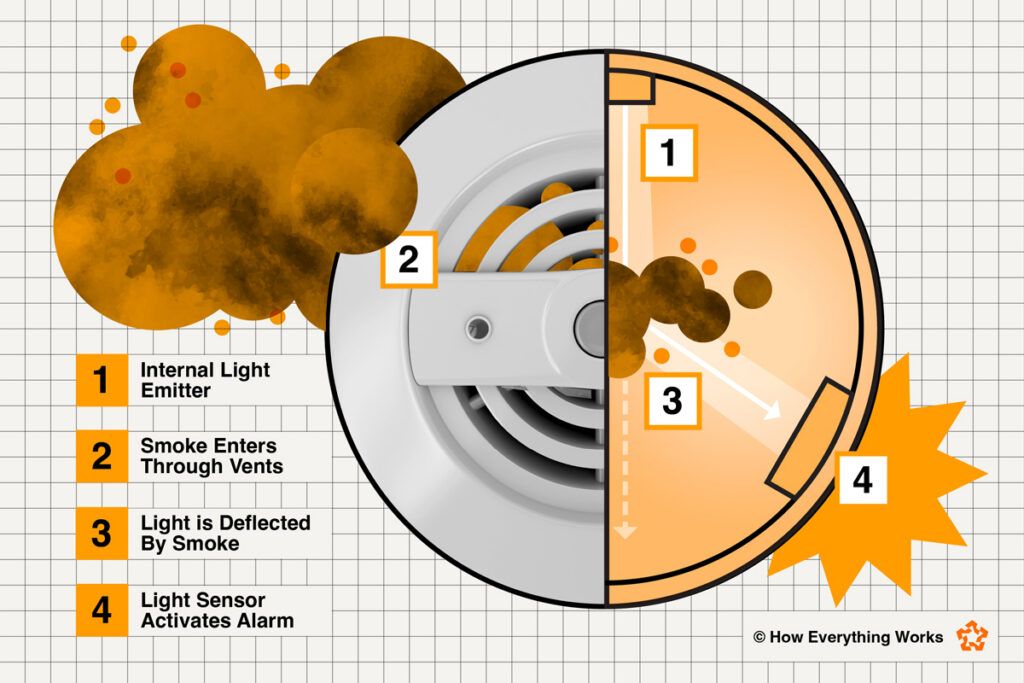
Smoke detectors utilize either ionization or photoelectric technologies, or a combination of both if they’re dual-sensor models. In this case, photoelectric is basically a fancy way of saying “it detects light.”
Ionization, on the other hand, refers to how these types of smoke detectors ionize, or electrically charge, the air molecules inside them. This allows an electric current to constantly flow from one end of the sensor to the other. When smoke enters the detector, it interrupts the flow of current and triggers an alarm.
To ionize the air and create the current, smoke detectors rely on a small amount of radioactive material. Don’t worry: They’re perfectly safe, as you absorb more radiation from space in one day than you do from keeping two smoke detectors in your home for an entire year. Because they are excellent at detecting black soot particles, ionization smoke detectors are a go-to option for protection against fast-burning fires.
Rather than radiation, smoke detectors with photoelectric technology rely on a light source and light-sensitive sensor. When all is clear, the light in the detector cannot reach the sensor. But when smoke dances around the sensor, it reflects light onto it and sounds the alarm.
Photoelectric detectors are more sensitive to smoldering or slow-burning fires, as they respond better to white or light-colored smoke. Steam can also reflect light, which is why these detectors may trigger in the kitchen even when there’s no smoke.
Because these two technologies excel at detecting different types of threats, many people prefer a dual-sensor smoke detector to protect against both smoldering and flaming fires.
Smoke Detectors Are Required by Law
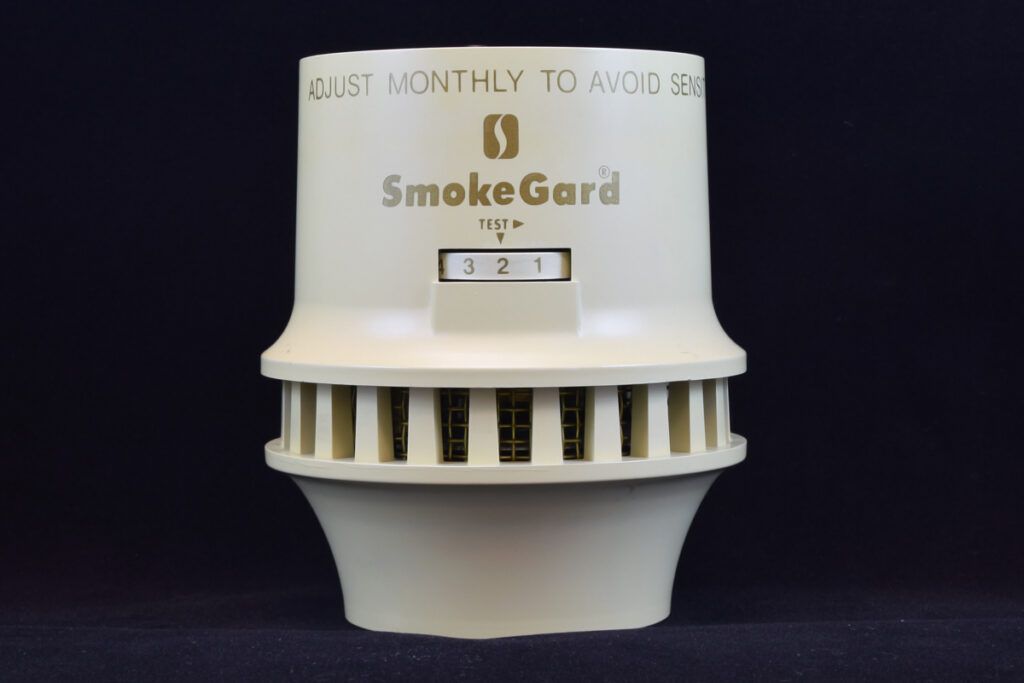
The first modern, battery-operated smoke detector dates back to the 1960s and used specialized batteries. (It had a great name, too — the SmokeGard 700.) By the early 1970s, smoke detectors switched to 9-volt batteries before eventually being powered by AA batteries, making them more accessible and convenient for people to use.
These types of batteries are still frequently used, but there are now models that can last 10 years using lithium batteries. Instead of swapping out the battery at the end of the decade, you’d want to replace the entire detector, though — since the sensors themselves have a 10-year shelf life.
Today, nearly all residential properties in the U.S. are required by law to have smoke detectors installed, and expired devices go against many state fire and safety codes. It may be tempting to remove an oversensitive device that sounds off when it doesn’t need to, which is not only illegal but also dangerous — because smoke detectors save lives.
There are two main types of smoke detectors. Ionization models run an electrical current internally that can be disrupted by black soot particles and dark smoke, which triggers the alarm. Photoelectric detectors have a light sensor that can detect light when it’s reflected off white- or light-colored smoke, which typically comes from slow-burning fires. Dual-sensor models are available that use both technologies to detect a wider range of smoke.
Short Answer