HEALTH
Why Are Some People Nearsighted and Others Farsighted?
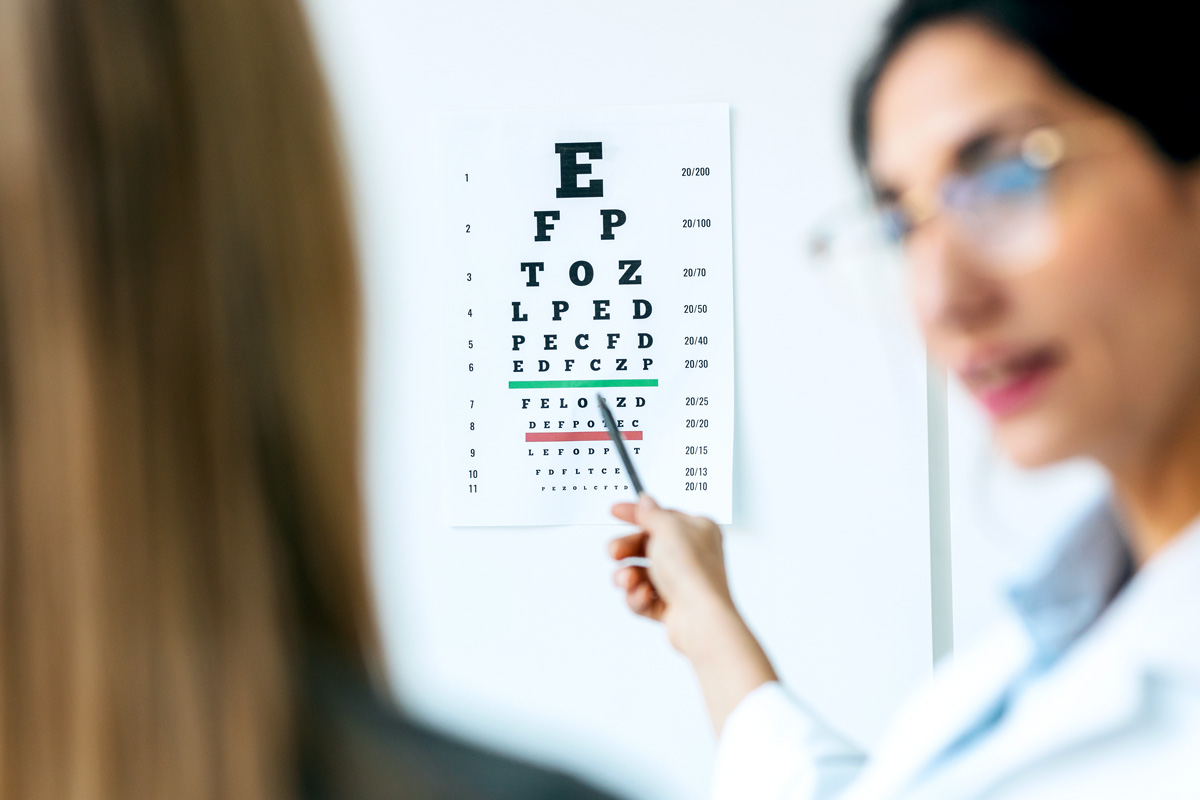

Maybe you can read a book with no problems, but the street sign at the end of the block is one big blur. Meanwhile, your friend can spot that sign from across the intersection but has to hold a menu at arm’s length to see it.
These vision differences aren’t simply due to differences in the brain. Whether you’re nearsighted or farsighted actually comes down to the physical shape of your eye.
Staying Focused
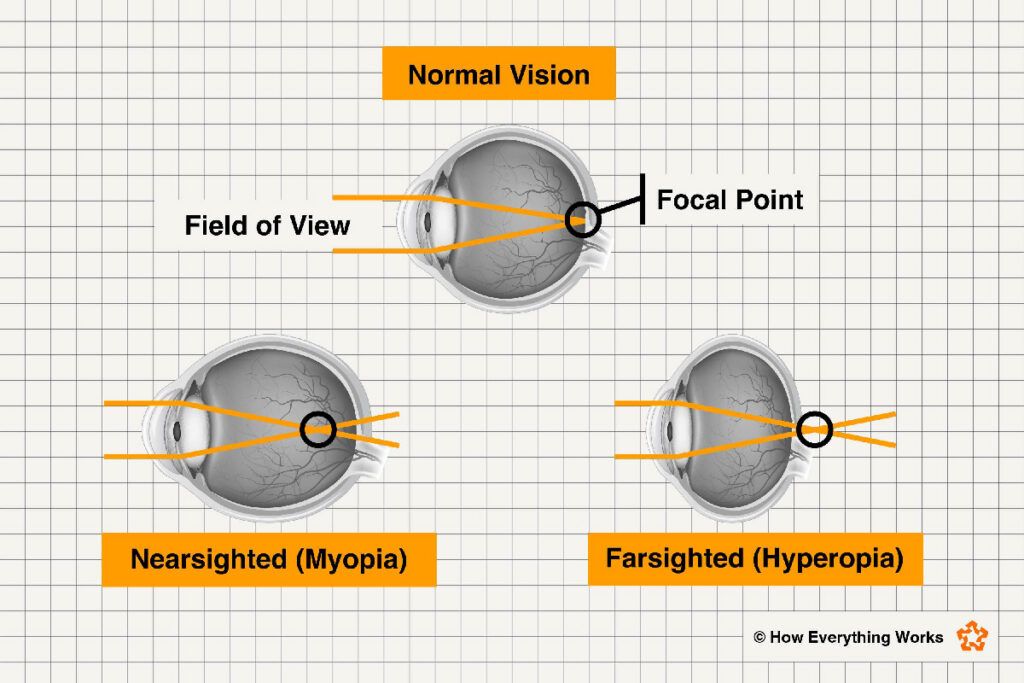
Your eye works a bit like a camera. Light passes through the cornea, the clear dome at the front of your eye, then through the pupil and the lens. The cornea and lens bend that light so it focuses on the retina, a light-sensitive layer at the back of the eye. The retina turns the light into electrical signals, and your brain turns those into images.
Each step is vital to how your vision works. For something to appear in focus, the light rays bouncing off it must converge at the same point in the lens — if they haven’t crossed yet or have already converged and are now moving away from one another, the image won’t be sharp. That sweet spot where light rays converge is called the focal point, and a normal, healthy eye has evolved so that the retina and focal point are in the same spot.
Nearsightedness, or myopia, usually means your eyeball grows a little too long from front to back. Sometimes the structure of the cornea or lens is the problem instead, often because it curves too much. Either way, light rays from faraway objects converge before they reach the retina. Nearby objects are generally easier to see, which is why you can read a text without reaching for your glasses but can’t read a street sign until you’re standing under it.
Farsightedness, or hyperopia, works the other way. The eye may be a little too short, or the cornea may not bend light enough, so the focal point ends up behind the retina. That can make your watch, a book, or anything else up close look blurry.
Reading for a while may also leave your eyes tired or give you a headache if you’re farsighted, because your eye muscles work harder to stretch and better sync with the focal point. You even unconsciously blink less as you try harder to see what’s right in front of you more clearly.
Are You Born This Way?

You can be born nearsighted, though it’s not as common as being farsighted at a young age. Although farsightedness is often something you’re born with, you might not notice it until later (you’re typically not reading as a baby, for one thing).
Why do some people end up with longer eyeballs and others with shorter ones? Genetics plays a role: If your parents are nearsighted, the odds go up that you will be later in life as well. Environment matters, too. Research suggests that kids who spend more time outdoors are less likely to become nearsighted. One idea is that brighter outdoor light helps regulate eye growth, though researchers are still investigating.
Having clear vision at age 25 doesn’t come with a lifetime guarantee, either. Starting around your 40s, the lens in your eye gradually becomes less flexible, making it difficult to focus up close. This is called presbyopia, and unlike farsightedness, it pretty much affects everyone in middle age, as it’s caused by the aging of your eyes.
While they have different causes, both can have you holding a menu farther away. If you do start reaching for reading glasses more in middle age, it’s more likely presbyopia, because you would have likely noticed by then if your natural eye shape was affecting your vision.
Glasses and contacts help bring the world back into focus. They bend light so it lands directly on the retina, with different prescriptions — meaning differently shaped curves of the lenses — depending on whether you’re nearsighted or farsighted. Your friend’s glasses may not help you because they’re made to precisely match the focal point with your friend’s retina, not yours.
This is also why LASIK surgery can restore 20/20 eyesight for eligible patients. Doctors use a laser to physically reshape the cornea so light bends the way it needs to. Rather than having you wear corrective lenses, LASIK corrects your (natural) lenses.
Nearsightedness and farsightedness happen when the physical shape of your eye bends light in such a way that it lands on your retina out of focus. Nearsighted eyeballs are usually too long, so distant objects look blurry, while farsighted eyeballs are usually too short, making nearby objects harder to see. Genetics plays a role in both, and you typically notice if you’re afflicted with either or both before early adulthood. However, everyone experiences presbyopia as they age, often starting in your 40s. It has a different cause than farsightedness — your natural lenses stiffen with age — but still makes it harder to see things clearly up close.
Short Answer