ENGINEERING
How Does Velcro Work?

The world’s greatest engineer is nature. It’s why the nose of a bullet train mimics the bill of a kingfisher, swimwear shares similar attributes with shark skin, and the bumps on a humpback whale’s fins inspired better wind turbines. Copying a page out of nature’s engineering playbook is a concept known as biomimicry, and it’s also the driving force behind one of the biggest fashion inventions of the past century.
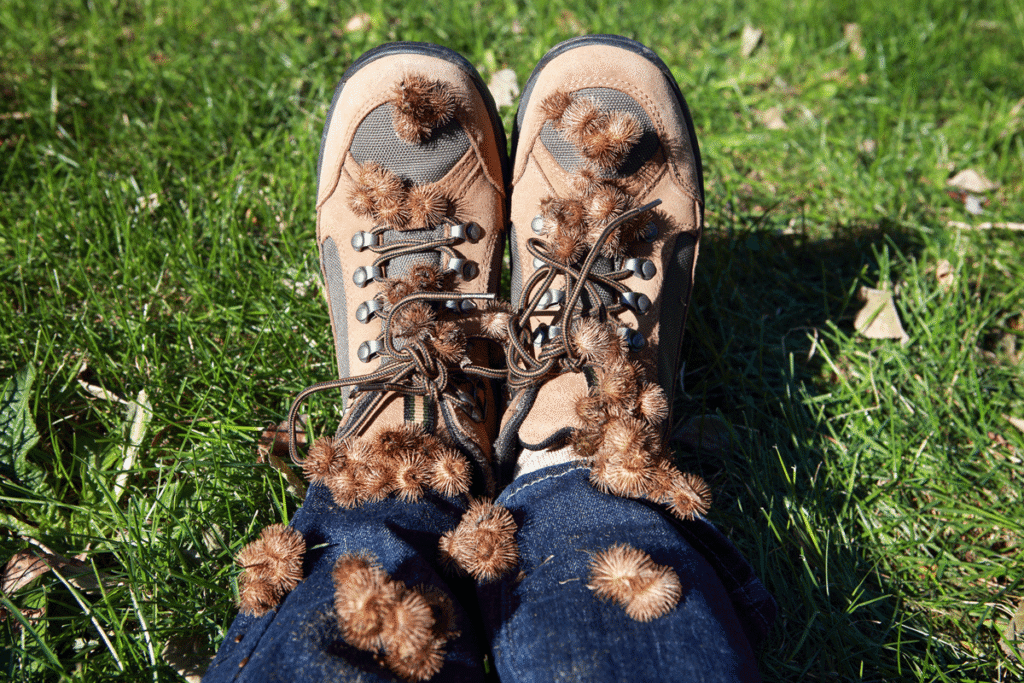
In 1941, after returning from a hunting trip in the Alps, Swiss engineer George de Mestral noticed a bunch of burrs from a burdock plant clinging to his pants and the fur of his hunting dog. His curiosity got the best of him and he decided to take a closer look at these plant-based nomads.
What he saw had him hooked — or rather, what he saw inspired the hook-and-loop mechanism that would eventually become Velcro.
A Patent Patterned on Plant Production
When examining the burdock burrs under a microscope, de Menstral noticed that their tips weren’t straight (as they appeared to the naked eye) but actually formed tiny hooks designed to grasp onto any passersby. Plants rely on a variety of seed dispersal strategies, including animal consumption, water, fire, or simply just the wind.
The biennial burdock plant, a member of the genus Arctium, relies on this hook-and-loop strategy to hitchhike onto other animals and disperse its seeds far and wide. This process is known as “epizoochory,” and de Mestral wondered if he could artificially replicate this natural function to create an easy-to-use fastening system.
That dream took nearly 15 years to realize. In 1955, the U.S. finally approved de Mestral’s patent for his plant-inspired creation called Velcro, a portmanteau of the French words velours (“velvet”) and crochet (“hook”), in 1955.
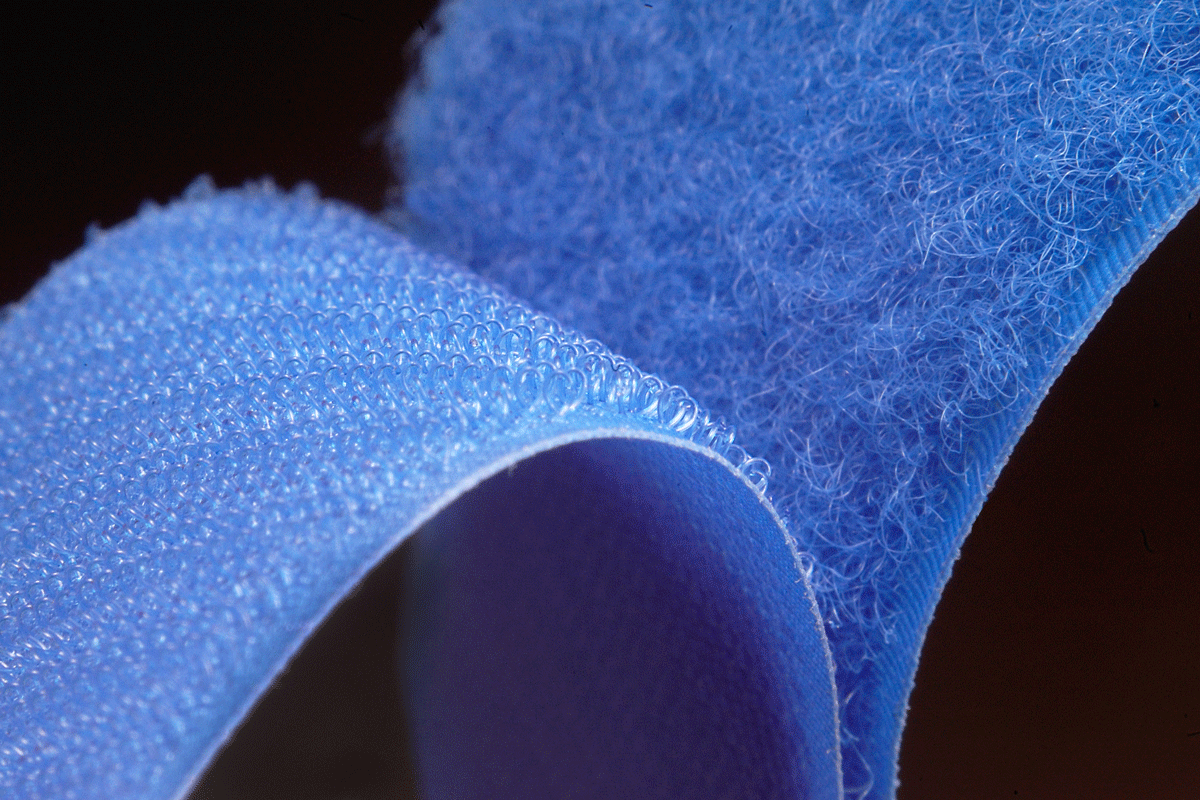
The way it works is that one piece of Velcro contains an array of burdock-inspired hooks — created from nylon for its ability to bend, flex, and return to its original shape — while the other half contains a series of loops, similar to an animal’s fur. When pressed together, the hook grabs the loop and holds the material together, but when you apply just a little bit of pulling force, the hook easily slips free of the loop, and the two materials separate.
While velcro’s place in fashion was slow going, its eventual use by NASA during the Apollo missions as well as its introduction into running apparel during the 1968 Olympics thrust the hook-and-loop system into the mainstream.
Sometimes the most brilliant piece of engineering is also the simplest.
Inspired from the burrs of a burdock plant, Velcro is essentially a microscopic system of hooks and loops. One side of the Velcro features an array of tiny hooks designed to cling to the other side, which is a tiny smattering of loops. When applying a small amount of pulling pressure, those hooks easily slip free of the loops, allowing them to be pulled apart.
Short Answer