NATURE
How Does a Bee Become Queen?

Even if you’re interested in modern-day monarchies, you may find keeping track of royal lines of succession daunting and confusing. With bees, it’s very different — but also much simpler.
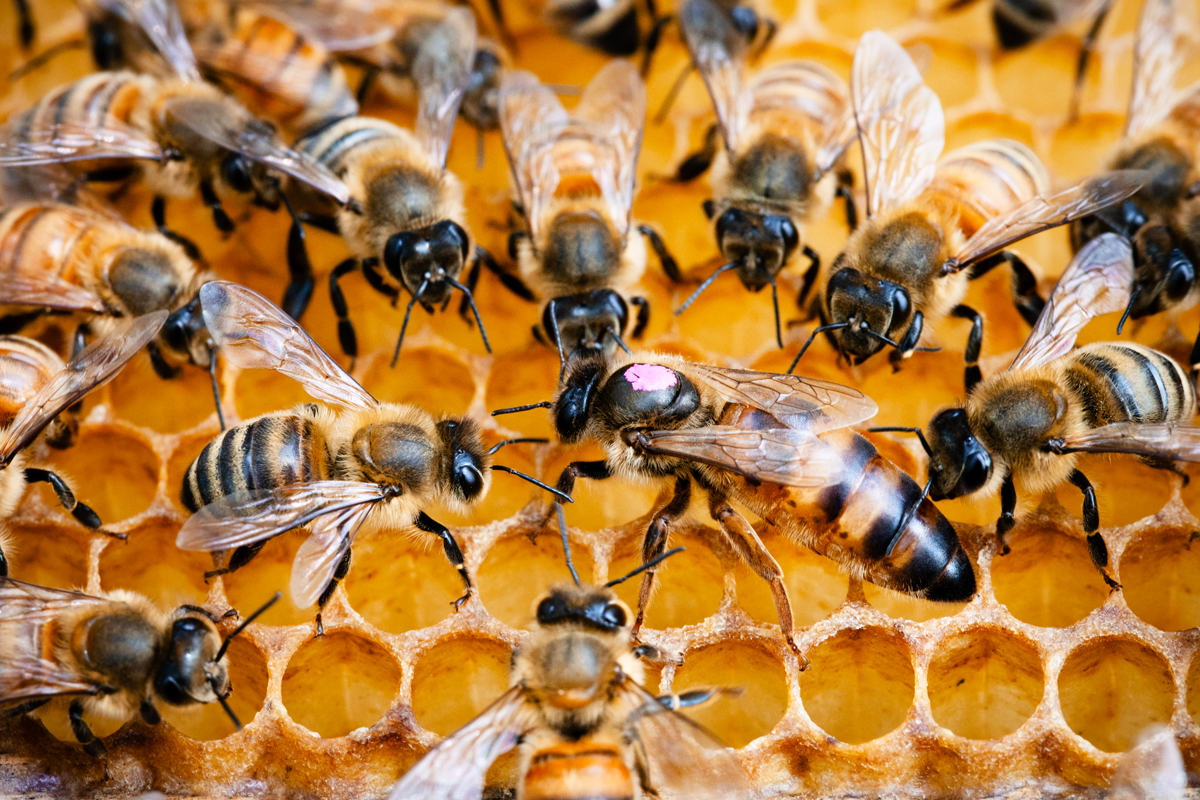
A honeybee hive can contain up to 60,000 bees, almost all of which are female worker bees that spend their short lives — about two months in the summer — supporting their colony: foraging, building, and caring for the young. The vast majority of these worker bees will never reproduce. That role belongs to exactly one bee: the queen.
So how does the queen get her spot on the throne? That’s up to those other worker bees.
A Feast Fit for a Queen
The road to honeybee royalty is not decided by lineage, but by selection. Any fertilized egg in the hive has the potential to become either a worker bee or a queen (all fertilized eggs are female, all unfertilized eggs are male). There’s no king bee, because, well, the hive doesn’t need one — the queen’s got everything covered.
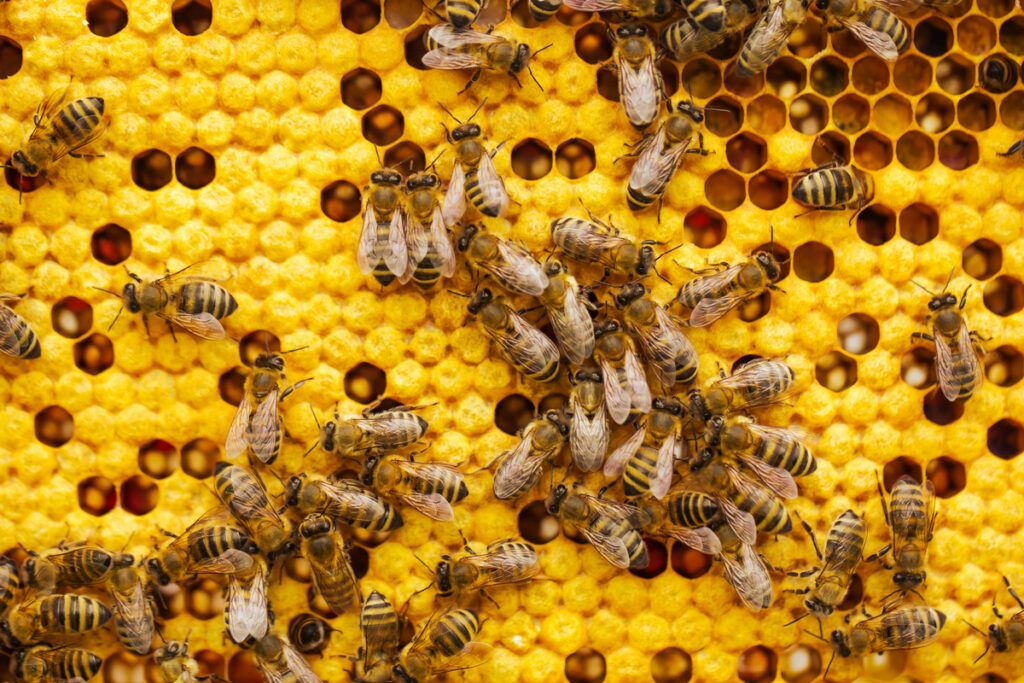
When a hive needs a new queen — because the old one has died, is declining, or the colony is getting large enough to split — a special class of worker bees called nurse bees step in. Nurse bees are the youngest adult bees, and they’re responsible for caring for the hive’s developing brood and queen, including feeding the young. And here’s where the queen selection process begins.
For the first few days of life, all bee larvae are fed a substance called royal jelly, a protein-rich secretion produced by glands in the adult worker bees. Royal jelly is remarkably potent and important for development. Future worker bees will be fed the substance for a few days before being switched to a diet of pollen and honey (a mixture called “bee bread”).
But when the hive is on the hunt for a new leading lady, the nurse bees select up to 20 young larvae — typically the youngest (less than three days old) and healthiest. These chosen few are exclusively fed royal jelly, in large quantities, throughout their development. This diet causes sweeping biological changes. Essentially, it flips certain genes on or off without altering the bee’s DNA itself, resulting in an insect that is still the same species, but with a larger body, fully developed reproductive organs, and a lifespan measured in years rather than weeks.
The chosen larvae are also raised in special, larger chambers called queen cells. While worker bees develop in the small, uniform hexagon cells that come to mind when you picture a honeycomb, queen cells are designed to give the developing queen more room to grow. Put another way: the worker bees are reared in a studio apartment while the potential queens each get their own multi-floor penthouse.
Battle Royale
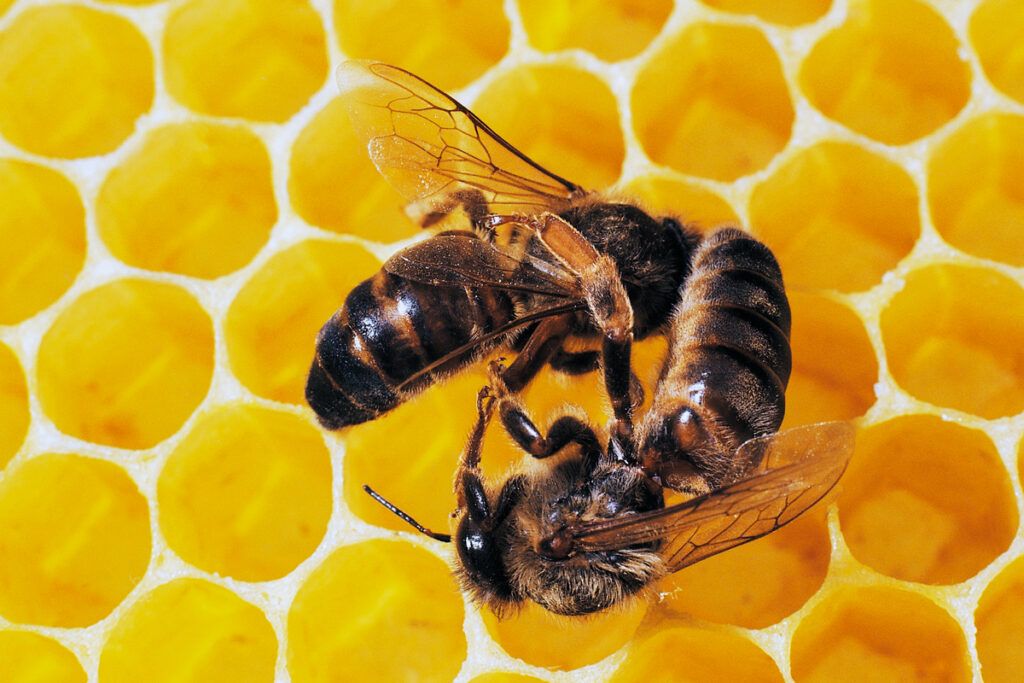
Once the queen candidates fully develop, the hive’s monarchy is settled the old-fashioned way. The first queen to emerge seeks out her rivals — including those still sealed in their cells — and stings them to death, like a sword fight straight out of Shakespeare. If two queens emerge at the same time, they fight until one remains.
Typically, the new queen only leaves the hive during a short mating period, before confining herself to the hive for the rest of her life. During this time, she mates with up to 20 drones (male bees) in order to secure as much genetic diversity as possible for her hive. She stores their sperm in a special organ, using the supply to fertilize eggs for the rest of her life, which is particularly impressive as she can lay up to 2,000 eggs a day and live for several years.
After that, she rarely, if ever, leaves the hive again, though she’d be too busy even if she wanted to when she’s laying approximately one egg every minute. Being queen comes with its perks though, as she is followed day and night by a retinue of attendant bees. These attendants are under 12 days old, and since they can’t produce wax or feed larvae yet, they’re assigned to guard and groom the queen, as well as keep the rest of the hive informed of her well-being.
It turns out that even bees can’t get enough news about their royals.
When a hive needs a queen, a group of nurse bees select a small group of young larvae (about 20). This group is fed a nutrient- and protein-rich substance called royal jelly, which causes them to develop into larger, fertile queens. The first bee to emerge from this crew kills her rivals and claims the throne.
Short Answer