TECHNOLOGY
Do Lie Detectors Actually Work?
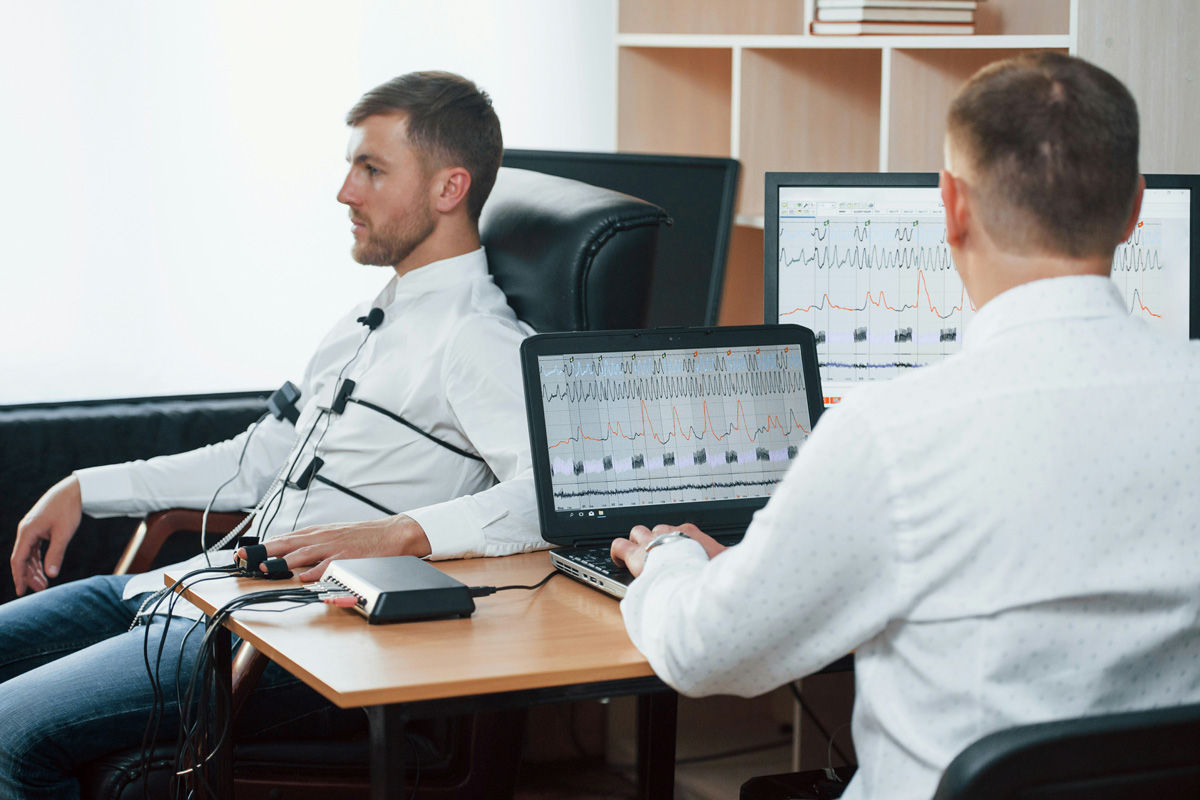

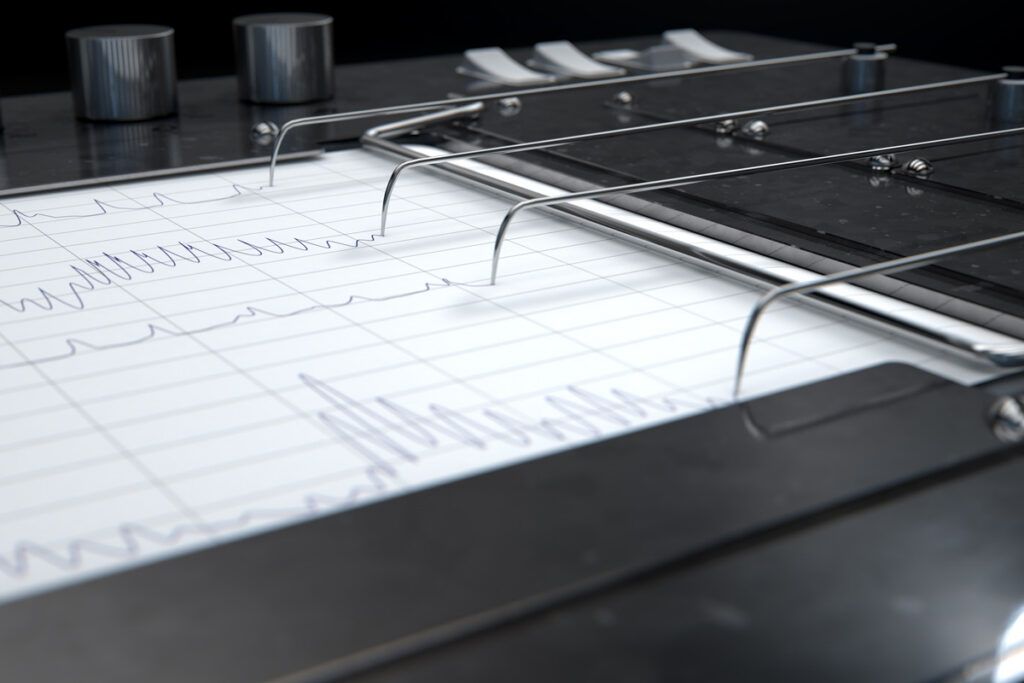
Gritty police procedurals would have you believe lie detector tests take place in dark rooms where a guilty perp breaks only after the clever detective asks the right “gotcha” question, sending the machine’s needles skittering across the page. In reality, that machine isn’t called a lie detector — it’s called a polygraph, and that’s because instead of lies, it’s actually designed to detect something else: stress.
For most people, lying is stressful: We’re uncomfortable bluffing during a poker game or concealing a surprise party from a prying friend. But how does a polygraph detect stress, and how can the results tell an investigator if someone is telling the truth or not?
More importantly, does a polygraph even work — or is it TV-friendly pseudoscience?
Stress Test
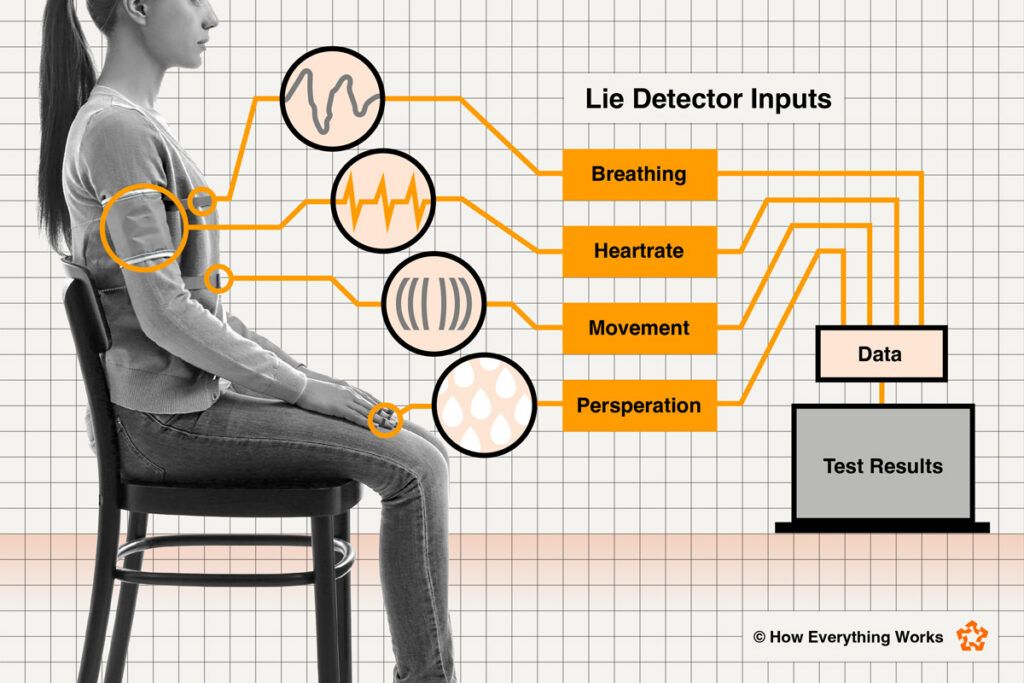
When you’re stressed or afraid, your body shifts into fight-or-flight mode. Your brain signals your heart and lungs to work harder to more effectively move oxygen and blood throughout the body, better preparing you for either action.
A polygraph is designed to detect this shift. It’s equipped with devices that measure the subject’s heart rate, pulse, respiration rate, movement, and the changes in the skin’s electrical conductivity that occur when someone begins to sweat — all in an effort to determine if, and when, stress occurs. The word “polygraph” actually translates to “many writings,” a reference to the several biomarkers it measures.
Before the test, an interviewer explains the test and observes the subject’s baseline behavior — how they talk, move, and express themselves when they’re not stressed. They’ll also build rapport so that the subject feels comfortable with the interviewer — unnecessary anxiety could throw off the results.
They’ll discuss the case, including the questions they’ll ask. The intent isn’t to catch the subject off guard, but to measure the response to the same questions over time.
Then, the interviewer connects the subject to the machine and asks a series of simple yes-or-no questions. The comparison-question technique (CQT) is the most common interrogation method. It uses three types of questions.
The first type is relevant questions that pertain to the case: “On September 14, did you steal a Pontiac Grand Am?”
The second type is irrelevant questions that are benign, such as “Do you have a pet cat?” These questions give the interviewer a feel for the subject when they’re relaxed.
The third type is control questions that don’t relate to the case, but are meant to elicit a stress response. For example, “Have you ever hurt someone you loved?” “Have you ever stolen from your job?”
The concealed-information technique, though less common, adds information only a guilty person would know. For example, “Was a knife used in John Doe’s murder?” The idea is that a guilty person’s stress response will increase when actual truthful information is presented that an innocent person wouldn’t know or have an emotional response to.
But Is It Accurate?
A 2003 National Academy of Sciences report found that CQT testing could identify a lie better than detecting it by chance, but the study couldn’t determine how often a truthful statement was misinterpreted as a lie.
While it’s true that people often exhibit signs of stress while lying, some people don’t or are able to willfully suppress their own stress response. Others can be anxious just because they’re being tested, even when telling the truth.
There are several recorded cases of inaccurate results, including those with serious consequences. For instance, Floyd Fay spent over two years in prison for a murder he didn’t commit after he “failed” a polygraph test. Meanwhile, the infamous Green River Killer, Gary Ridgway, remained calm enough to pass a polygraph in the 1980s, despite later confessing to murder.
In the U.S., individual states can decide if polygraph results are admissible as evidence. Due to its unreliable results, about half have banned polygraph evidence, while the other half allow it only if both the prosecutor and defense have agreed to it.
Most private sector employers are banned from using polygraphs in employee screenings, though some U.S. government agencies, including the FBI and the Department of Defense, still use them for background checks, clearance, and internal investigations, including into information leaks. That said, Aldrich Ames, a CIA operative who spied on behalf of the Soviet Union and Russia for several years, passed multiple polygraph tests while acting as a mole.
So, while a polygraph can accurately detect the stress of someone lying, it’s not foolproof. If only the “pants on fire” test were more definitive.
Despite being commonly known as lie detectors, polygraphs actually measure stress, using blood pressure, heart rate, respiration, sweat, and other indicators. Because lying is stressful for many people, the idea is that a polygraph, used in conjunction with a series of specific types of questions, can help determine if the subject is being truthful or not. While this can work, polygraphs have proven to be wrong before, which is why several U.S. states have banned their results as evidence in legal proceedings.
Short Answer