HEALTH
Why Are Some Belly Buttons Outies?


Your belly button is basically a souvenir from before you were born — and it comes in two main styles: innie and outie. An innie navel is a recessed dip in the middle of the abdomen. Conversely, an outie sticks out from the same spot and is far less common. Only about 10% of people normally have an outie as opposed to an innie, so it’s roughly as rare as being left-handed.
So why do some people have outies? For generations, folks have blamed the medical professionals in the delivery room for the difference, imagining that a doctor or nurse somehow snipped or tied the umbilical cord in a particular way and voila: an outie.
But that’s not how it works. In fact, your body has much more to do with how your belly button looks than anything anybody did the day you were born.
Scarred for Life

While “navel” is considered a more mature (and less fun) way of describing your belly button, the actual medical name is “umbilicus,” which makes sense since the feature is a direct result of humans having an umbilical cord in the womb. Before we’re born, the umbilical cord is our connection to the placenta and our supply of oxygen and nutrients.
Blood vessels inside the cord carry these nourishments to us while also removing carbon dioxide and other waste products. After we’re born, we don’t need that connection anymore. So, the doctor clamps and cuts the cord, leaving a small stump attached to the abdomen. Over the next few weeks, the stump dries out, shrivels, and eventually drops off.
What remains becomes your belly button, a scar marking the spot where the umbilical cord once entered your body. Because the healing was more than skin deep, it’s a permanent scar.
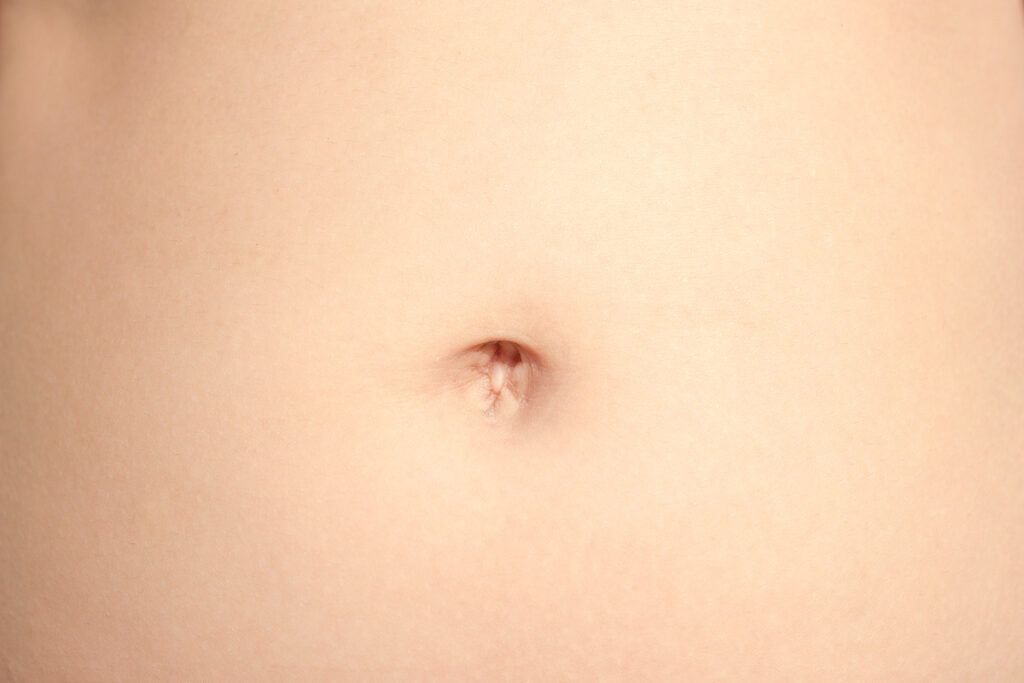
After the umbilical cord falls away, the body repairs and closes the area. Scar tissue forms as the opening heals, and how that tissue settles against your abdominal wall determines your belly button’s shape. That shape naturally varies from person to person and can be round, oval, horizontal, vertical, bulb-shaped, or even T-shaped.
Your belly button is almost certainly unique thanks to subtleties in its shape, but it’s fairly easy to classify whether you have an innie or an outie. Generally, an innie belly button looks like a little dimple while an outie looks more like a knot protruding out.
Whether you have an innie or an outie and the precise shape of your navel comes down to how it heals. There’s no “outie” gene you can be born with — it’s essentially random.
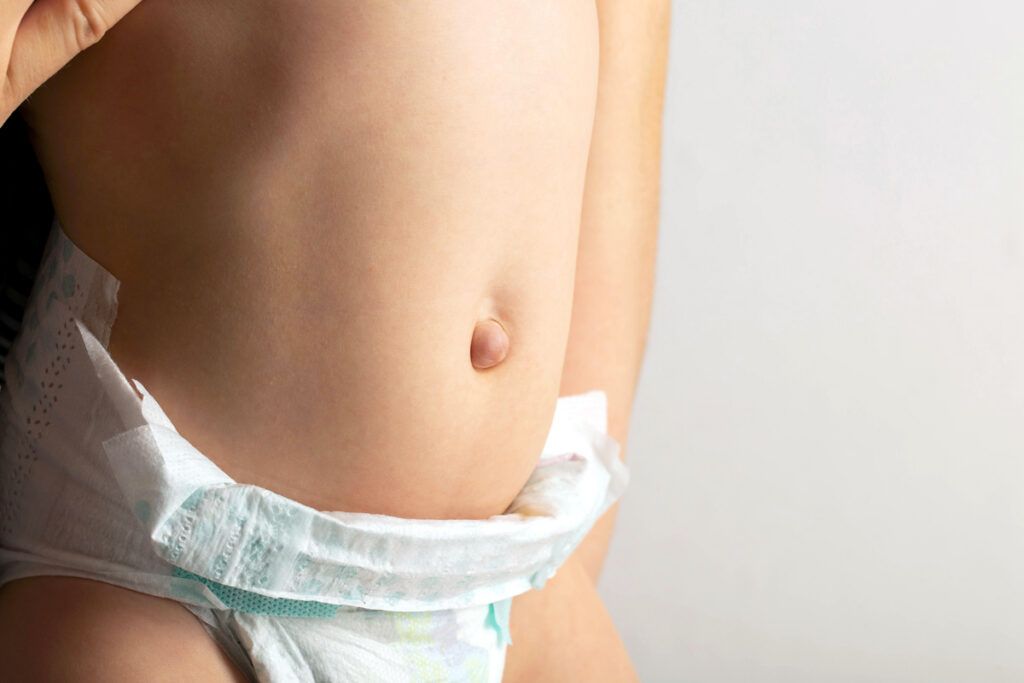
There are a few exceptions, though. Babies with certain medical conditions that affect the navel are more likely to have outies. For instance, the healing process can leave an extra bit of tissue called an umbilical granuloma. It can look like a tiny red or pink bump and may bulge from the belly button. It’s usually harmless and can be treated if it doesn’t heal on its own.
Another reason for an outie is an umbilical hernia at birth. This happens when the umbilical cord pushes through an opening in the abdominal muscles. Normally, the opening closes after birth. But if it doesn’t close completely, a small amount of tissue can push through, creating a bulge near the belly button.
Even if you grow up with an innie, it’s possible for your navel to change to an outie later in life. This can happen for a number of reasons, including fluid buildup from a liver or kidney disorder, or even the swelling of the liver itself, or the spleen. A more benign change can occur for pregnant women as the uterus pops the belly button outward as it grows larger.
But, just as with the navel shape you’re born with, none of these are because a doctor botched cutting the umbilical cord.
Your belly button is scar tissue formed when the remaining umbilical cord falls off after you’re born. This scarring naturally develops differently in everyone and results in various shapes and sizes, including determining whether the navel recesses inward (an innie) or protrudes outward (an outie). Outies are far less common but are determined randomly, not by genetics or the actions of the staff in the delivery room. However, some outies can be related to minor medical issues or even form later in life from an innie.
Short Answer