CULTURE
How Does Morse Code Work?
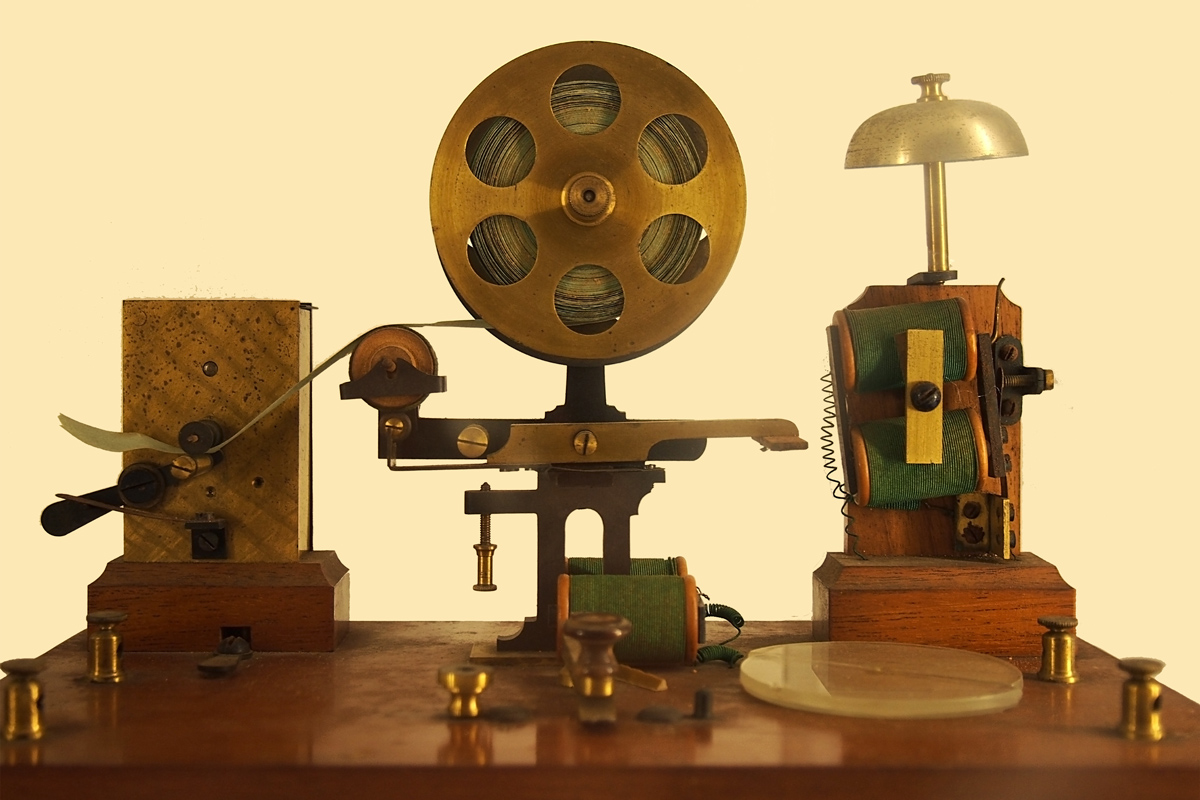

On May 24, 1844, inventor Samuel F.B. Morse tapped out the first telegraph message. Instead of using the English alphabet directly, he used a series of short and long taps — his eponymous Morse code — combining the two into patterns that represented each letter of the alphabet.
Derived from the Bible, the message was an austere one conveying the gravity of the moment, a moment history now defines as the dawn of the communication age: “What hath God wrought?” Morse sent this message from the Supreme Court Chamber in the U.S. Capitol Building. Near-instantaneously, it was received at a train depot some 40 miles away in Baltimore, Maryland.
The invention is still heralded as one of the most important in human history, since it was the first time, after tens of thousands of years, that humanity could share and spread information on a large scale faster than a horse can gallop.
Today, with the rise of social media and AI, we’re still waiting for a definitive answer to Morse’s initial question. But even as communication technology has progressed from dots and dashes to ones and zeroes, Morse code remains a skill with a dedicated fanbase.
How a Telegraph Works
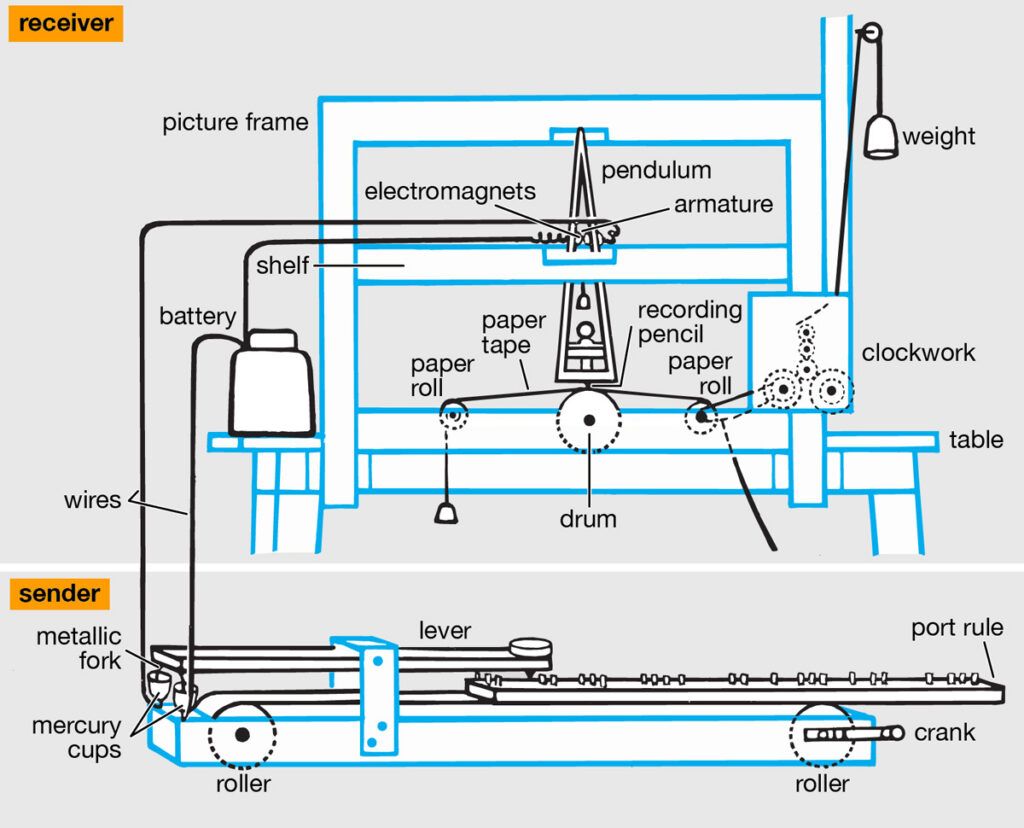
The simplest way to describe a telegraph is to picture the system as a circuit. Electricity, from a battery or generator (the first electric grid wasn’t established until 1882), travels through the circuit along a wire from one telegraph to another.
The telegraph key (the device you physically tap) essentially opens and closes the circuit. The transmitted message of dots and dashes represents the short and long moments when the circuit is closed, allowing the electricity to pass and make its trademark beeping sound. Because electricity travels through wire at the speed of light, messages are received immediately on the other side.
At the time the telegraph was invented, the idea of crisscrossing long thin wires around the world was very novel, but today it’s not too different from the network of telephone, electrical, fiberoptic, and other telecommunication wires that modern society depends on. It is simpler, though.
Because telegraph communication is done entirely through stopping and starting the flow of electricity, a basic system of interpreting these signals needed to be developed. That’s where dots and dashes come in.
Dits, Dots, Dashes, and Dahs
The basic concept of Morse code is similar to modern computer transistors that use binary code. Morse’s entire “language” is communicated through passing electricity (ones) and not passing electricity (zeroes). Interestingly, Morse code is actually more complicated than binary — it’s trinary code, because it uses three distinct elements to represent language.
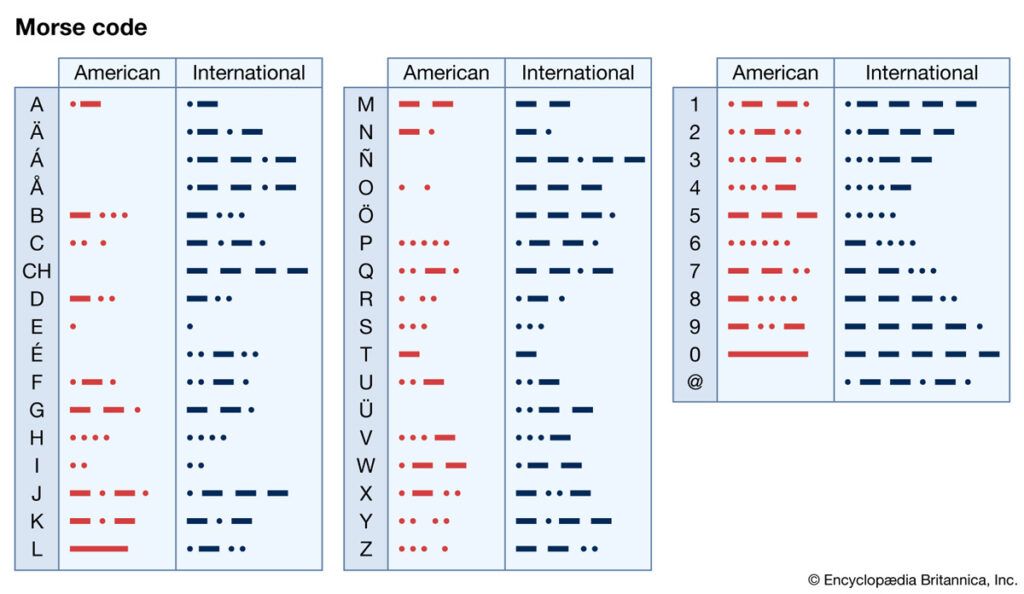
The silence between letters and words is communicated by the lack of electricity, but the flow of electricity is represented two different ways: a quick tap, or pulse, called a “dit,” and a tap that’s three times as long called a “dah.” On paper, a “dit” is represented by a dot and a “dah” by a dash, which is why we usually refer to them as “dots and dashes” (even though “dits and dahs” is a lot more fun to say).
The International Morse code contains 40 foundational characters, each represented by a unique pattern of dots and dashes. These include the 26 letters of the English alphabet, numbers zero through nine, and a handful of punctuation marks. Letters are assigned up to four elements (an element being either a dot or dash). Numbers are assigned a combination of five.
For example, the letter “E” is only one dot while the letter “T” is only one dash. “C,” on the other hand, is “dash-dot-dash-dot” while “P” is “dot-dash-dash-dot.” You might notice that more common letters are simpler to use (and remember) — this was very much intentional when Morse and his partner, Alfred Vail, devised the code.
Using Negative Space
Morse code is more than just dots and dashes, though. Remember when we said it’s a trinary system? That’s actually oversimplifying it, as there are really five basic units that make up the language. In addition to a long pulse and short pulse that closes the circuit, there are three ways to leave it open — three lengths of time a space between dots and dashes can be.
One unit is the length of a short tap. A moment of silence that’s one unit long represents the space between two taps within the same letter, but three units of silence represents the space between two letters. That way the receiver knows whether a dot or dash is part of the same letter or starting a new one.
For example, “E” is just one short pulse (.) and “I” is two short pulses (. .). The length of time between two short pulses tells you if it’s two back-to-back “E’s” or an “E” and an “I.” Telegraph operators can also use a third length of space between pulses that is seven units long. This extended pause indicates the beginning of a new word. Sometimes, to make sure a message is clear, operators also spell out “STOP” to indicate the end of a sentence.
Learning by Ear
The method may seem cumbersome at first, but with practice, you can get up to speeds approaching or even exceeding how fast people talk. In 2005, two men achieved the world record for transmitting and receiving a 160-character message in just one minute and eight seconds. A standard audiobook is typically read at a speed of 150-160 words per minute.
Originally, Morse conceived of telegraphs using styluses that would print dots and dashes onto moving paper tape. However, telegraph operators found it easier to just learn the language by ear and translate it themselves in real time.
Today, many enthusiasts learn Morse code by using the “Koch method,” named after German broadcaster Ludwig Koch, who pioneered it. From day one, you start at your target speed (however fast you want to be once you’ve mastered the skill) and then learn each letter’s pattern of dots and dashes, one by one. Once you’ve mastered one letter, you move on to the next. With diligent practice, you can learn to send and receive Morse code in three to six months.
Morse Code Isn’t a Dead Language
While Morse code may not have as widespread an application as it did at the turn of the 20th century, the skill can still come in handy, especially in the military and the aviation industry. The U.S. Navy, for example, still uses signal lamps, rather than telegraphs, to communicate in Morse code between ships when needed. Primarily, though, it’s radio enthusiasts that continue to use Morse code regularly.
The Federal Communications Commission (FCC) no longer requires a proficiency in the code to attain an amateur radio license, but many people still learn it anyway. Some amateur operators even travel to various mountain peaks and set up portable communication gear for transmitting Morse code messages.
Hamvention, the world’s largest ham radio convention, brings more than 35,000 attendees to Dayton, Ohio, annually. With Morse code competitions and artisans showcasing bespoke telegraph keys, the event is proof that Morse isn’t going anywhere anytime soon.
– …. .- -. -.- … / ..-. — .-. / .-. . .- -.. .. -. –. -.-.–
(Translation: Thanks for reading!)