CULTURE
How a Newspaper Goes From a Tree to Your Doorstep, Step-by-Step


When you sit down in the morning with a hot cup of coffee and newspaper in hand, you’re probably focused on brushing up on the biggest headlines — or maybe skipping right to the daily crossword. But have you ever stopped to wonder how the paper in your hand made its way from the forest to your kitchen table? Here’s a step-by-step look at how newspapers are made and what exactly goes on when a publisher “starts” the presses.
Step 1: Harvesting Trees
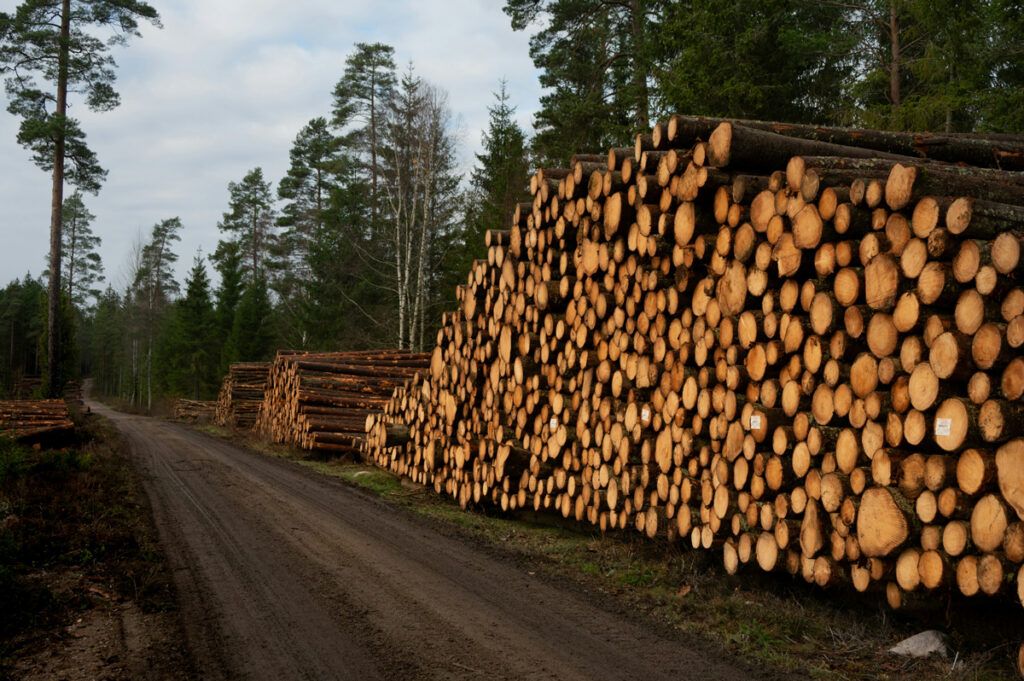
Around 85% of U.S.-made paper comes from softwood coniferous trees — a group that includes pines, spruces, and firs. Softwood varieties are renowned for their long, strong fibers that provide the paper with its durability. Hardwood species such as oaks, walnuts, or maples are sometimes combined with softwood, as those harder varieties have shorter, fatter fibers that result in a smoother printing surface.
Once trees have been selected, they’re cut down and the logs are debarked, as bark isn’t used for standard paper. The logs are then broken down further and processed into tiny, uniform pieces by an industrial wood chipper, before being sent to the paper mill for pulping.
Step 2: Pulping the Wood
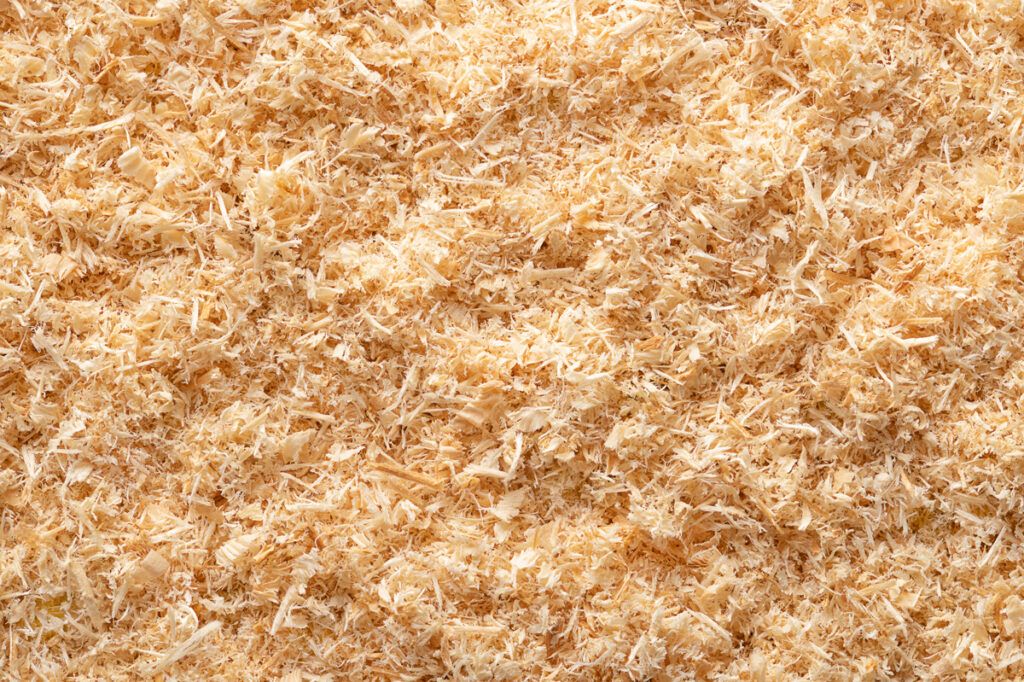
Being mashed into a pulp is a necessary part of the papermaking process in order to separate the individual wood fibers. And there are various methods for how that can be done.
Historically, newspaper manufacturers often relied on mechanical processes, creating pulp by pressing wood chips against a revolving grinding stone or passing them through a mill. While this is a useful method for mass-producing paper on the cheap, it also produces paper that’s prone to degrading and discoloring — hence why so many old newspapers have yellowed over time.
A more modern product is chemical wood pulp, which is formed by mixing wood chips with chemicals such as sulfite salts, caustic soda, and sodium sulfide. That mixture is then cooked under intense heat and pressure as part of what’s called the “kraft process.” (Don’t worry, it’s not what sliced American cheese is made from.)
The kraft process loosens up lignin, a glue-like polymer that binds wood fibers together, breaking those bonds to create wood pulp. Sometimes the pulp undergoes bleaching as well, creating a brighter, whiter, and more aesthetically pleasing hue, which also lessens the risk of future yellowing. (That means your kids’ wedding announcements may preserve better in scrapbooks than your own.)
At this point, the wood pulp is liquified into a big goopy pile of mush, kind of like a bowl of oatmeal. To use recycled paper, it needs to be re-pulped in a similar process. Usually recycled pulp is then mixed with additional chemicals to separate ink from the original paper, which then floats to the surface for easy removal.
Step 3: Forming Pulp Into Paper
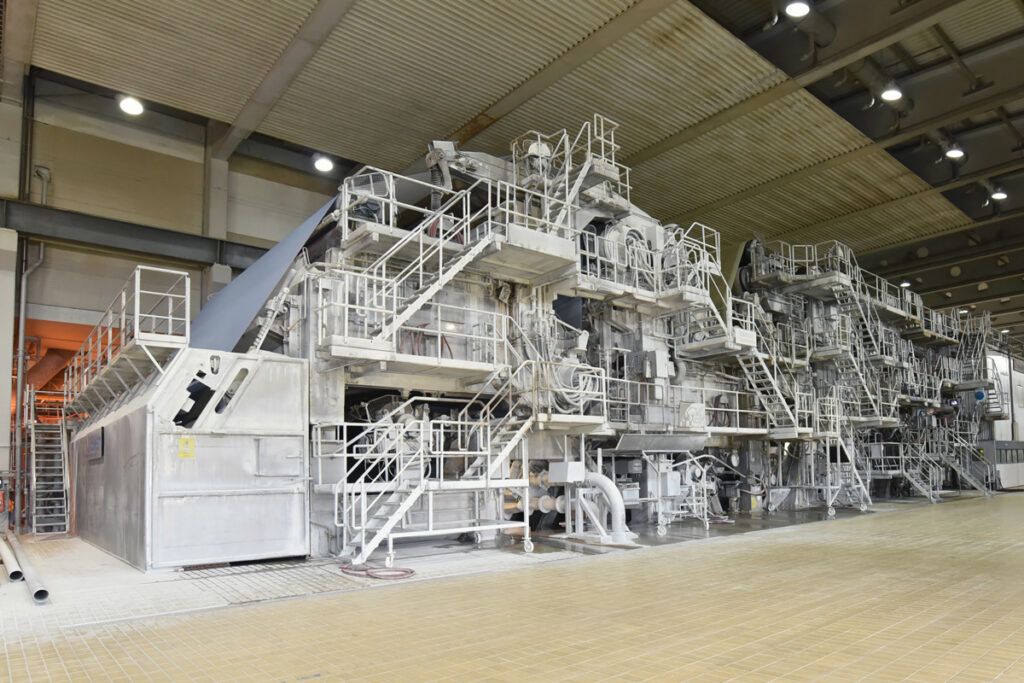
Recycled or not, the resulting mushy pulp is transformed into thin sheets of paper using a papermaking machine that can be absolutely massive in size. These industrial paper machines can be as long as several football fields and as tall as a 10-story building, able to process hundreds to thousands of tons of pulp each day.
The first component of the machine is called a headbox, which helps to evenly distribute pulp onto a layer of wire mesh. Next, excess water is drained from the pulp, and the fibers slowly start to spread out, forming into a relatively thin layer.
The thinned-out pulp enters a pressing mechanism that squeezes out up to 50% of the remaining water content. Then, it’s dried by metal cylinders heated to temperatures in excess of 212 degrees Fahrenheit. This eliminates any remaining bits of moisture, locks the remaining fibers together, and creates paper that’s ready to be cut to size and printed upon.
Step 4: Printing
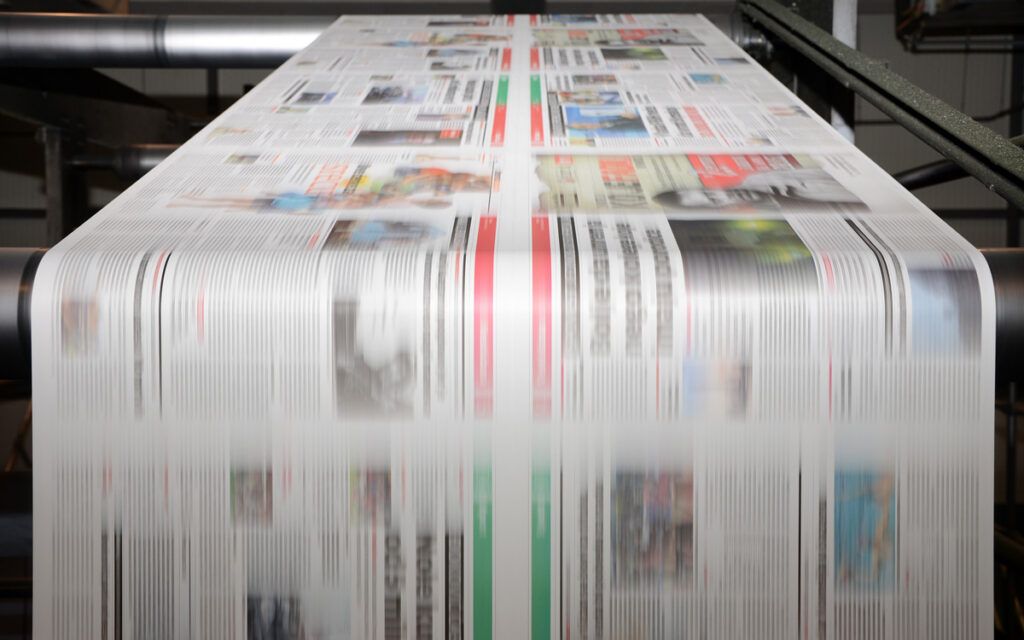
Having been processed, pulped, and pressed, the former wood is then packaged into huge reels of paper. The rolls are transported to a newspaper manufacturing facility to be fed through a printing press. But before any printing can occur, the newspaper staff must create what they want printed, and then transfer those words and images onto printing plates.
Traditionally, most major newspaper manufacturing facilities use a process known as offset lithography. Engravers laser etch the image they want printed onto aluminum plates, which are then attached to spinning drums. These plates are then dampened by water to prevent ink from pooling in areas that are intended to stay blank, and ink is introduced to coat the areas that are meant to be printed onto paper.
The image is transferred over to the blanket cylinder, which is encased in rubber, and it receives the inky image while draining out excess water. The blanket cylinder is actually what comes into contact with the paper, and the original metal printing plates never do. Large rolls of newsprint are then fed into the printing press, passing through the blanket cylinder and an adjacent cylinder called the impression cylinder, which helps apply a bit of necessary pressure.
The newsprint is fed into the device at lightning-quick speeds, and is not entirely immune from error. It’s possible for there to be tears and other snags, ink can run out, and printing plates can be misaligned. If any of these mishaps occur, it may result in wasted material or lengthy delays.
Once paper is fed into the machine, there’s really no simple way to stop the process until the roll has been fed through entirely — so publishers better hope there are no major changes to the details of a news story. But if a breaking story is big enough to warrant disrupting the machine, the printer can literally “stop the presses,” allowing the plates to be swapped out before starting the printing process over again.
Step 5: Packaging and Delivery
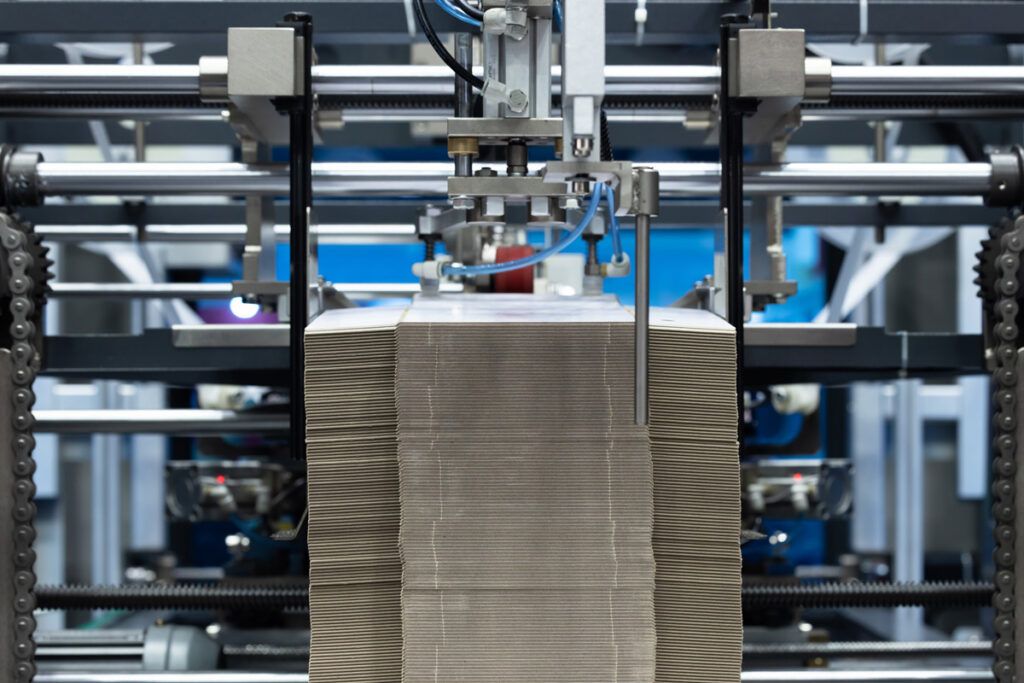
At the same facility, the printed newspaper is guided by rollers through a machine that collates, sorts, and packages it. Each step, such as excess paper getting trimmed from the edges, is entirely automated. Computer programs with preset digital page layouts sort the pages into the correct sequential order, before the completed newspapers are collected into bundles to be delivered.
Once newspapers have been bundled and wrapped in protective plastic, they’re loaded onto trucks and planes, much like other mail. From there, the papers are dropped at newsstands, taken hundreds of miles to a different state or country, or loaded into a bicycle basket of a kid delivering newspapers to their neighborhood, where one finds its way to your front door.