NATURE
Why Do Geese Fly in a ‘V’?
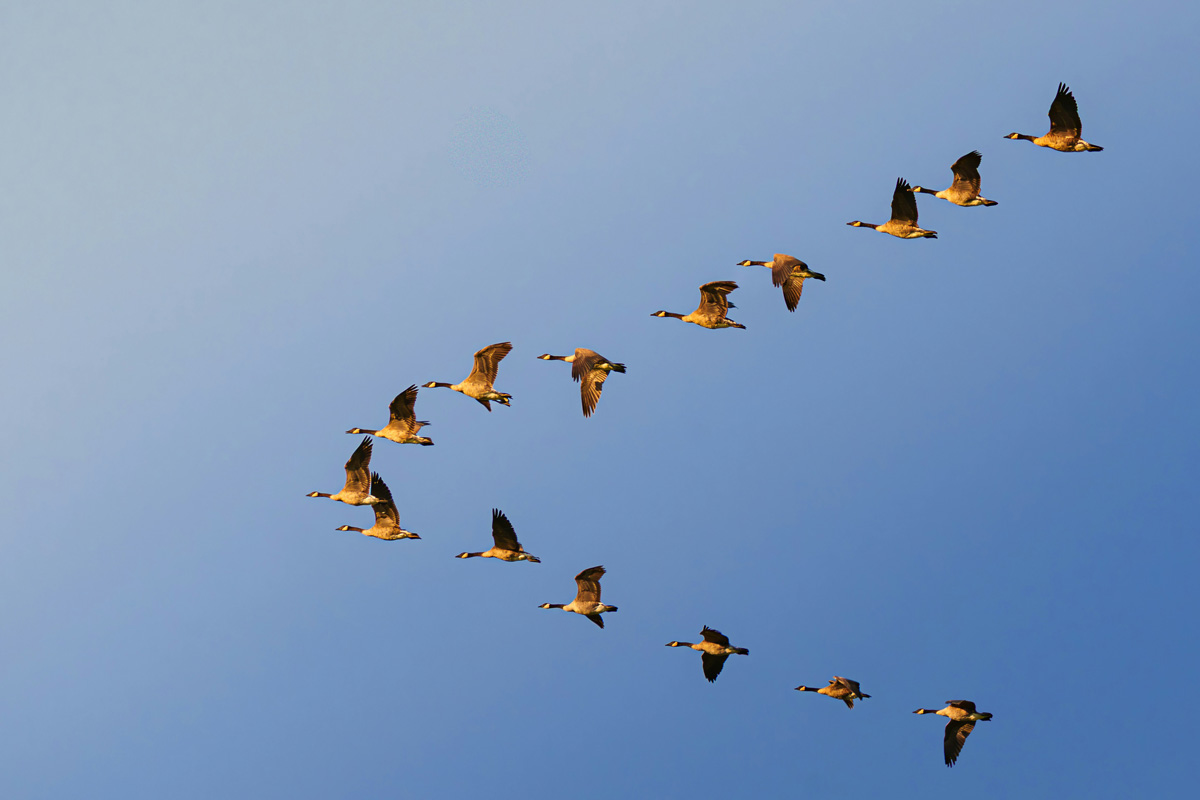

When a flock of geese passes overhead, it can look almost choreographed: one bird at the point, two lines trailing behind, and a steady chorus of honks announcing the procession.
But the flying “V” is more than an eye-catching way to cross the sky. It’s a deliberate shape that allows geese to travel with less effort, making long flights less exhausting, and it may even help the birds keep track of one another. Here’s how.
“V” for Victory
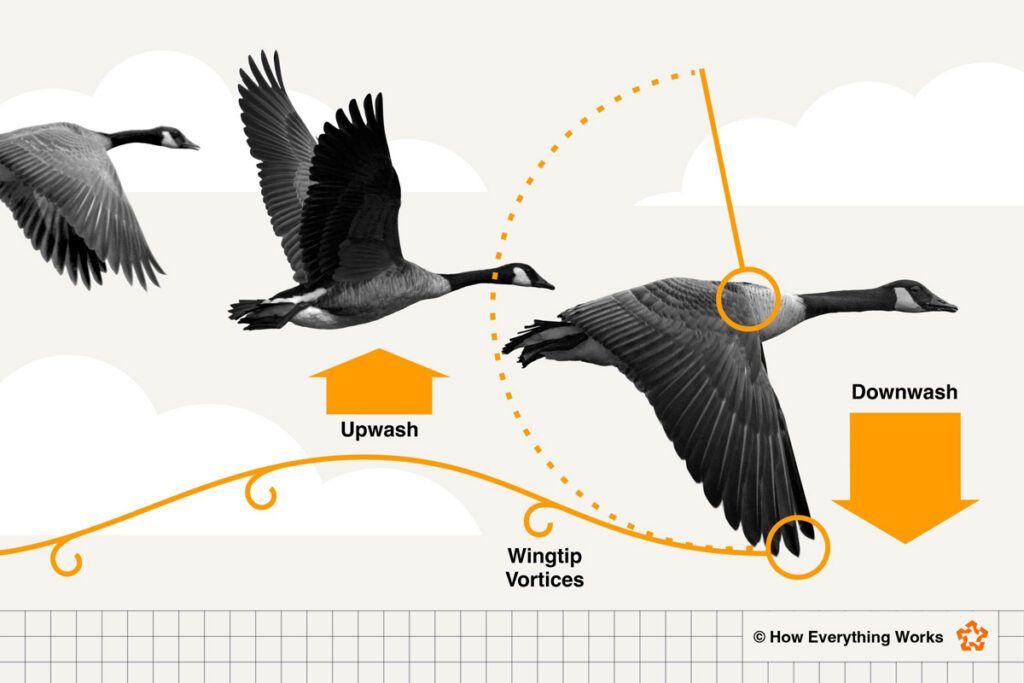
The air around a bird’s fluttering wings can be surprisingly complex. At their wingtips, all those flaps create swirling air currents called wingtip vortices. Behind each wingtip, the air sinks, producing what’s known as downwash. Just beyond each wing, however, the air rises, creating upwash.
You can probably guess where a smart goose wants to be — in that upwash. A goose flying slightly behind and to the side of another can position itself in that rising air, and the extra lift reduces the amount of work needed to support its weight. It’s a little like encountering a handy escalator in the sky.
The flying “V” formation arranges each follower near a useful patch of upwash while keeping it out of the strongest downwash directly behind the bird ahead. In a study of eight Canada goose formations, researchers calculated that the birds’ typical wingtip spacing produced a median savings of 36% in induced power — the portion of flight power used to generate lift.
That doesn’t mean the geese reduced their total energy use by 36%, since birds need to flap their wings for purposes other than lift. But it showed that some of the birds were flying in ways that aerodynamic models predicted would be most efficient — in other words, aviation engineers couldn’t have designed the pattern better themselves.
That said, the amount of energy the birds save can vary considerably depending on where they are in the formation, which brings us to the next point.
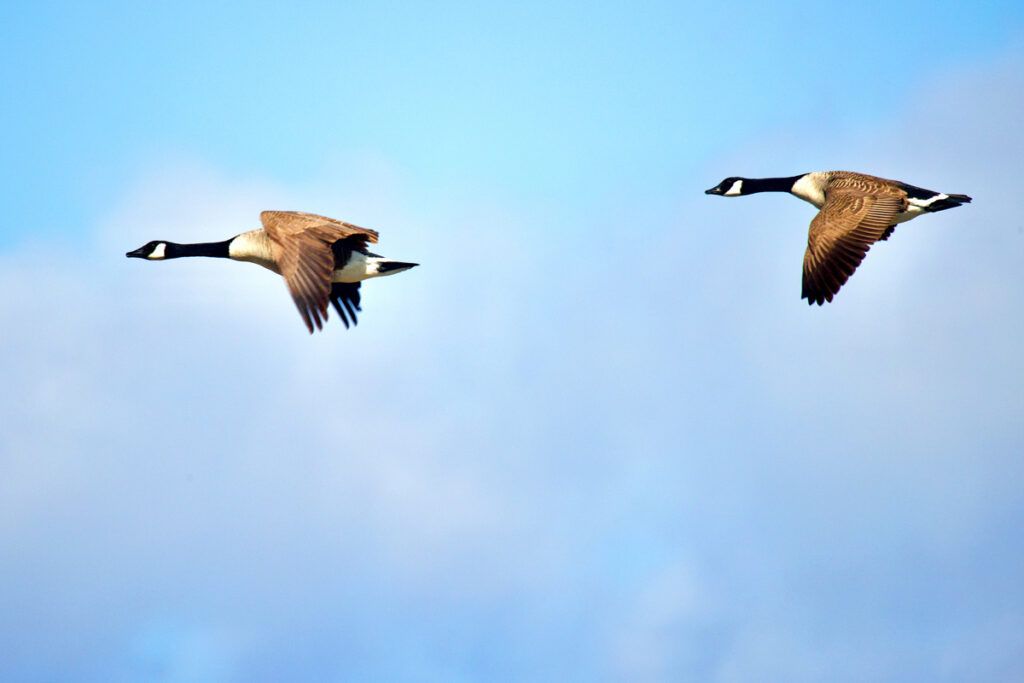
There is one obvious downside to being at the point of the “V”: The lead bird has no upwash to help keep it aloft. That’s why geese (and other birds that fly in a “V” formation) periodically change places rather than leaving one individual to do all the hard work — much like pilots rotating shifts to make sure no one in the cockpit is ever too tired.
The “V” may provide other benefits as well. Its staggered arrangement gives each bird an open view ahead and makes nearby flock-mates easier to track. If they traveled in single file, each bird would block the view of the one behind it.
Visual contact helps the birds maintain their spacing and respond when the flock changes speed or direction. Birds aren’t the only ones in the sky who fly in a “V” for this reason — fighter pilots also reap the benefits of a “V” formation.
When a bird flaps its wings, rising air called upwash is generated just beyond its wingtips. Geese fly in a “V” shape so that they can fly in the upwash generated by the bird ahead of them, allowing them to conserve energy as less power is needed to stay aloft. Since the lead bird has no upwash to take advantage of and must work harder to fly, birds take turns in the demanding lead role. The staggered arrangement of the formation also allows each bird to see ahead, making it easier for them to maintain their spacing and see when the flock changes speed or direction.
Short Answer