NATURE
Is Thunder the Sound of Lightning?
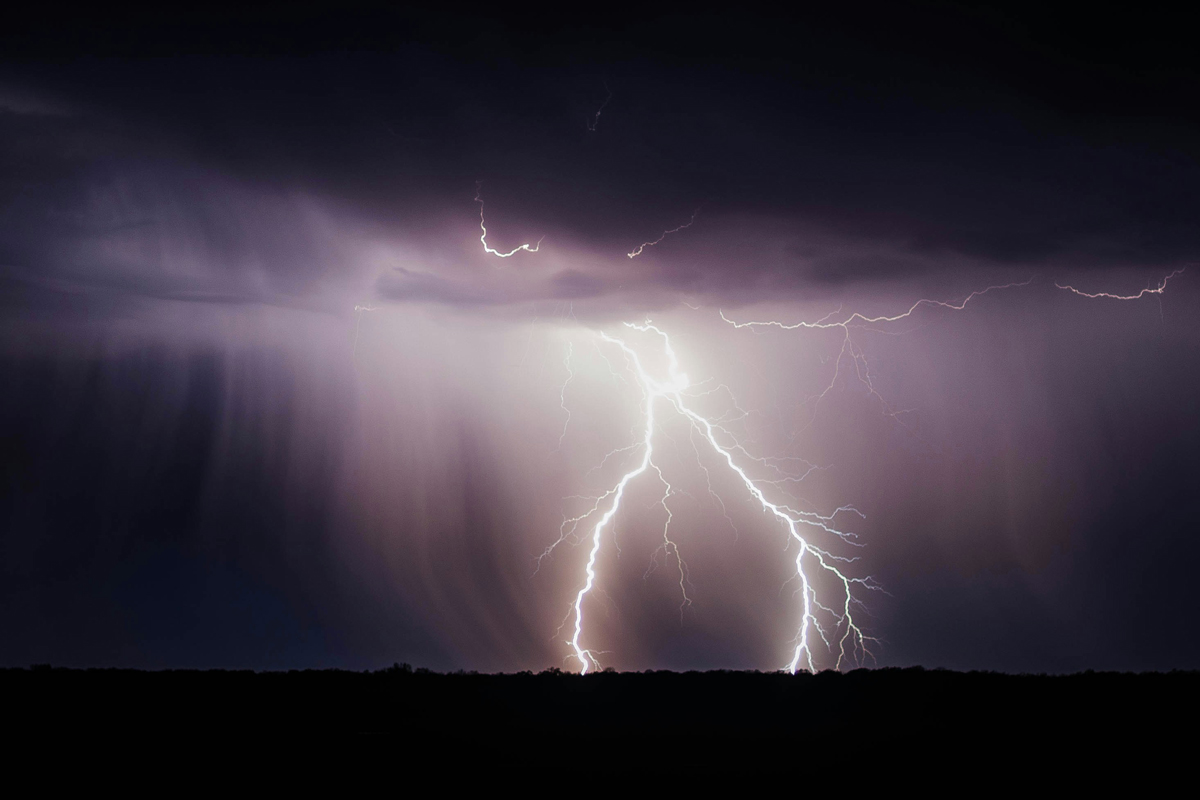

Remember seeing lightning as a kid and counting down the seconds to the first clap of thunder? Five seconds indicated the storm was just a mile away, so you and your friends had to hightail it inside. But 15 seconds or more meant the storm was far enough that you could finish that game of hide-and-seek.
Lightning and thunder occur pretty much simultaneously, and the time lag between when you observe them is due to light traveling faster than sound. But there’s more going on that explains why thunder always follows lightning, including this shocking fact: Thunder isn’t the sound of lightning, but something else altogether.
Lightning’s Electric Slide
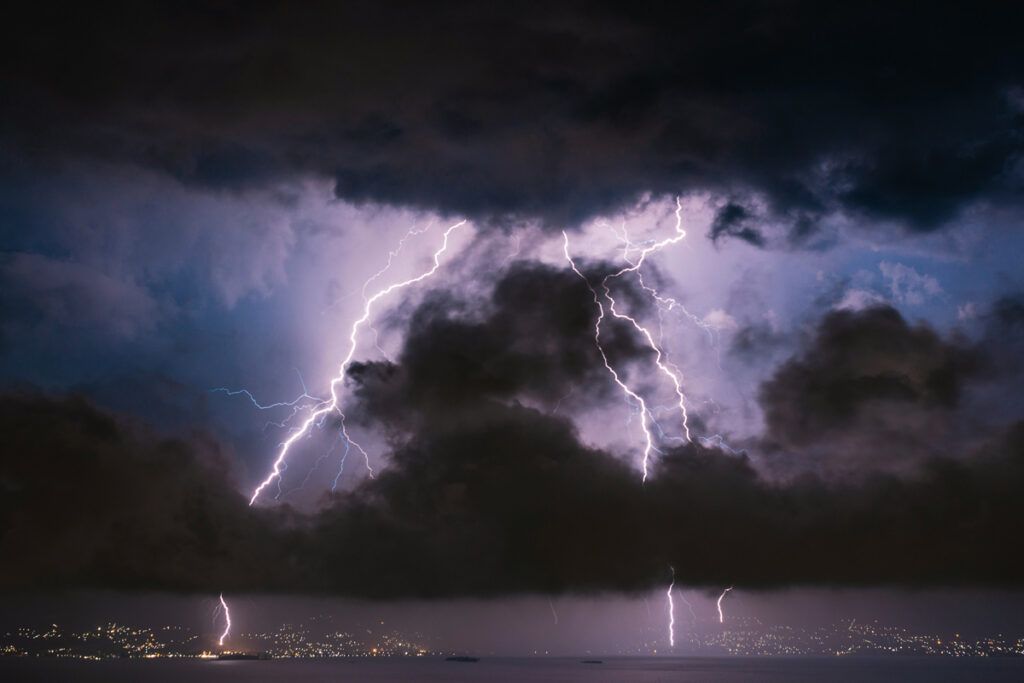
Thunder and lightning are inextricably linked, but not the same thing. Lightning is a static discharge caused by an electrically polarized cloud, traveling a crooked path of least resistance between the sky and ground. Thunder is the loud, explosive sound produced by air being quickly heated by the lightning.
The ambient air around a lightning bolt can climb to as much as 54,000 degrees – five times hotter than the sun. This sudden surge in temperature causes the air to expand and contract rapidly, which produces a sonic boom.
That’s why it’s more accurate to say that the sound of thunder is an effect of lightning, rather than the bolt of electricity itself. It’s like how the sound of a gunshot comes from the gunpowder igniting and propelling a bullet, as opposed to the bullet generating any noise on its own. Because lightning will always superheat the air around it, thunder will always follow, with the sound being generated near instantaneously.
If you were standing directly under a lightning bolt (which wouldn’t be advisable), you’d hear the thunderclap — a violent sound of exploding air — almost immediately. But if you were at a distance, you might not hear the boom for seconds, or even minutes. Why the gap?
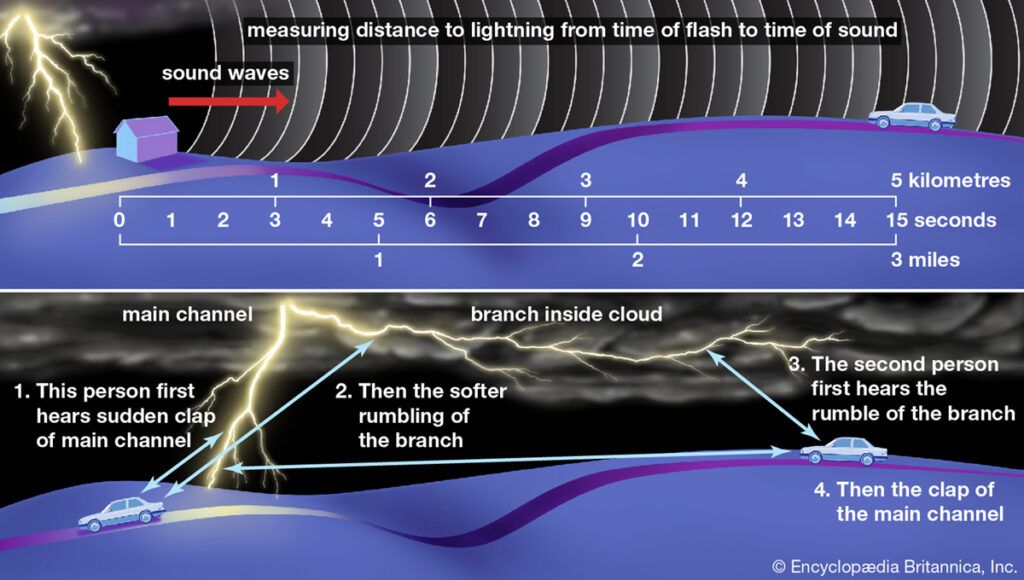
It all comes down to the speed of light. Or the slowness of sound, depending on how you look at it. The speed of light is approximately 186,282 miles per second, which is why you see lightning the moment it strikes – even when it’s more than 100 miles away. Sound is much slower than light, traveling at around 1,125 feet per second through air.
While that’s still fast, it can take a bit of time to reach your ears. The further away the lightning, the longer it’s going to take for the sound of thunder to catch up. You can easily observe the same effect from distant fireworks or a fighter jet soaring overhead at an airshow.
Even when you’re too far away to hear it, lightning is creating thunder, though it can be audible from up to 10 miles away. Because sound travels through warm air faster than it does cool air, the speed of lightning’s shock waves fluctuate and refract. Shock waves are also stretched and elongated as it moves further from the source, which is why distant thunder rolls and rumbles. Another reason thunder isn’t one monotone sound is that a lightning bolt heats air at different points (microseconds apart) as it zigs and zags through the sky.
Given that sound travels through the air at a rate of about one mile every five seconds, counting your Mississippis is a fairly accurate estimate of a storm’s distance. This lightning-to-thunder countdown even has a name: the flash-to-bang method. So, you’ve actually been a meteorological expert all along.
The heat of a lightning bolt causes the air around it to rapidly expand and contract, creating a sonic boom loud enough to be heard miles away. Because light is faster than sound, we see the lightning bolt before we hear the resulting thunder, with distortions in the shock wave adding to its irregular rumbling.
Short Answer