ENGINEERING
Why Are Objects in Car Mirrors Closer Than They Appear?
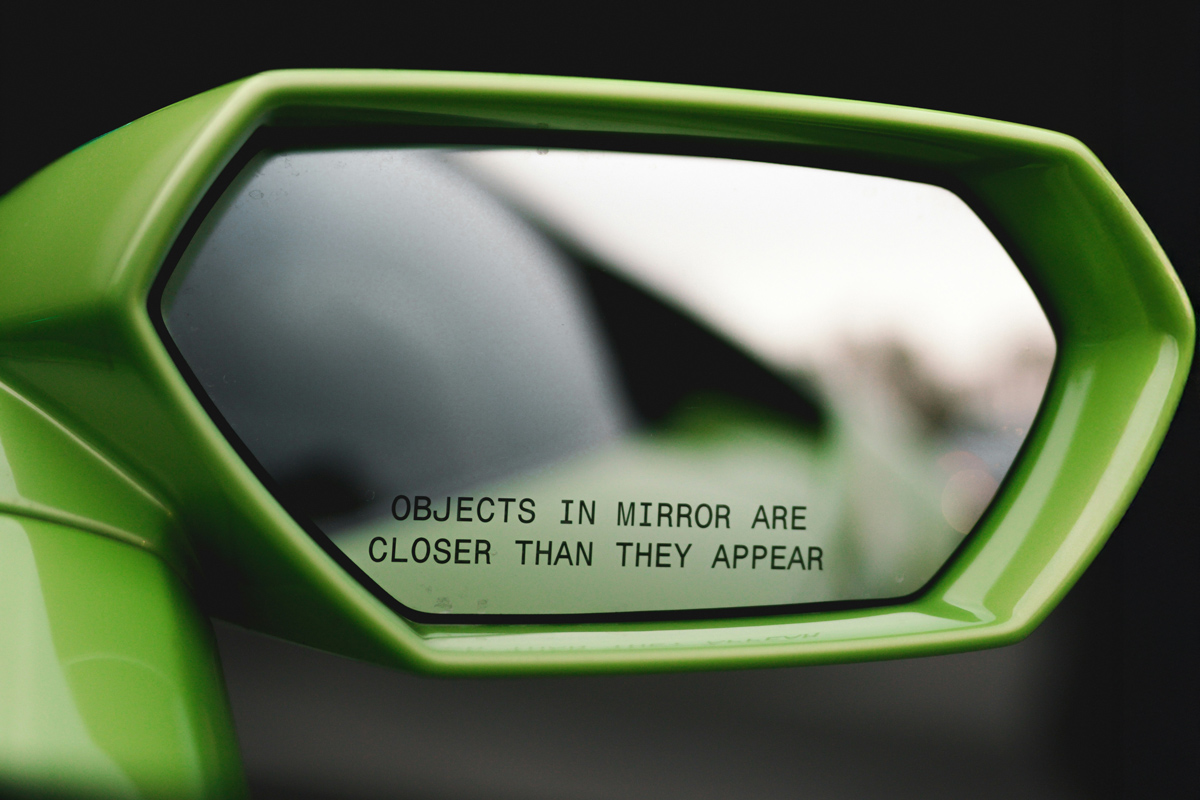

Modern cars come equipped with cutting-edge safety systems, including airbags, automatic emergency braking, and blind spot monitoring. But there’s also a very low-tech safety feature automakers attach to every passenger car at no extra cost: the side-view mirror.
A passenger-side mirror is designed in such a way that it minimizes a driver’s blind spots. However, this design also comes with an unavoidable side effect that, ironically, can make it more dangerous to drive, turning blind spots into optical illusions.
This side effect is significant enough that it’s required to include a warning etched right onto the glass: “Objects in mirror are closer than they appear.” It sounds like a legal disclaimer, but what does it even mean, and why does something intended to make driving safer come with such a trade-off?
Perhaps more importantly, why doesn’t this mirror show objects as they appear?
The Two Side Mirrors Aren’t the Same

Let’s start with the shape of the mirror. The mirror on the driver’s side is flat, just like the one in your bathroom. It doesn’t distort size or shape, so what you see is a true reflection of what’s on the road.
But the passenger-side mirror is different. It’s convex-shaped, which means it’s slightly curved and rounded. When light reflects off objects on the road and hits the curved mirror, it spreads out before it reaches your eyes, distorting the image.
The distortion isn’t random. Light rays always travel straight, and there’s a lot of complicated geometry that can calculate the exact angles of light every curve of a convex mirror will reflect compared to a flat mirror.
The way a convex mirror reflects light gives it a much wider field of view, which is why it’s attached to your car. The wider view helps reduce blind spots, allowing you to see more of the lane beside and behind your car. If the passenger-side mirror was flat, you’d only be able to see a small part of the road.
Your Brain’s False Assumptions
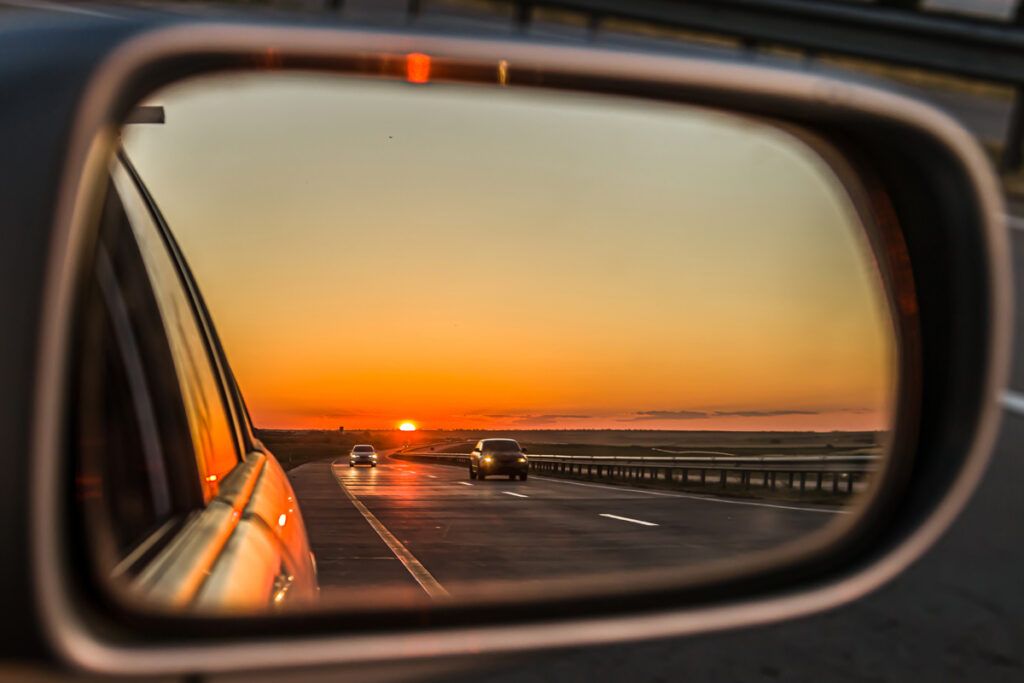
Just like the wide-angle lens of a camera, the more information you try to cram into a space, the smaller everything appears. That’s the trade-off.
Your eyes trace reflected light in straight lines, looking for their source — your brain doesn’t realize you’re looking at a mirror, so it traces the imaginary paths of light backward behind the glass. That’s why objects in a mirror look like they’re actually on the other side of the glass rather than on a flat surface.
When light is spread out from a convex mirror, these imaginary lines intersect at a smaller distance, which compresses the image and makes it look smaller than it really is. This, in turn, makes these “smaller” objects seem farther away than they are. But why?
Once again, it’s because of false assumptions made by your brain. It instinctively falls back on the basic principle of depth perception and relative size. The further away something is, the smaller it seems. That’s why the sun and moon look about the same size in the sky, even though the sun — which is much, much further away — is much, much bigger.
Conversely, when something is smaller in a convex mirror, it looks further away — especially when you already have an idea of how large something like a car is supposed to be.
Because cars reflected in the passenger-side mirror are reduced in size, your brain thinks they are farther away than they really are. That can be a dangerous misperception, since you really want to know how close other cars are to you while driving.
That’s why, for decades, it’s been mandatory in the United States that a warning is etched directly into the mirror, constantly reminding you that what you’re seeing is actually an optical illusion. Even though today’s modern vehicles include high-tech mirrors with blind-spot monitoring systems and rear-facing cameras, the convex passenger-side mirror is still used to provide drivers with a wider view of the road.
It’s a very helpful safety feature when you’re driving — provided you remember that tiny car in the mirror is actually right behind you.
Passenger-side car mirrors use a curved (convex) design that helps provide a wider field of view and reduce dangerous blind spots. But the shape of the mirror makes objects appear smaller than they really are. Your brain instinctively misinterprets the depth perception and assumes the “smaller” vehicles are farther away than they are. To counteract this optical illusion, federal regulators mandate a warning be etched onto passenger-side mirrors.
Short Answer