SCIENCE
What’s the Smallest Thing in the Universe?
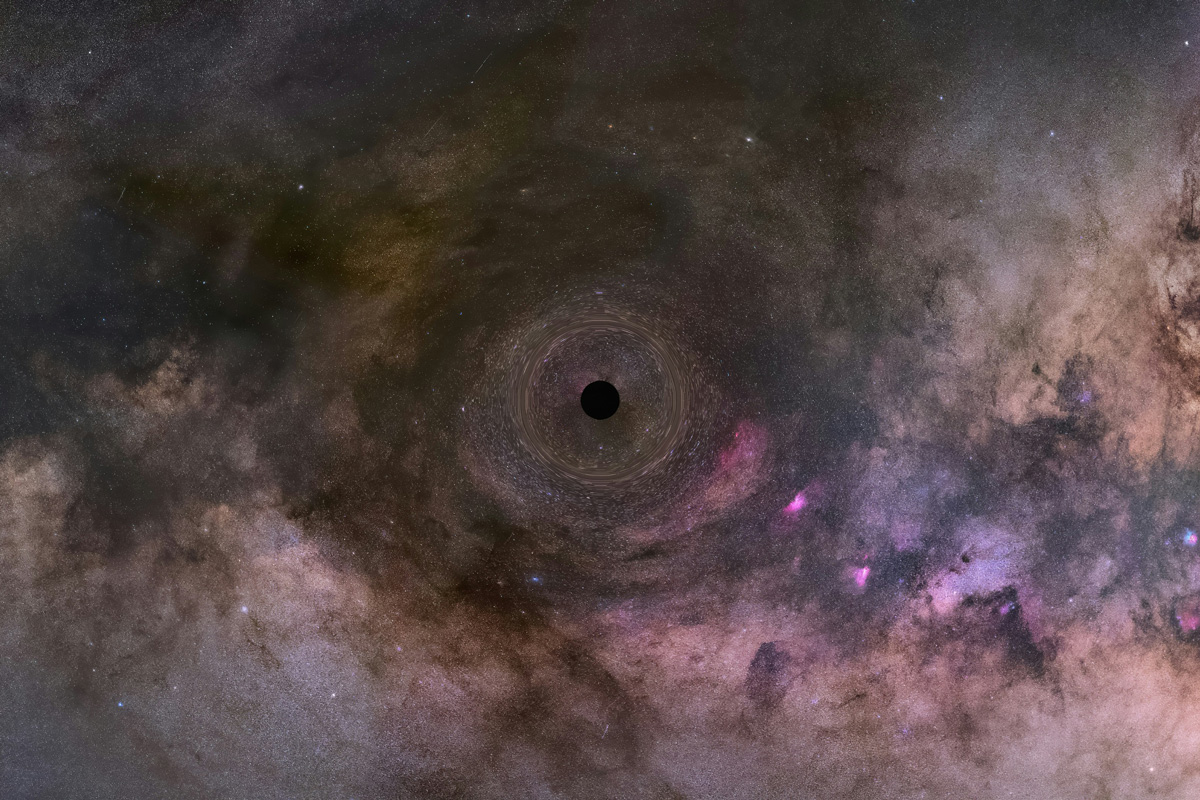

Stand outside on a clear night, and the starry sky can make you feel tiny. The observable universe is about 92 billion light-years across, which is so large that the human brain doesn’t really have a frame of reference for it. To give you some idea, the largest known object in space, a cluster of 14 merged galaxies, is a small fraction of that size — and it weighs 10 trillion times as much as our sun.
In short, the universe is a big, big place. But the scale goes in both directions. So what’s the smallest known object? Well, to put it in perspective, the mind-boggling numbers of the cosmic scale don’t even come close to the quantum scale, which measures subatomic sizes. We can use telescopes to see the edge of space, but no microscope can let us see the bits of matter so minuscule that trillions of them are passing through you as you read this.
What’s Smaller Than an Atom?

Early humans believed that the smallest object in the universe was a grain of sand. It wasn’t until the fifth century BCE that ancient Greek scholars theorized the world was made up of tiny particles (the term in physics for any basic unit of matter or energy). The Greeks called these fundamental particles atomos, which translates to “indivisible.” But that descriptor isn’t actually accurate.
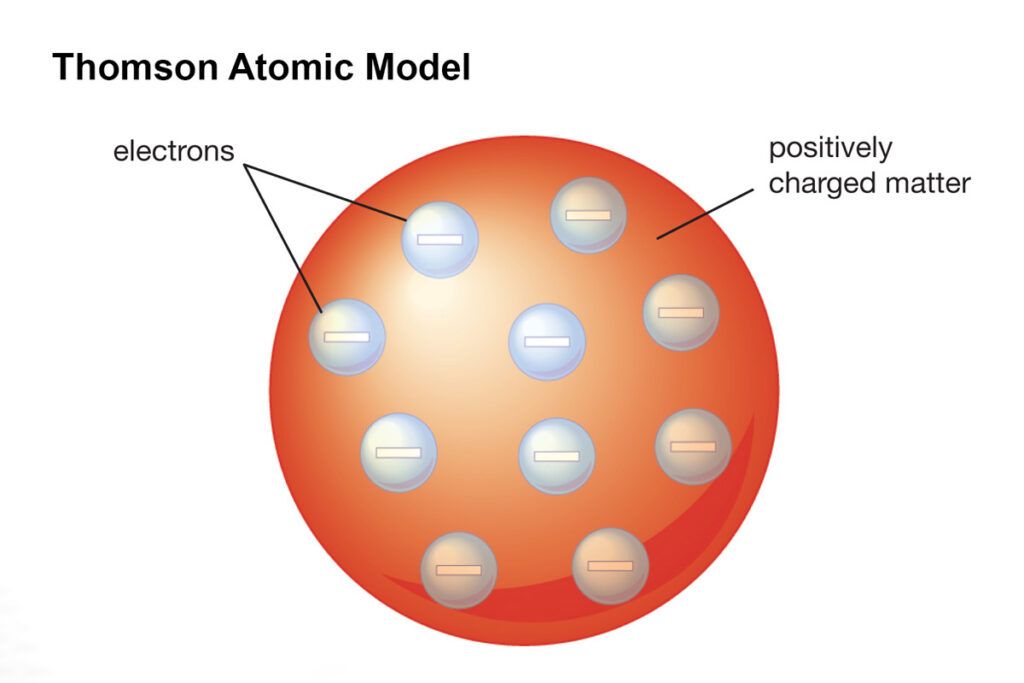
At the end of the 19th century, Cambridge physicist Sir Joseph John Thomson observed negatively charged particles that are a thousand times smaller than hydrogen atoms, which were considered the smallest unit of matter at the time. Thomson realized that atoms, previously assumed to be indivisible, were actually made up of smaller particles of positive and negative charge.
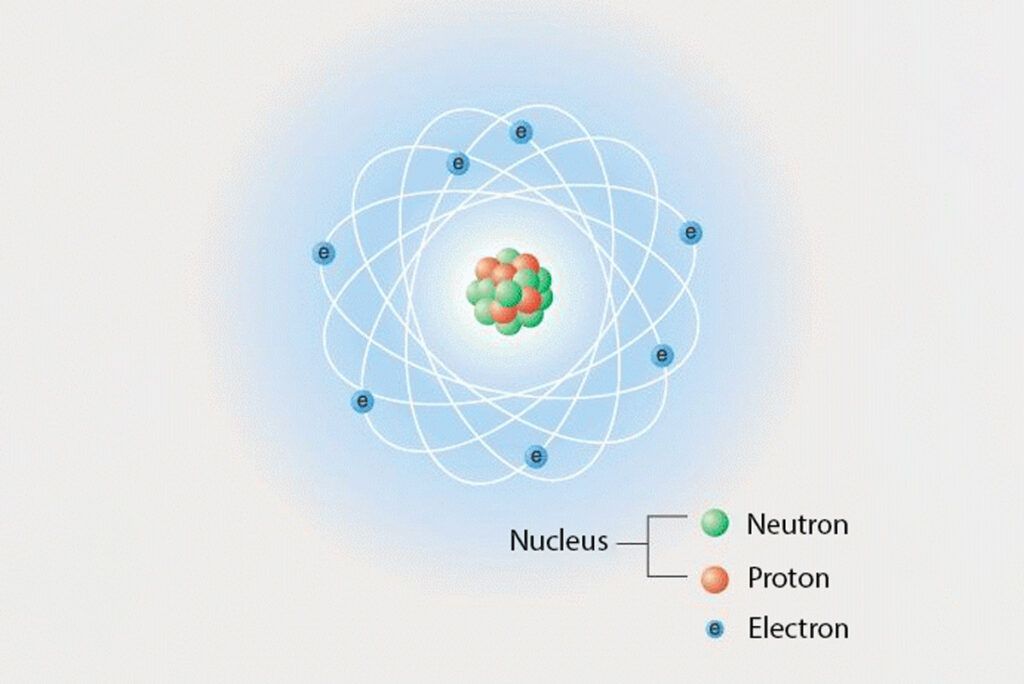
The atomic model has been further refined since then, and while researchers haven’t fully worked out the mechanics of it all, we now have a fairly accurate conception of how atoms work, and how big — or rather, small — they truly are. Atoms are mostly made of empty space. (Quantum physics complicates what exactly counts as “empty,” but it’s a good way to think of it.) They contain smaller particles, with electrons orbiting a nucleus of protons and neutrons.
These particles show that despite what humans believed for millennia, atoms are divisible and are not the smallest things in the universe. Some atoms can be observed directly using powerful specialized microscopes, but the components that make up atoms are too tiny to be observed this way.
If a single atom were blown up to the size of a football stadium, the nucleus would be roughly the size of a marble. That includes all of the protons and neutrons of the atom, but an electron would be even smaller. A lot smaller. Electrons are estimated to be 1,836 times less massive than a proton and 100 million times smaller than an atom.
It’s an understatement to say that this is very, very small. But you’ve probably guessed by now that when a physicist declares that they’ve finally whittled down reality to its fundamental structure, someone else eventually finds an even tinier particle.
In the late 1960s, physicists discovered that protons and neutrons are not indivisible either, and in fact consist of even tinier particles called quarks. As of now, quarks are considered to be the smallest building blocks that make up the universe. But they’re not the smallest known particles. Those would be neutrinos. Nothing with mass, i.e., nothing that occupies physical space (unlike, say, light), is smaller than a neutrino.
Ghost Particles

“Neutrino” sounds a lot like “neutron,” but it’s actually not a part of the atom at all. It’s a distinctly separate particle formed by radioactive decay and the sun’s nuclear fusion, and it may have played a pivotal role in the formation of the universe during the big bang.
There are different types of neutrinos, and their size hasn’t been precisely determined yet, but physicists have a rough idea. Remember how small an electron is compared to an atom? Well, a neutrino weighs at least 500,000 times less than an electron.
They’re so small that, as you’re reading this sentence, trillions of neutrinos are coursing through your body near the speed of light. They barely interact with anything, despite neutrinos being the most abundant particle in the universe other than light particles (photons). Because of this, neutrinos are often referred to as “ghost” particles.
Their diminutive size also makes them hard to observe and study. Researchers use ultra-sensitive detectors buried deep underground to prevent pesky larger objects, such as stray atoms, from skewing the data.
The neutrino has very little mass — but it does have mass. There are particles with zero mass, such as gluons and photons, but it’s hard to quantify something that has no mass as smaller or lighter than something that does. A thought in your head has no mass either, so imagine comparing its size to something else. Because of this, neutrinos are currently considered the smallest “objects” in the known universe.
Can Anything Be Smaller?
Physicists do have a knack for proving each other wrong every few generations. So could particles even smaller than neutrinos exist? Possibly. Some physicists believe that quarks contain tinier particles, called preons, but these are only theoretical at this point.
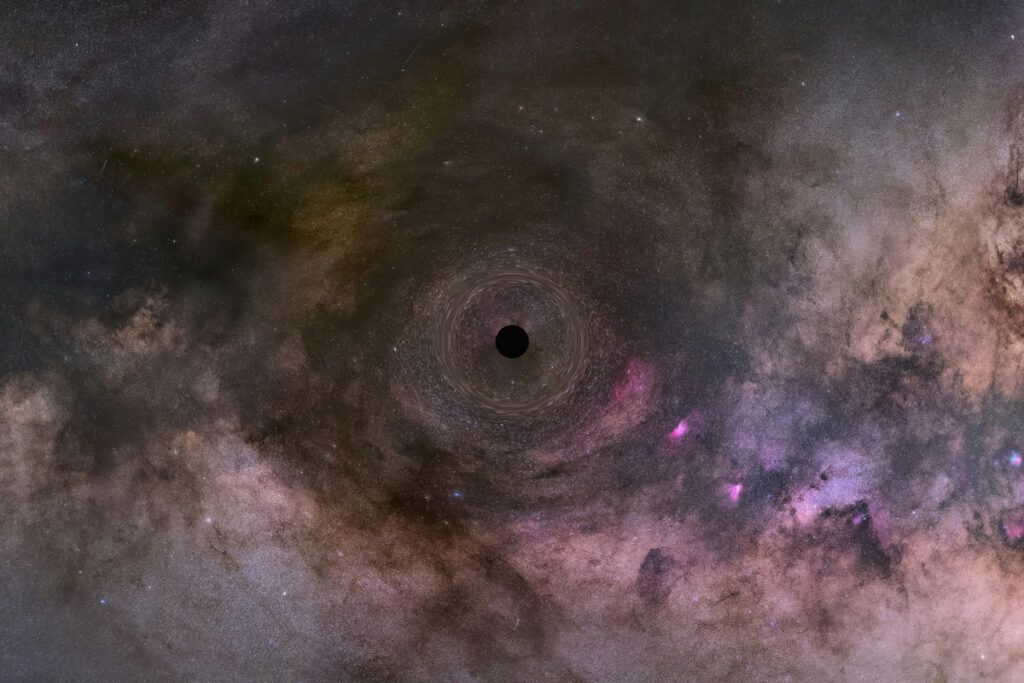
Some experts believe that the smallest thing in existence is a singularity — the center of a black hole. But that theory hasn’t been tested. Is there anybody out there willing to fly into the center of a black hole to find out?
Then there’s string theory, which posits that the tiniest building blocks of the universe aren’t particles at all but actually tiny loops of vibrating string. If the universe is made of strings, how small is each string? About one Planck length. German physicist Max Planck, a pioneer of quantum physics, formulated the smallest unit of distance possible — a theoretical limit of how small anything can be. The Planck length is 1.6 x 10^35 meters, which is actually too small for any instrument to measure.
It’s so small that you are actually 100 million times closer in size to the entire observable universe than to one Planck length. Planck theorized that nothing physical could be smaller than this size, because beyond this marker, the universe is indeterminate and probabilistic, meaning the entire concept of “size” is no longer applicable. It’s the ultimate ideal of what it means to be indivisible.
If your head is spinning, well, welcome to the world of quantum mechanics.