SCIENCE
Why Does a Spinning Coin Speed Up Before It Drops?
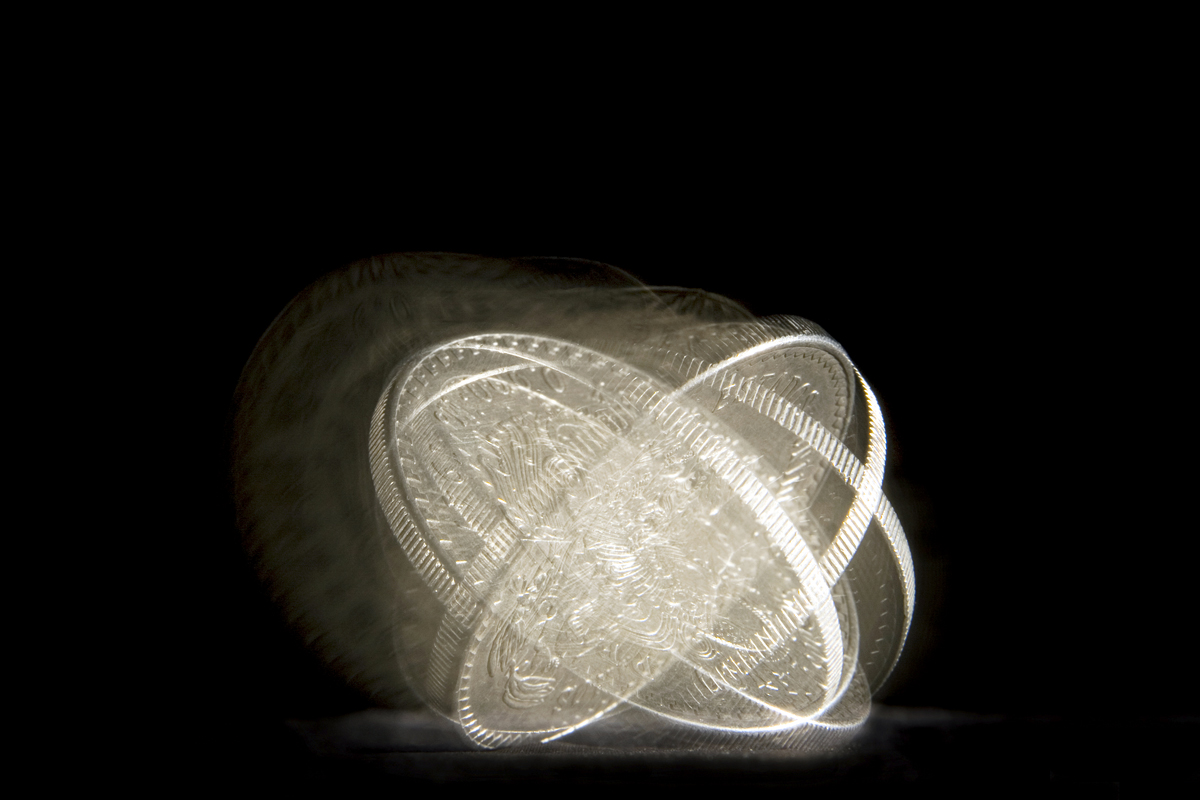

Ever been stuck waiting at a table for a tardy friend and spun a quarter just to pass the time? It also works as a stand-in for a coin toss. Give it a flick, wait for it to land, and let heads or tails decide who pays for pizza.
Either way, you know how the show ends. (Or if it’s been a while, grab a coin and try it now.) The coin twirls smoothly for a few seconds, then starts to wobble, leaning lower and lower as the whirring rattle climbs in pitch. Just when it seems to be picking up steam, it slaps down flat and goes silent.
It’s a strange finale. A coin running out of energy should be slowing down, not speeding up. And in a sense, it is. But the part that speeds up isn’t quite what it looks like.
It’s All About the Wobble
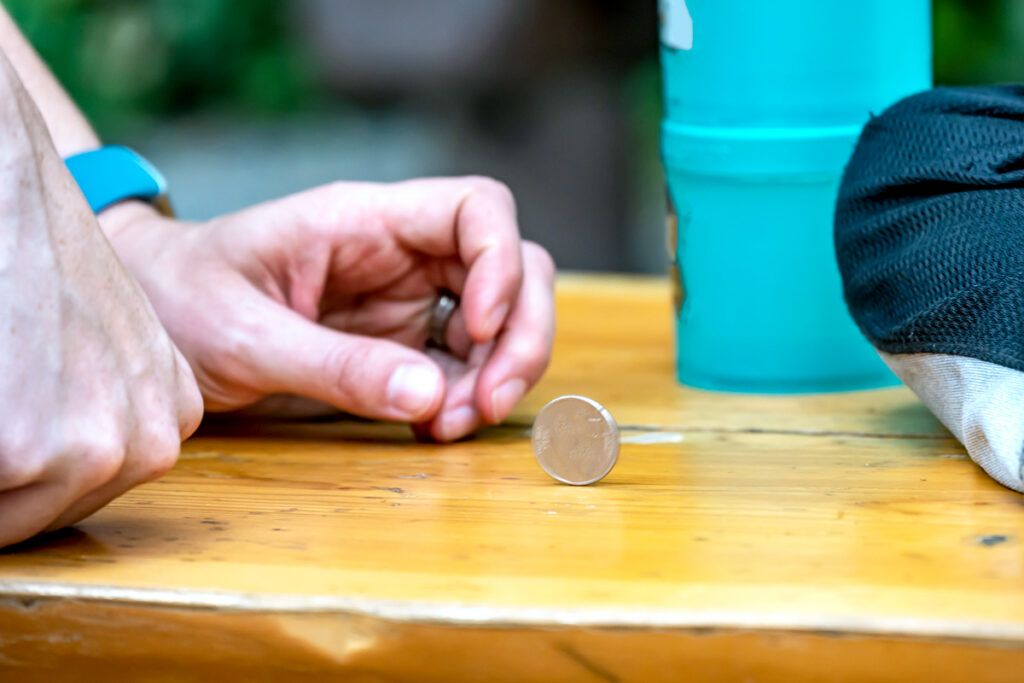
A spinning coin is doing two things at once: It’s rotating around its own center, and it’s also rolling on its edge. As it rolls, its tilted axis sweeps around in a circle, so the point where it touches the table travels around, too. Physicists call this precession, but the rest of us call it a wobble.
Every time the coin loses a bit of energy to friction against the table, it leans a little lower. The lower it leans, the faster that contact point has to race around to keep it from tipping over. A toy top works on the same principle, but a coin pushes it to the extreme. It’s somewhat like how increased momentum keeps you stable as you head down a steep hill or round a tight curve on your bicycle — if you were pedaling slowly, you’d fall to the ground, but hitting the turn at speed keeps you upright.
So as a spinning coin gets closer to lying flat, the wobble rate shoots up. At the same time, the rattle, caused by the edge rolling and tapping against the table, rises in pitch. Meanwhile, though, the coin’s actual spin — not its wobbling in circles around the table — is winding down. If you watch a quarter closely near the end, George Washington’s face turns more and more slowly, even as the noise hits its peak. What sounds like a coin speeding up is really a coin falling over, first in slow motion and then all at once.
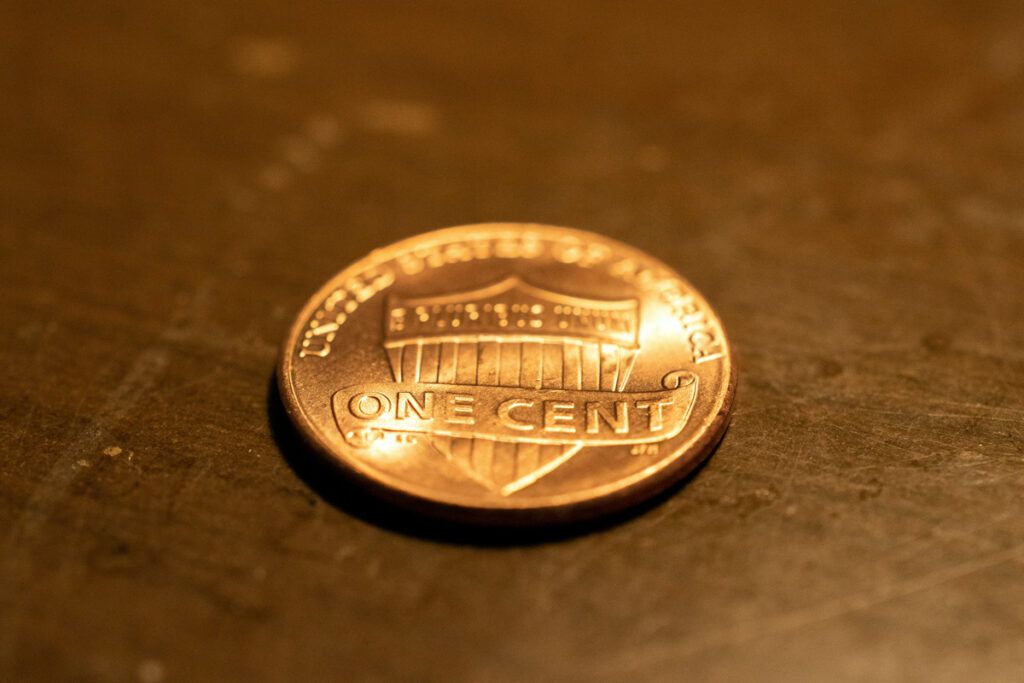
That’s also why the ending seems so abrupt. If you ran the math on a perfectly idealized coin and a perfectly flat table, the wobble would keep speeding up until it hit infinity, and it would get there in a set amount of time. Physicists call this a “finite-time singularity,” which is a fancy way of saying the numbers stop making sense.
It’s a rare case where you can watch that kind of math play out on your kitchen table. (When is anything perfectly idealized in the kitchen?) The quarter in your wallet has imperfections, as does the table. At some point, the coin is going to lose its grip and flop over.
That frantic final rattle, then, isn’t a grand finale. It’s the sound of two different motions heading in opposite directions: the spin quietly running out of steam while the wobble races faster to keep the coin upright. Eventually, the wobble can’t keep up, and the coin lands on heads or tails.
A spinning coin also moves around the table in tight circles, which we call its wobble. As a coin loses energy and its spin slows down, it leans closer to the table. The lower it tilts, the faster it circles to keep itself upright. You can hear this increasing wobble because the rattle caused by the coin edge rolling against the table rises in pitch. The wobble is what speeds up dramatically just before the coin loses all spin and falls flat.
Short Answer