CULTURE
Understanding the 6 Classes of USPS Mail
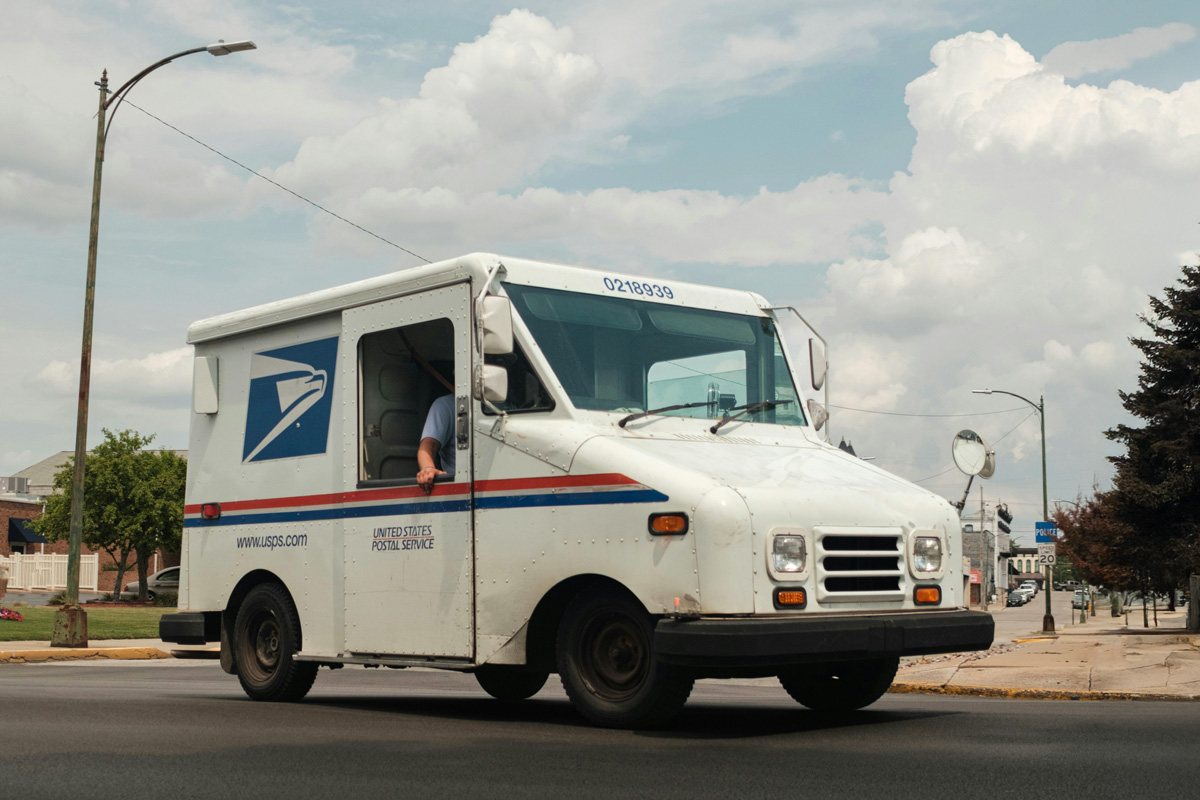

Not all mail is created equal. You can send a birthday card and a 50-pound box of who-knows-what through the same U.S. Postal Service (USPS), but they don’t travel under the same rules.
That wasn’t always the case. The USPS was established by the Second Continental Congress July 26, 1775, when Benjamin Franklin was appointed as the first postmaster general. The idea behind the USPS was both practical and philosophical: Easy communication was needed for the Continental Congress and Continental Army during the Revolutionary War, but also for citizens to participate in a democracy, staying informed and keeping in touch with their elected representatives.
Rather than how mail is delivered to your home today, early Americans would have to pick up their mail at their local post office. In its infancy, there were about 75 post offices, however, the system expanded quickly — first up and down the East Coast and then westward as the United States expanded. By the time of the California Gold Rush in 1848, the demand for mail service skyrocketed.
By 1863, the USPS had a three-class system, and in 1879, a law was passed that expanded that to include a fourth, creating a First-, Second-, Third-, and Fourth-Class mail structure. All mail had the same rate, based on quantity and distance it needed to travel. Today, only First-Class Mail still goes by its original name — and it’s misleading, because, unlike commercial flying, First-Class isn’t the best class.
Here’s what the six major USPS mail classes and services mean now.
First-Class Mail
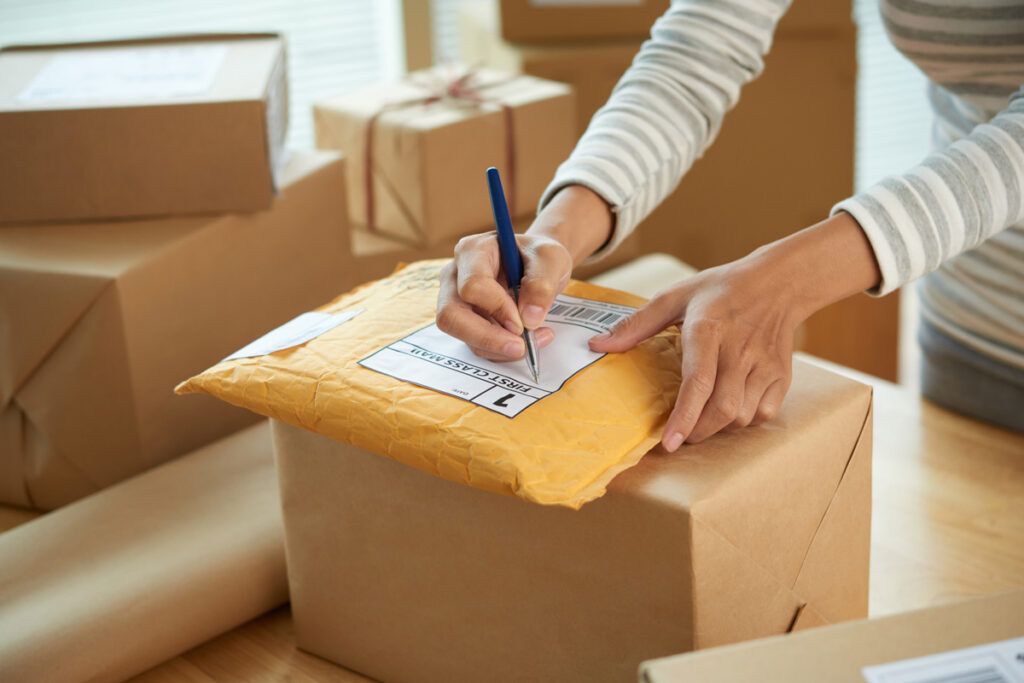
First-Class Mail is the method you probably use the most. It typically takes between one and five days to get to its destination, and it’s best for sending letters, greeting cards, bills and other documents and has a maximum weight limit of 13 ounces.
The standard stamps you buy are First-Class stamps, with the price of one stamp covering one ounce of weight. Additional ounces are typically a cheaper rate, so you’d only need seven stamps for a 13-ounce large envelope. The price of a single First-Class stamp goes up with inflation — in 1976 one stamp cost 13 cents; in 2026, it costs 82 cents. One forever stamp is equivalent to a current First-Class stamp, no matter what you paid for it.
Priority Mail
Priority Mail makes your mail just that: a priority. It gets your items to their destination faster — usually in two to three business days. Any First-Class mail that ends up weighing over 13 ounces must be upgraded to Priority, and a package can weigh as much as 70 pounds.
Think of Priority Mail as USPS’s version of “We’ll get it there for you faster, and it won’t cost you a small fortune.” Unlike First-Class, there are several different rates you can be charged for Priority Mail, including commercial or retail rates, flat rates, variable pricing by weight and zone, and even temporary holiday surcharges (since postal workers are extra busy toward the end of the year).
Priority Mail Express
If that’s not fast enough, there’s Priority Mail Express. USPS guarantees to have your mail to where you want it in 24 hours (if you drop it off by 3 p.m. local time). So, if you forgot to send your grandson his birthday present, this is USPS’s fastest option. This is important to remember, because it’s a bit confusing that, when it comes to the USPS, First-Class mail isn’t the best class — it’s the standard.
There’s also 2-Day expedited service. Flat rates are available when using standard Priority Mail Express envelopes, and prices are based on the weight and dimensions of the package and where it’s going. Mail in this class includes $100 of insurance coverage and delivery is typically offered 365 days a year (though not everywhere).
Periodicals
The next three classes of mail are ones you’ll rarely use, if ever, though you may receive them. Periodicals, for instance, include media such as newspapers, and magazines subscribers.
Publishers must apply to use the class and fit certain criteria, such as publishing at regular intervals, having an established list of subscribers, and meeting standards for advertising limits, and other metrics. Certain periodicals, such as nonprofit and classroom ones, can get lower postage rates. The weight limit for Periodicals is 70 pounds.
Marketing Mail
Marketing Mail is the class for all the junk mail that fills up your mailbox: flyers, ads, newsletters, and catalogs. Each individual piece must weigh less than a pound, but to send mail this way, it needs to be a minimum of 200 pieces or 50 pounds. Nonprofits can apply for lower prices for this class.
Package Services/USPS Retail Ground
Package Services and USPS Retail Ground is the final class and has three subclasses:includes Bound Printed Matter, Media Mail, and Library Mail. These are reserved for libraries, institutions and editorial services and have special retail ground-postage rates and weight limits, such as a 15-pound limit for Bound Printed Matter.
The class is non-expedited but you can pay extra for services such as insurance and tracking. Lower prices for bulk quantities may be available depending on the delivery. The USPS says that, if you are mailing merchandise, you should do price comparisons with Priority Mail, which may move your mail faster and cheaper in certain situations.
International
These six classes are all for domestic mail. Mail sent to other countries are categorized into their own set of classes. Some have domestic equivalents, including First-Class and Priority, while others are more distinct, such as Airmail M-Bags, which is for bulk printed material. Depending on the class and material, prices and weight limits vary (and are typically more expensive than domestic mail). Customs forms are usually required as well.
While getting something overseas in under 24 hours is likely not feasible, the USPS does promise 3-5 business days for its fastest international class, Priority Mail Express International.
What Classes Use Forever Stamps?
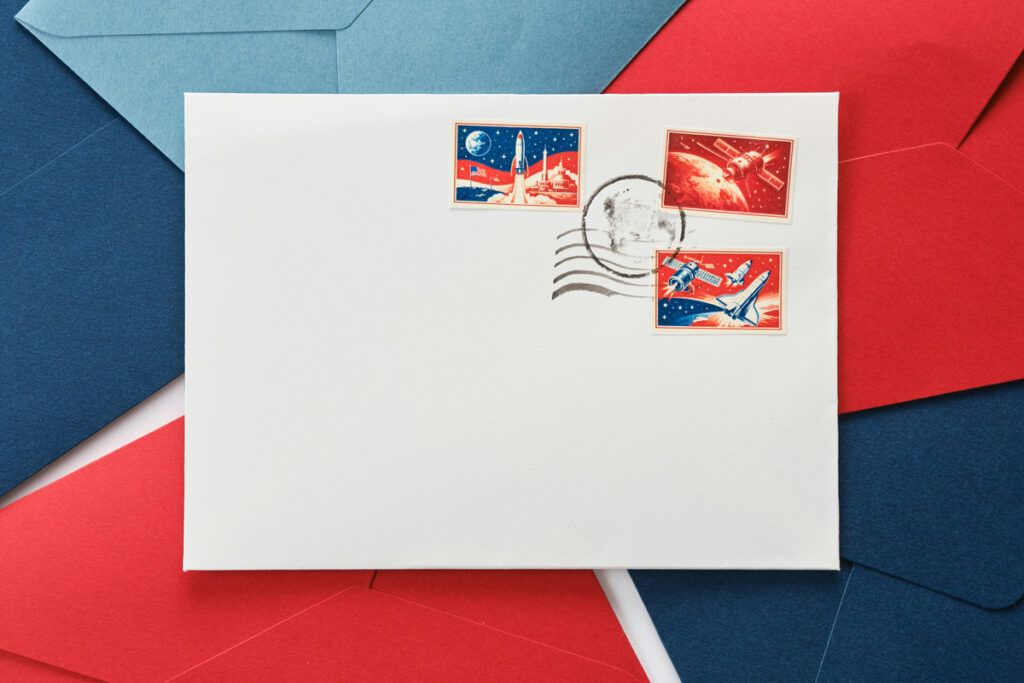
Buy one today and a Forever stamp will cover the price of mailing a standard one-ounce First-Class letter, even if USPS raises that price tomorrow (and you know it will). That’s the entire point of “Forever.”While it’s based on First-Class rates, you can apply Forever stamps on Priority Mail or even First-Class Mail International toward the cost of those packages. So if the current rate for 1 ounce of First-Class mail is 82 cents, each stamp would cover 82 cents of the total cost of that delivery.
There are also Global Forever Stamps, which are the equivalent for International mail. One stamp covers 1 ounce of First-Class Mail International, which is currently $1.75.
What Happened to Second-, Third-, and Fourth-Class Mail?
In 1996, USPS overhauled its century-old mail-class system. Second-Class Mail became Periodicals, while Third- and Fourth-Class Mail were consolidated under the new Standard Mail category. Standard Mail was later renamed USPS Marketing Mail in 2017.
So today’s system is less a clean break from the past than a postal game of musical chairs: the names changed, categories merged and services were reorganized as Americans’ mailing habits changed. But at its heart, it’s still the same USPS that Benjamin Franklin ran 250-plus years ago.