HEALTH
Why Do You See Eye Floaters?
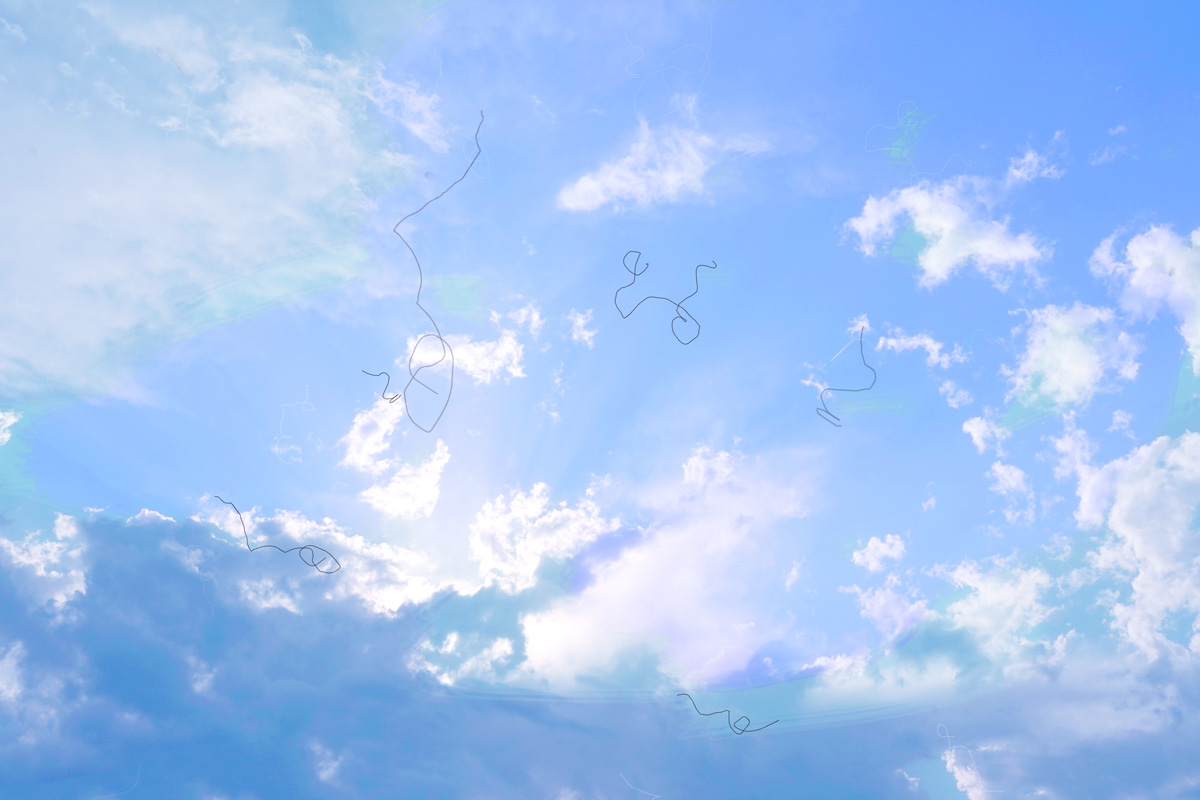

If you’ve ever looked up at the sky or stared at a blank wall, you might have noticed small particles floating across your eye. Appropriately enough, these are called eye floaters. (Though technically, they’re known as vitreous opacities.)
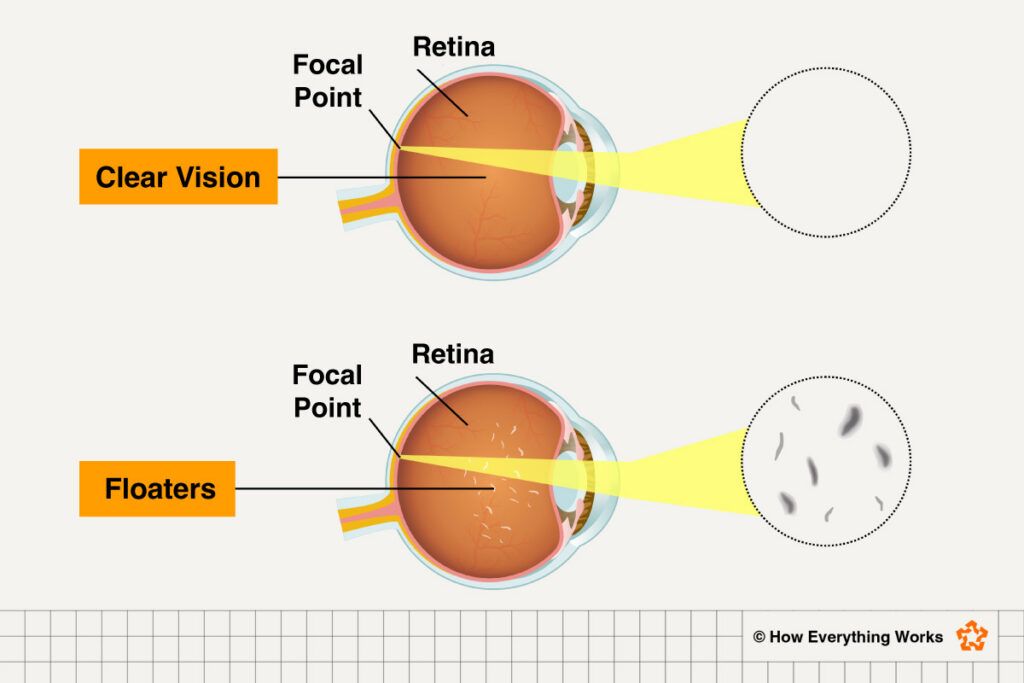
Despite appearing like solid fibers or flecks of dust, they aren’t physically floating across your pupil (that would hurt). They are actually shadows drifting across the retina, kind of like a cloud casting a shadow on the ground. But what are they shadows of, exactly?
A Look Behind the Lens
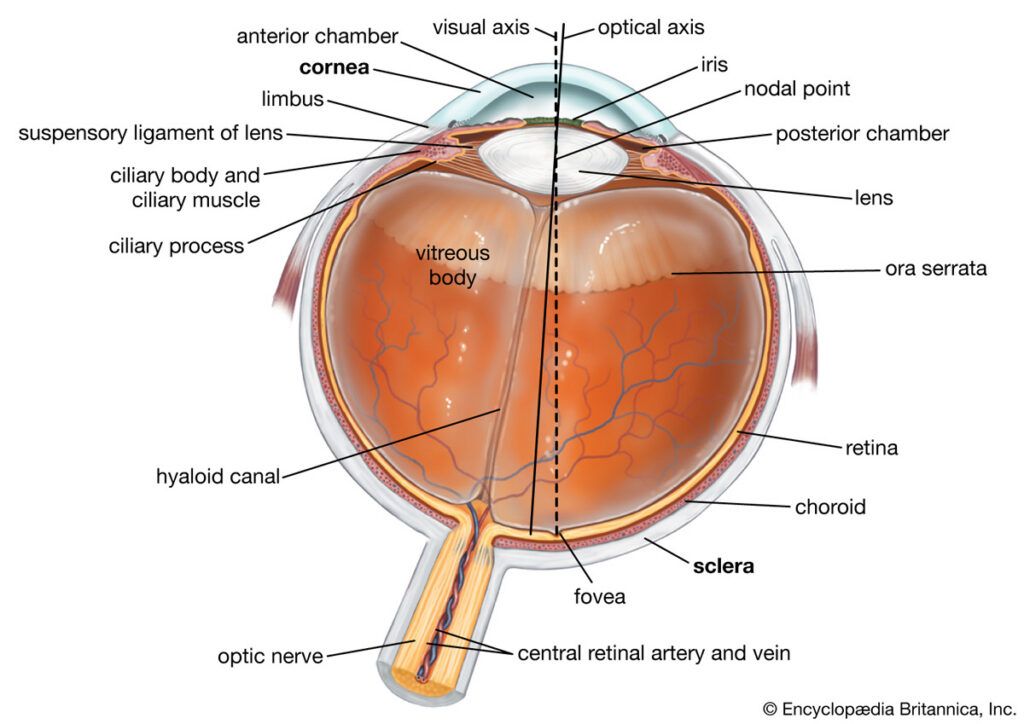
When you look in a mirror, you only see parts of your eye, such as the pupil, iris, and cornea. But there’s a lot more going on behind the lid. The eyes contain a clear, gel-like substance called vitreous humor, which fills around 80% of the eye’s volume in the back of the eye, between the retina and the lens. Though mostly water, this substance consists of collagen fibers, hyaluronic acid, proteins, salts, and electrolytes.
The vitreous humor also acts as a filler, supporting overall eye shape and keeping the retina in place. When you’re young, it’s relatively firm and tightly pressed against the retina, but as you age, the gel becomes more watery. Like the elastic in your favorite sweatpants or a rubber band that’s been reused too many times, it becomes looser.
As this happens, the collagen fibers in your vitreous humor begin to clump together. All of this happens behind the eye’s lens, which is what focuses light for a sharper image, just like the lenses in eyeglasses. The light itself goes to the retina, which sends signals to your brain, telling it what you’re looking at.
Since the floating collagen fibers are between your lens and retina, they block light, casting fleeting shadows across the retina. Because floaters originate in your actual eye, it’s impossible to focus on them directly. When you try to, the vitreous humor also moves with your eye, shifting the suspended collagen clumps alongside your line of sight. This keeps them mostly in your peripheral vision.
Gravity also has some pull on these fibers and gives them a little bit of movement, even when your eye is completely still. This creates an illusion of active evasion, as if they’re shy and trying to avoid your attention.
For the most part, eye floaters are nothing to be concerned about — they’re a natural part of aging. However, in some cases, they can serve as a warning sign for some more serious conditions, especially if you notice a sudden increase in floaters or if they’re accompanied by flashes of light.
If you experience these additional symptoms, it’s worth booking an appointment with your eye doctor to get a better idea of what is happening back there and rule out concerns such as detached retinas, bleeding, inflammation, or tumors.
While floaters can be a bit distracting or annoying (especially when they tend to linger), the brain eventually learns to tune them out and they become less noticeable. If only you could do that with anything you don’t want to be looking at.
As you age, a gel-like fluid in your eye called the vitreous humor breaks down, causing collagen fibers to clump together. You can’t see these clumps directly, but they create shadows that seemingly “float” over your retina. They’re typically a harmless side effect of aging eyes, though they can occasionally indicate more serious concerns, especially when accompanied by flashes of light.
Short Answer