SCIENCE
What Causes Static Shocks?


Sometimes, when two people meet, sparks fly. We’re not talking love at first sight, though — it can happen between any two people, even if they’re total strangers. You reach for a friend’s hand or brush against a colleague’s shoulder, and suddenly — zap! You’ve been shocked. Sometimes there’s even a tiny visible spark, turning an ordinary greeting into a surprisingly electrifying encounter.
These little shocks can seem to come out of nowhere, and the same touch might have been uneventful a moment earlier. Yet everyday activities can quietly set the stage for a surprise discharge.
Sudden Sparks
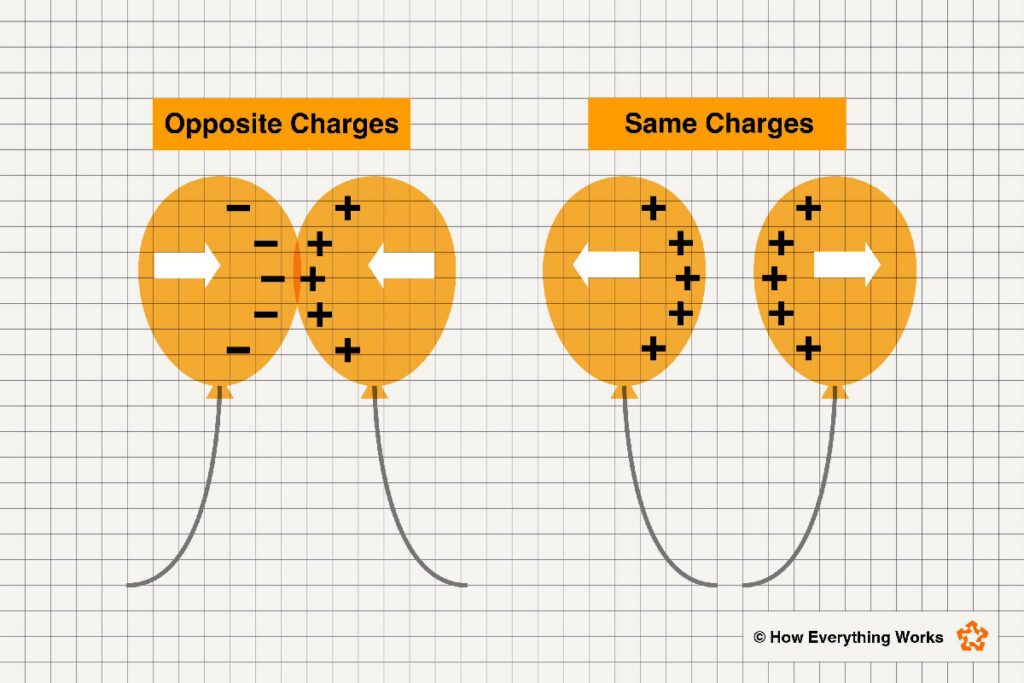
As you might remember from science class, atoms contain positively charged protons and negatively charged electrons. Usually, these charges balance out, leaving an object electrically neutral. But when different materials make contact and then separate, electrons can transfer between them.
A material that gains electrons becomes negatively charged, while one that loses them becomes positively charged. This imbalance is called static electricity, and the accumulated electrical charge is known as a static charge.
You can build up a static charge during such innocuous activities as walking across a carpet, sliding out of a car seat, or pulling off a sweater. The movement brings surfaces into repeated contact, giving charge more opportunities to transfer. The materials involved also help determine which surface gains electrons and which loses them.
For example, running a plastic comb through your hair can transfer electrons from your hair to the comb, leaving your hair positively charged and the comb negatively charged. Your hair begins to stand on end because each strand is repelling one another, since they now carry the same charge. Just as with magnets, opposites attract while objects with the same charge push away from one another.
Since friction increases the rate at which electrons are transferred, rubbing a balloon against your head often causes the same effect much more quickly (and the balloon will even stick to your head because it now has an opposite charge).
Whether that charge sticks around depends partly on how easily it can escape. Conductors allow electrical charge to move relatively freely; insulators resist its movement. Your body conducts electricity, in part because it contains water and dissolved salts.
But insulating materials such as the rubber in your shoe soles can interrupt the path between your body and the ground — electrons have nowhere to go, allowing a charge to accumulate. Even if you’re in a good mood, you may be walking around negatively charged.

Now imagine approaching someone after you’ve shuffled across a rug. Your body may have accumulated a different amount of static charge than their body has. When you touch, charge can suddenly flow between you, producing a shock. The other person doesn’t have to carry an opposite charge: Someone who is electrically neutral can still receive a discharge from you, because those accumulated electrons have found somewhere to go.
Physically touching creates a path for the charge to flow, but a spark can also leap across the tiny gap just before you make contact. Air normally acts as an insulator, but if the electric field across that gap becomes strong enough, it makes the air briefly conductive.
Charge uses the air between you and the other person as a bridge, rushing across in an electrostatic discharge. This produces the zap and can even make a visible flash. Lightning is actually just a much larger, stronger occurrence of this very phenomenon, with a lightning bolt using the air between the ground and the storm clouds as its bridge.
Once charge has flowed between you and another person, the voltage difference between the two of you has decreased. That’s why immediately touching again usually doesn’t produce another shock. You need to build up a new difference first.
As you may have noticed, these shocking encounters are especially common in dry weather. A thin layer of moisture on surfaces helps the accumulated charge bleed off, but when conditions are dry, charge can linger long enough to produce a noticeable shock. Wearing a fuzzy sweater can increase the charge even further.
Although the initial zap can be startling, an ordinary static discharge involves a small amount of charge and energy. It’s not even close to what’s in a lightning bolt, and it’s not likely to harm you — unless you jump away from it too quickly and crash into something.
Friction from everyday actions such as walking across the carpet or pulling off a sweater transfers electrons from surfaces to your body, giving you a certain amount of static charge. An electric shock between two people usually happens when their bodies have accumulated different amounts of static charge. As they touch or come very close, charge suddenly flows between them, producing a brief zap.
Short Answer