NATURE
What Is in a Rattlesnake’s Rattle?
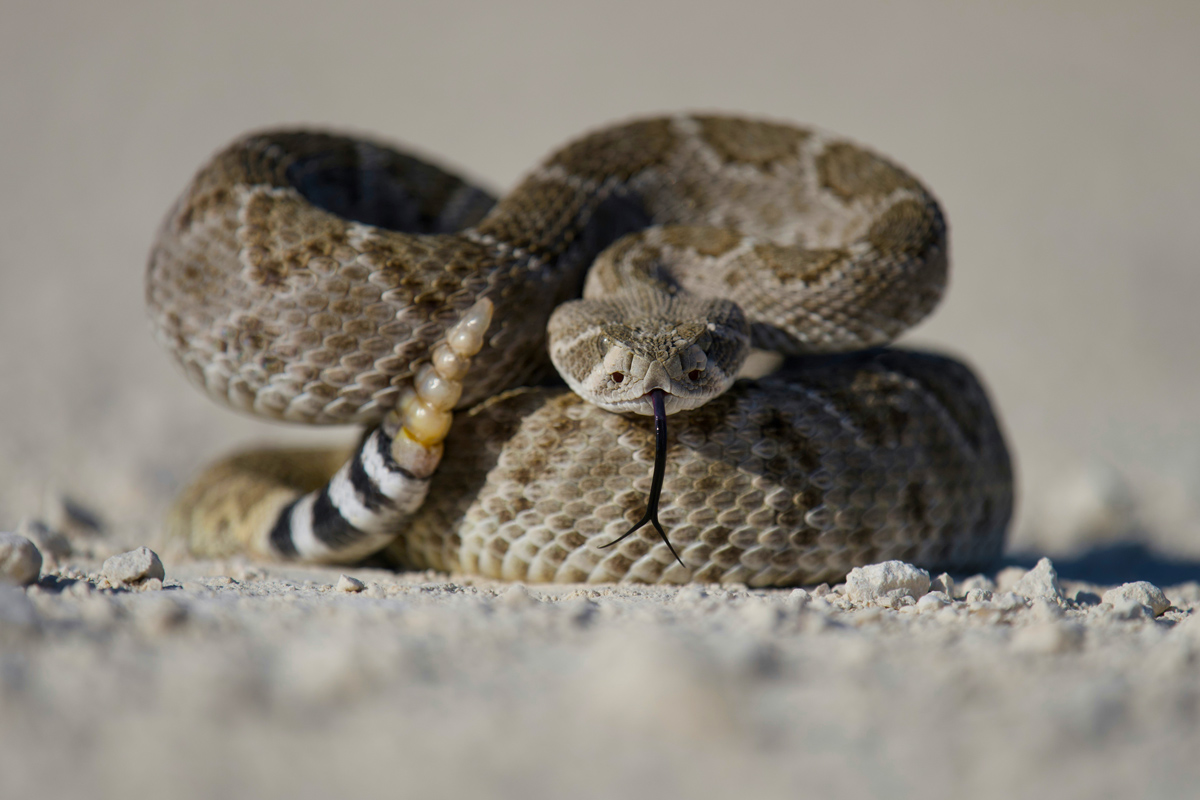

If you’ve been around a baby — or a salsa band — you know how a typical rattle works. Maracas and toy rattles are filled with beads, seeds, or pebbles that make noise when shaken. So you’d be forgiven for thinking the small, ribbed structure on the end of a rattlesnake’s tail functions in a similar way. But the name “rattlesnake” is a bit misleading, as the rattle contains nothing at all.
Found throughout the Americas, rattlesnakes are venomous reptiles that range in size, coloring, and habitat. But what’s consistent across all types of rattlesnakes is the buzzing sound it gives off as a warning. So just how and why is that noise produced?
It’s Just… Fingernails?
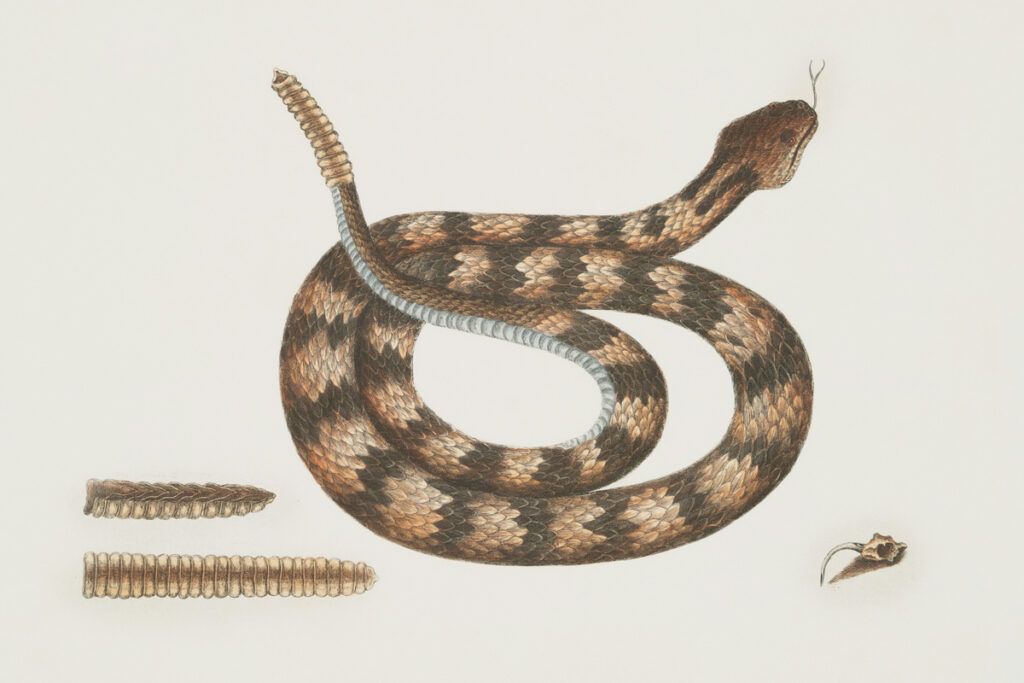
Despite its name, the distinct structure at the end of a rattlesnake’s tail consists of a series of interlocking, hollow segments made of keratin — the same protein found in human hair and fingernails, as well as in rhinoceros horns. These segments are actually modified scales. Rattlesnakes are born with a single “button” at the end of the tail, and each time the snake sheds its skin, it leaves a small piece behind that collects at the base of the rattle. Rattlesnakes build on this rattle with each shed, creating what is essentially a dried skin rattle.
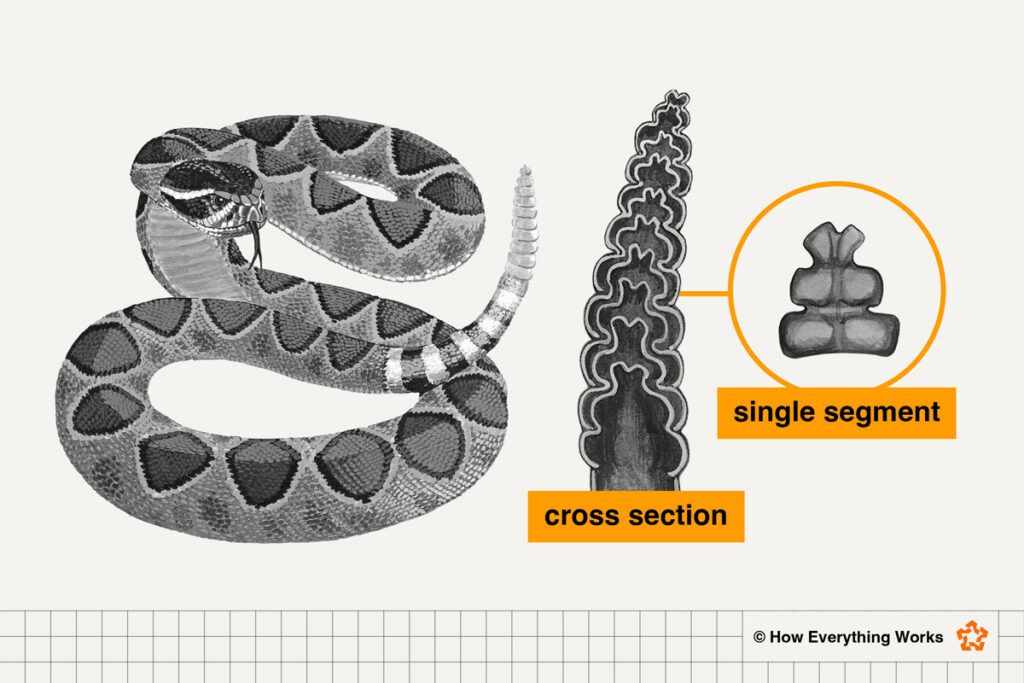
When threatened or startled, a snake rapidly vibrates its tail, causing the hollow segments to strike against one another and create a sharp, buzzing noise. That sound serves as a warning rather than a weapon, alerting potential predators — or unsuspecting humans — to its presence. Rattlesnakes are generally not aggressive and typically avoid confrontation, so this early warning system is their greatest form of defense.
By warning off threats instead of immediately striking, rattlesnakes conserve both energy and venom, which they rely on to capture prey. The rattle, therefore, is a simple structure with a clear message: stay back.
A rattlesnake’s rattle is not a container with objects inside but rather a structure made of interlocking, hollow keratin segments formed from modified scales. When the snake vibrates its tail, it causes the segments to strike one another. The resulting buzz serves as a warning, helping the snake deter threats while conserving energy and venom.
Short Answer