NATURE
Why Can’t Two People See the Same Rainbow?
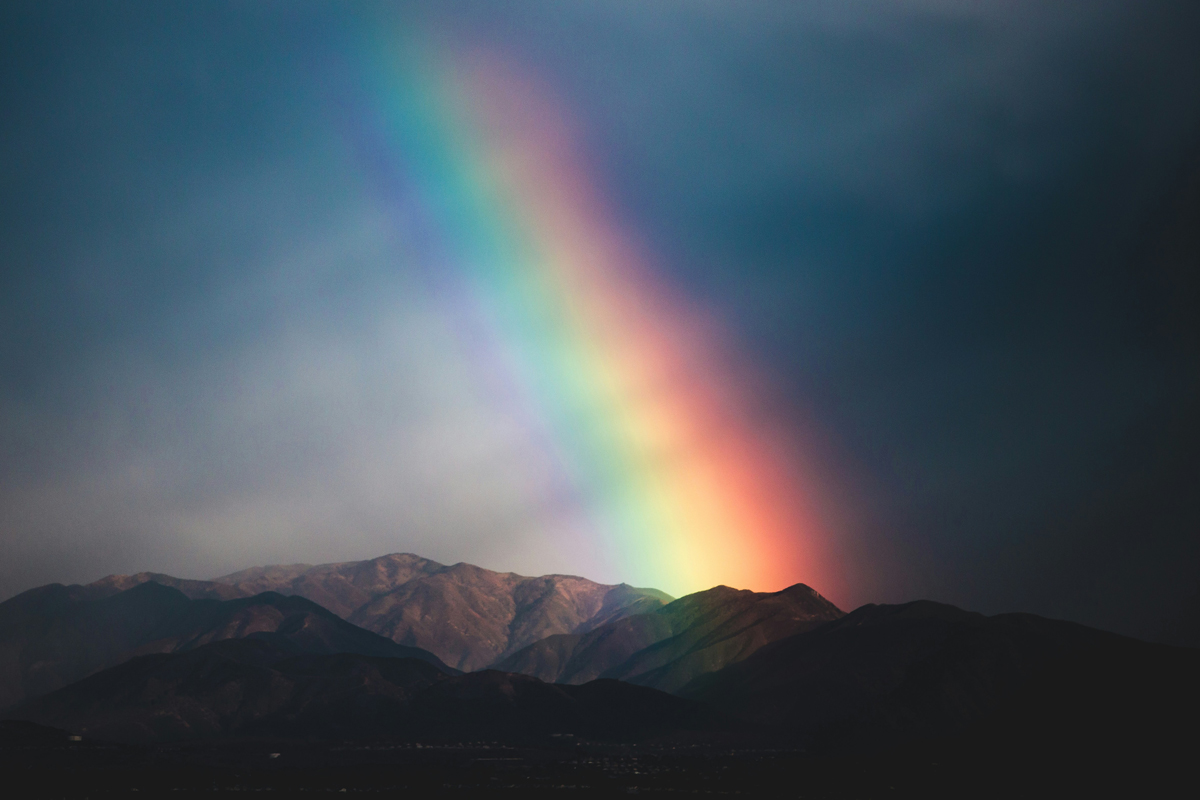

You’re walking with a friend after a summer shower when they point excitedly toward the sky and exclaim: “Look at that rainbow!” The next moment, it feels like you’re both admiring the same spectacular ribbon of color. But here’s the twist: You aren’t. In a very real sense, each of you is looking at a different rainbow.
That sounds impossible. After all, the rainbow is right there, stretching across the sky. But unlike, say, a mountain or a cloud, a rainbow isn’t actually an object sitting in one particular place. It’s an optical phenomenon — something your brain creates when sunlight, raindrops, and your own position on Earth line up in just the right arrangement.
Take a few steps to the left or right and the rainbow changes with you. That makes every rainbow you see uniquely yours. So what exactly are you looking at?
For Your Eyes Only
If you were walking toward a shallow pool and kept the same pace once you entered it, you’d still slow down and move differently. Well, light travels differently through water as well.
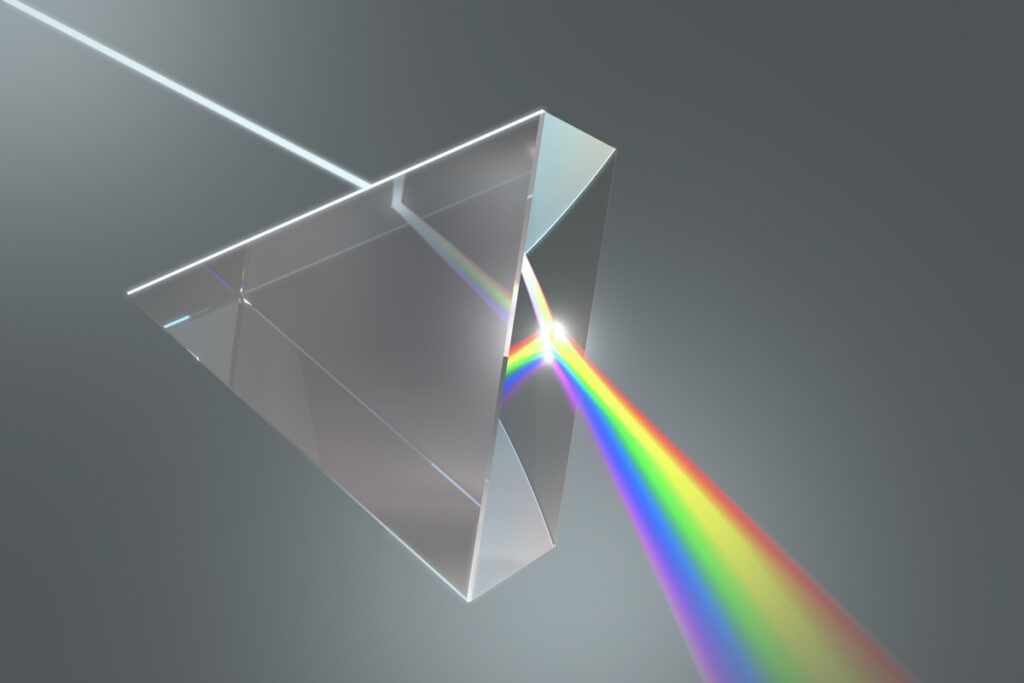
Rainbows begin when sunlight enters millions of tiny water droplets suspended in the air, often after rain. As the light enters each droplet, it slows and bends, because water is denser than air. This process is called refraction. Sunlight then reflects off the back of the droplet before bending again as it leaves the way it came.
Because different colors of light have different wavelengths, they bend by slightly different amounts. Sunlight disperses into its familiar spectrum of red (which has the longest wavelength), orange, yellow, green, blue, and violet (which has the shortest wavelength).
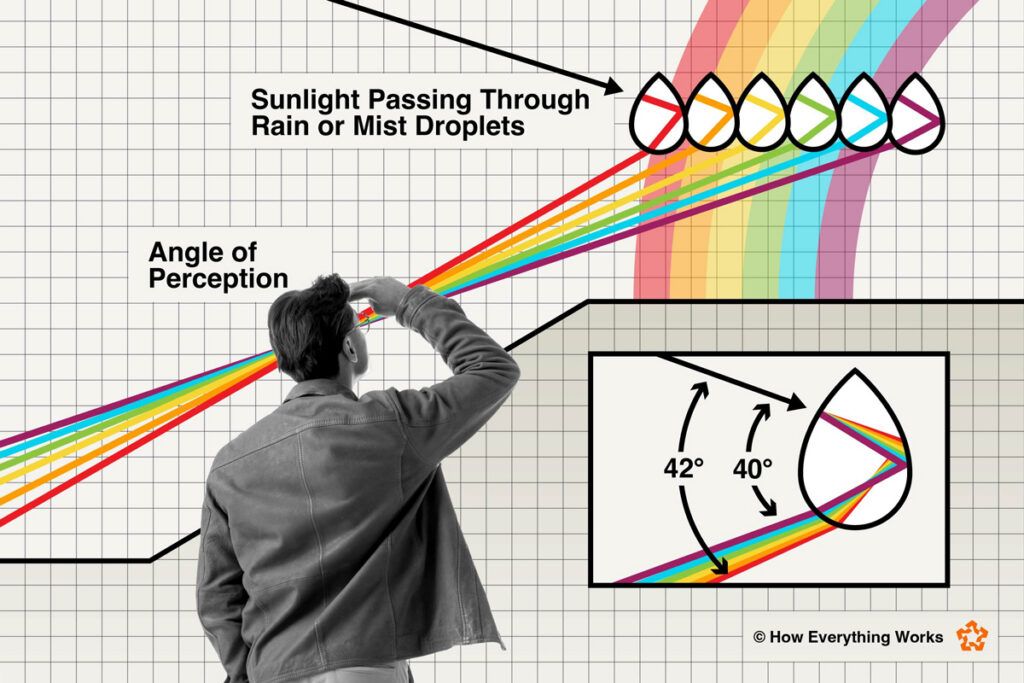
But here’s the part that makes rainbows so personal. Only droplets positioned at just the right angle send rainbow light toward your eyes. For the most familiar-looking rainbows, that angle is about 42 degrees from the point in the sky directly opposite the sun, known as the antisolar point.
Imagine an invisible line running from the sun behind you, through your head, and out into the sky. That line is unique to you, and it’s key to what creates the rainbow you see. Since your friend is standing in a slightly different place, even if it’s only a couple of feet away, their invisible line is different (unless they’re really invading your personal space). That means a different collection of raindrops in the sky is directing colored light into their eyes. So although your rainbows look nearly identical, they’re created from entirely different droplets.
The effect is typically so subtle that you never notice it. But physically speaking, you and your friend are not seeing the same rainbow at all.
This also explains one of rainbows’ strangest qualities: They seem to follow you. If you walk forward, your rainbow doesn’t stay behind like a billboard or fire hydrant. Instead, a whole new grouping of raindrops takes over, bending light toward your latest position. The old droplets stop contributing, and countless new ones step in, as if doing “the wave” at a sports arena. To you, the rainbow appears to remain in place.
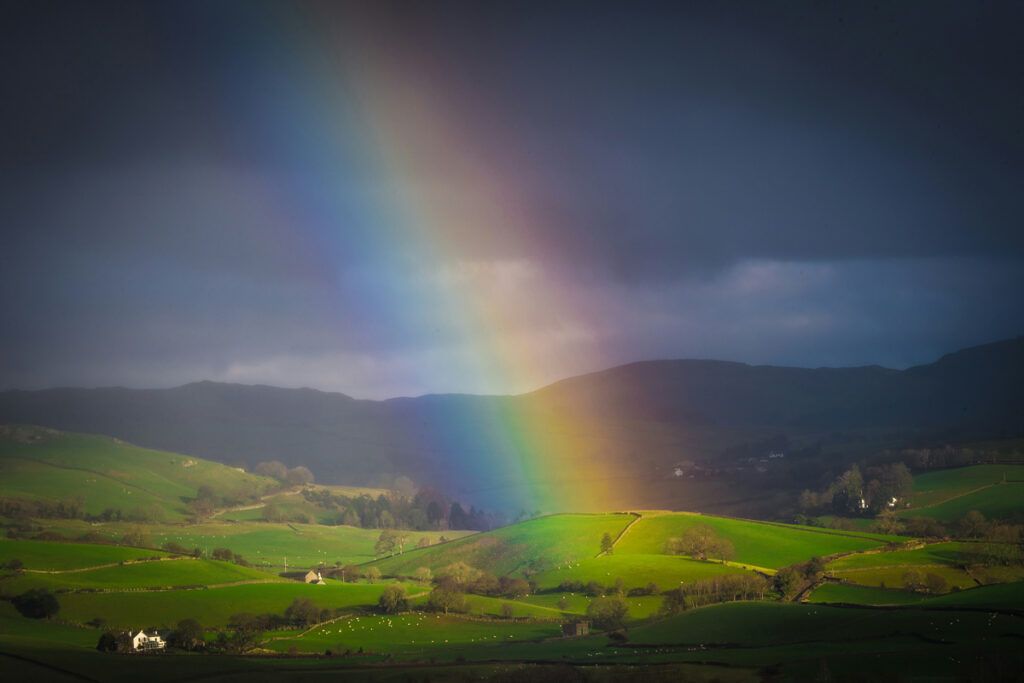
Even if you stand still, the droplets forming the rainbow are changing, as they’re often falling through the air the entire time. The rainbow is continuously rebuilding itself from moment to moment. If someone were standing exactly where you were a few seconds earlier, they wouldn’t see precisely the same rainbow as you did because the raindrops have already moved on.
This is also why it’s impossible to find the end of a rainbow, no matter how much you’d like a pot of gold. Sorry to break the news, but there isn’t one. Because a rainbow’s location isn’t fixed and moves with you, its “end” is always just out of reach
Then again, you’ve already found the real treasure. While rainbows may be among the most accessible wonders in nature, they’re also among the most personal. Gold’s got nothing on that.
Because rainbows are only created when light bends at a specific angle between you and raindrops in the sky, no two people see exactly the same one. Each person is seeing colored light from a different grouping of raindrops, so every rainbow is a one-of-a-kind optical phenomenon created specifically from that observer’s point of view. That means you’re also seeing “different” rainbows with every step you take, as you’re looking at different droplets in the sky.
Short Answer