HEALTH
Why Does Cracking Your Knuckles Feel So Good?

Opposites often attract. A night owl falls in love with a morning person. A social butterfly marries a homebody. And some star-crossed couples have one person who can’t stand the sound of cracking knuckles and another who finds the little pops too satisfying to resist. You can’t help who you love.
Then again, maybe both you and your soulmate crack your knuckles — it’s a fairly common habit. It does seem counterintuitive, though. It certainly doesn’t feel good to stub your toe, so why would cracking your knuckles be pleasurable? More importantly, is it harmful over time?
Take a Crack at It
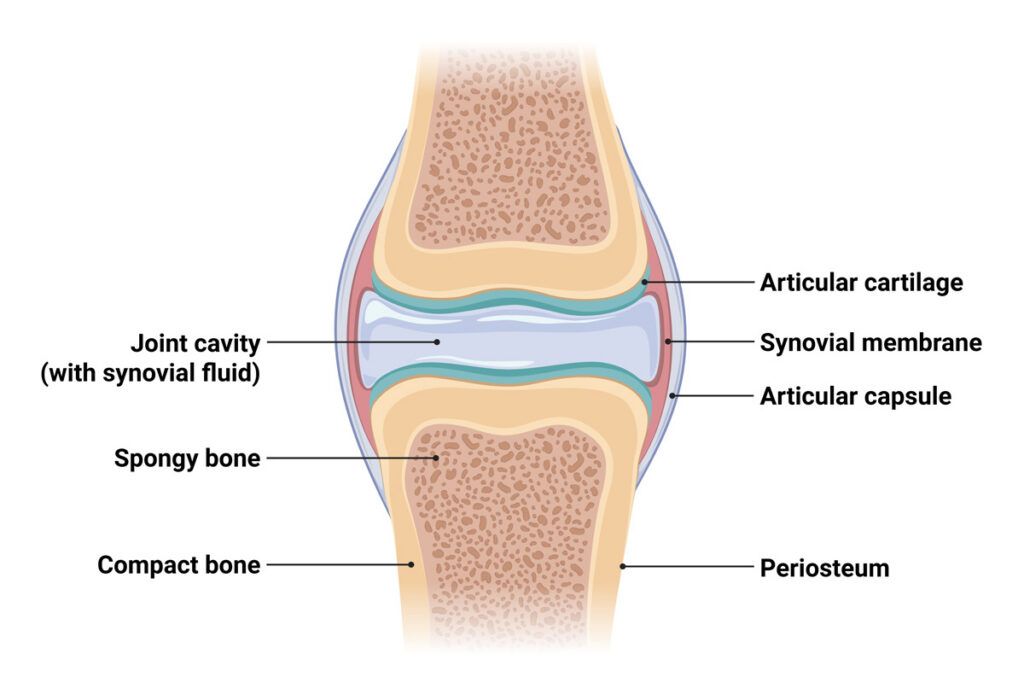
Knuckles are joints surrounded by protective synovial fluid, a thick liquid that reduces friction between bones and delivers nutrients. This fluid is contained within thin sacs called synovial capsules.
When you push on your knuckle to “crack” it, the capsule stretches and decreases the pressure within the joint, creating a vacuum. In a process called cavitation, dissolved gas rushes to fill that vacuum, forming a bubble. It was once believed that the cracking noise came from the bubbles bursting, but it’s not so simple.
In 2015, PLOS One published a study that examined knuckle cracking while the subjects’ hands were inside an MRI machine. It found that the sound coincided with the formation of the bubble, not its bursting. The noise is akin to how a suction cup “pops” when the pressure is released. Meanwhile, a 2018 study published in Scientific Reports argued that the sound could still be the partial collapse of the bubble, but that study relied on a mathematical model and not a real-world experiment.
Whatever the cause of the sound, there’s also no evidence to suggest that cracking our knuckles has any positive effect. It may feel pleasurable when tension in the muscles and ligaments around the knuckle is relieved, not unlike stretching your back. Some people claim that it makes their joints feel looser, but the feeling may just be psychological. It could also be a way some people deal with stress, as with a fidget spinner or drumming fingers on a table.
However, it’s hard to do over and over without at least some time passing in between. After gas rushes into the vacuum formed by cracking your knuckle, it takes a bit for it to dissolve back into the synovial fluid. Until it does — typically about 20 minutes later — you won’t be able to crack your knuckles again.
Does Cracking Knuckles Lead to Arthritis?
You may have heard that you shouldn’t crack your knuckles because it can lead to arthritis. However, multiple studies have found no link between the two.
California physician Donald Unger conducted a personal experiment in which he frequently cracked one hand’s knuckles, but not the other. Repeated X-rays taken over the course of many years found no difference between his hands. A larger 2011 study published in The Journal of the American Board of Family Medicine also failed to show a correlation between knuckle cracking and arthritis.
While one study evaluating 300 patients in a Detroit hospital found that doing it repeatedly over many years may increase hand swelling and reduce grip strength, another by the University of California, Davis found no such evidence.
That said, if someone keeps telling you cracking your knuckles is bad for you, it’s possible they don’t care about the studies — they just want you to stop doing it in front of them.
The pop we hear when cracking our knuckles is caused by gas bubbles in the liquid that lubricates the joints and delivers nutrients. It’s harmless, even when done repeatedly. It’s possible knuckle cracking can relieve tension in the surrounding muscles and ligaments, though the satisfying pleasure associated with it is likely more psychological than physiological.
Short Answer