NATURE
Why Do Dogs Kick When They Dream?
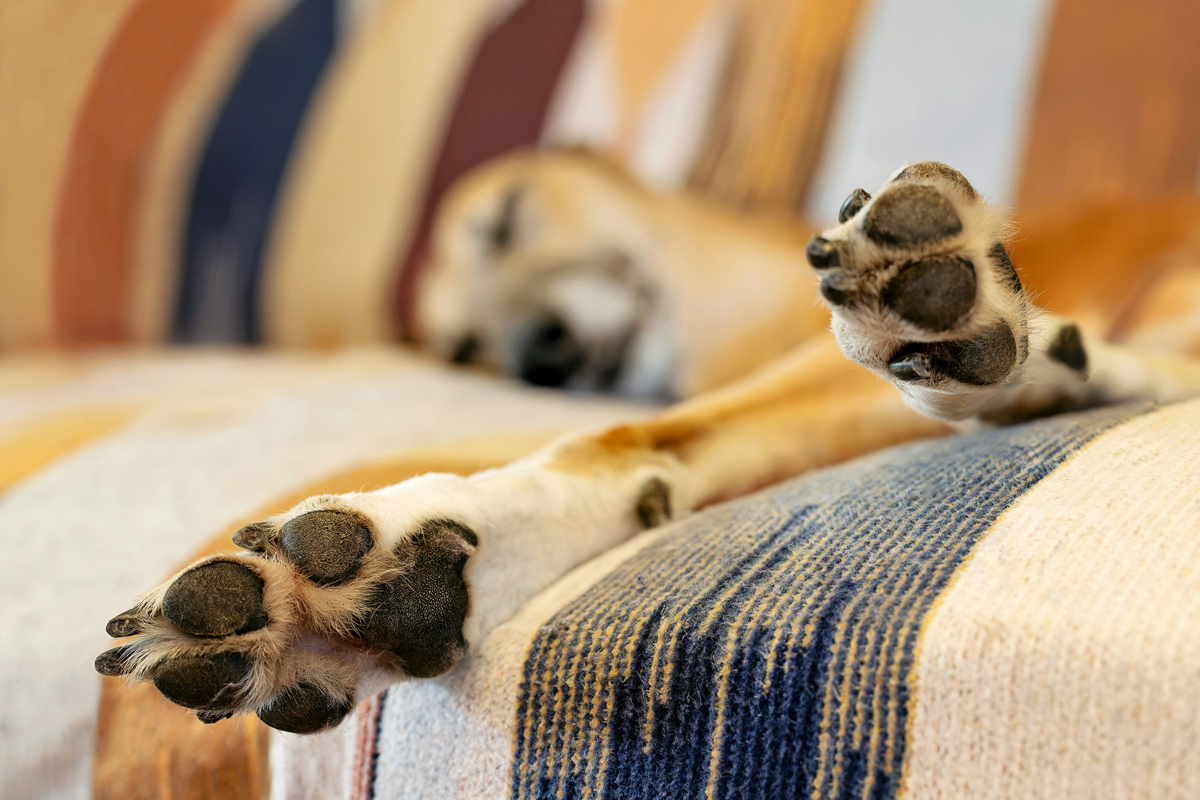

Watching a sleeping dog is one of life’s small, reliable joys: the twitchy whiskers, the muffled little woofs, the paddling paws. It’s hard not to narrate what’s going on in their head while you smile. “Get that squirrel!”
Most of us interpret these movements as dogs dreaming. But do they? You can’t ask Fido himself, but research suggests it’s likely true — yet those movements while your pup’s asleep are more than just the canine equivalent of talking in your sleep.
The Bigger They Are, the Harder They Dream
Like us, dogs cycle through several stages of sleep, including rapid eye movement (REM) sleep, which is the stage associated with vivid dreams. When you’re in REM sleep, your brain fires off movement signals as if you’re awake and actually doing whatever you’re dreaming about. For instance, if you’re dreaming you’re in the final set of Wimbledon and need to land the perfect serve, your brain may actually be telling you to raise and swing your arm.
To keep your body from acting on these signals and actually performing these motions, a part of the brainstem called the pons temporarily switches off your larger muscles. Think of it as unplugging the controller while the video game stays on. (This is why you don’t actually sprint for the train you’re dreaming you missed.)
This system isn’t foolproof, though — for humans or dogs. The pons allows some signals to “leak” through, and that’s where the twitches and paddling paws come from. It’s especially leaky in puppies and senior dogs, likely because the pons is still developing in young ones and is weakening in older ones. Researchers also think that puppies have more dreams than older dogs because they have more to process and develop — everything is still new to them!
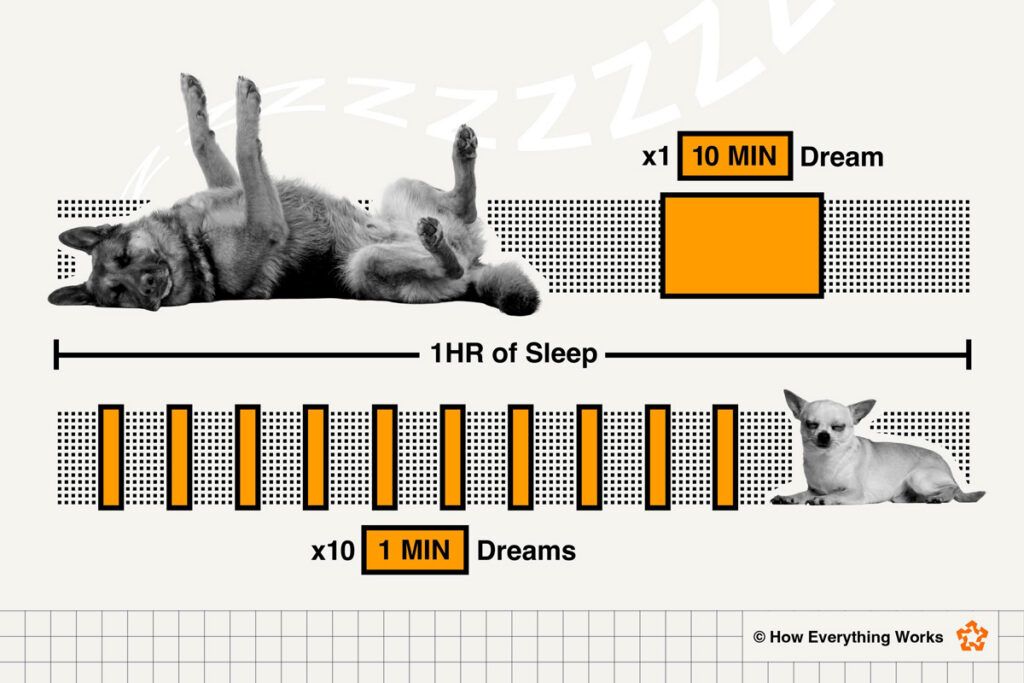
How often a dog dreams seems to depend on its size. According to Stanley Coren, a psychologist who researches the neuropsychology of dogs, smaller breeds tend to have shorter dreams more often, while larger breeds have longer dreams less frequently. So a Chihuahua may dream for about one minute every 10 minutes, while a German shepherd may dream only once an hour, but for up to 10 minutes. Essentially, the bigger they are, the harder they dream.
Test Dreams
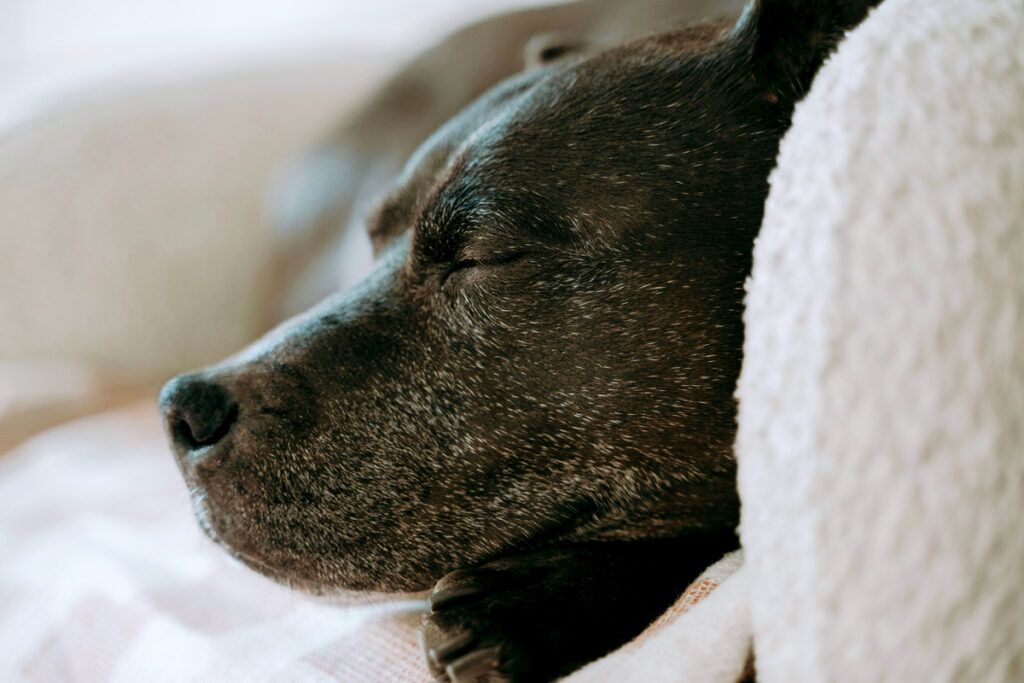
Research suggests that those adorable little twitches may be more than leaking signals, though. Neuroscientist Mark Blumberg at the University of Iowa found that in young animals, sleep twitches send feedback to the brain that may help them learn how their limbs work and “map” out the body.
Blumberg published follow-up work suggesting that in adults, twitching may help the brain keep that map up to date. Rather than brain signals misfiring, it’s more like they are test-firing.
So the next time you notice your pup making cute whimpers and pattering their paws on the couch, go ahead and keep narrating. Just know that while your dog is chasing that squirrel, their brain may also be running a little routine maintenance.
When dogs dream, their brains send out movement signals, much like when they’re awake. Normally, those signals are blocked from actually making their muscles perform these motions, but that system isn’t perfect. Some signals slip through as kicks, twitches, and paddling paws, especially in puppies and older dogs. Similar nerve firings may be your dog’s brain performing basic maintenance and making sure your dog’s nervous system is working as it should.
Short Answer