HEALTH
Why Do Your Ears Ring When It’s Quiet?

You’re finally enjoying some peace and quiet when you hear something odd: a faint ringing or hissing sound, like there’s an invisible motor running next to your ear. Are you imagining it?
The good news is that the sound is real, even if you’re the only one who can hear it. So what’s really going on when you hear ringing in your ears, and is it a problem?
Do You Hear What I Hear?
That ringing is known as tinnitus, defined as the perception of sound when no external source is present. At least 10% to 15% of adults have reported experiencing it. Some people find it doesn’t impact their daily lives, while others have difficulty sleeping or focusing.
While it’s usually not associated with a serious medical issue, most people with tinnitus also have some hearing damage or loss. Short-term stress to the hair cells in your inner ear from exposure to a loud environment, such as a concert or club, can also cause temporary ringing. Other causes include certain medications, earwax buildup, ear infections, head or neck injuries, and aging.
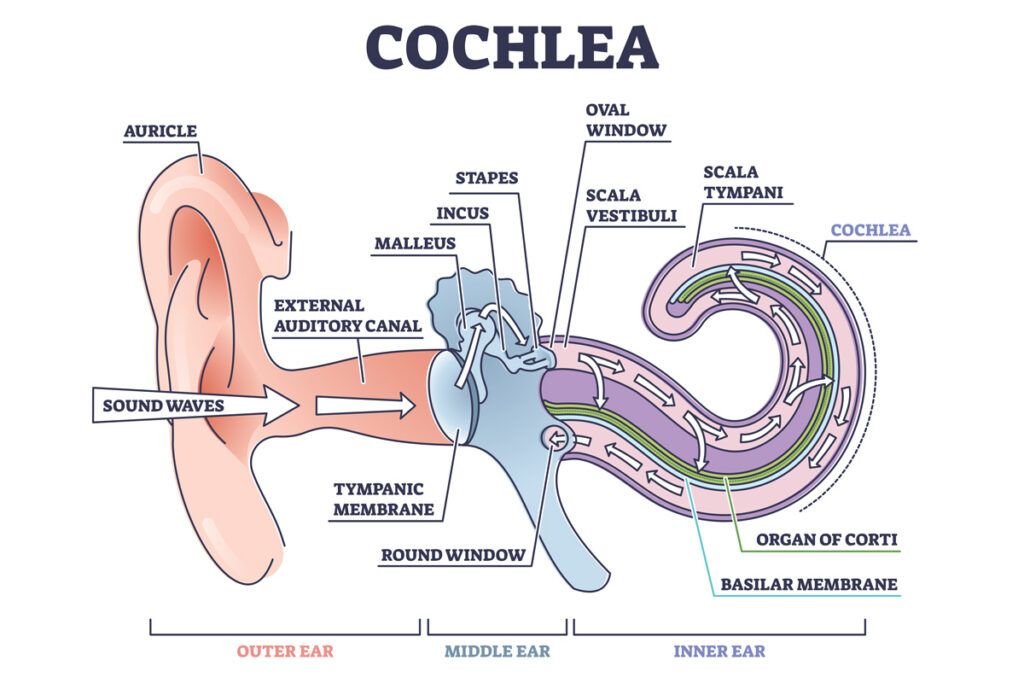
Researchers still don’t fully understand how tinnitus works, but one theory is that changes in the inner ear affect how signals reach the brain, which can then change how its auditory networks process sound. Your inner ear contains the cochlea, a snail-shaped, fluid-filled cavity lined with about 15,000 hair cells that help convert vibrations into electrical signals that your brain interprets as sound.
If the cells are damaged, the signals can change. Experts think the brain may compensate for these changes in ways that contribute to tinnitus. For example, your brain may turn up the sensitivity of your auditory pathways to compensate for the missing signals, essentially boosting the signals it does receive. Imagine turning up the volume on a radio station that’s not coming in clearly; the music gets louder, but so does the static.
Tinnitus can also occur without obvious hearing loss or damage, and the causes of such cases are more mysterious.
When Is Ringing a Problem?

Occasional ringing is often normal, but you should consult a doctor if you notice ringing that persists, gets worse over time, pulses, or occurs in only one ear. And you should seek immediate attention if sudden hearing loss occurs, with or without tinnitus.
Even though some ringing is normal, you can protect yourself from hearing damage by taking care of your ears. Wear earplugs in loud environments and don’t listen to music or your TV at full blast.
When that annoying ringing does start up, it can be eased by masking the sound with something subtle but more pleasant, such as white noise or soft music.
You Are Never Silent

So why does the ringing always seem to start when it’s completely quiet? The lack of noise doesn’t necessarily cause the ringing — it just makes it more noticeable.
Your body is constantly making noise and vibrations, even when you’re sitting still. Your heart is beating and your intestines are contracting. You’re swallowing. You’re breathing. Most of the time, you don’t notice these sounds because they’re masked by the din of everyday life.
In quiet environments, the small noises that originate inside you become easier to detect — including, yes, that pesky ringing in your ears.
In a quiet room, faint noises — including those made by your own body — are easier to notice because nothing is masking them. Ringing or hissing in the ear could be tinnitus, defined as the perception of sound when there is no external source. Tinnitus can be caused by hearing damage, medications, or other factors, including normal aging.
Short Answer