SCIENCE
Why Do Hot Roads Look Wet?
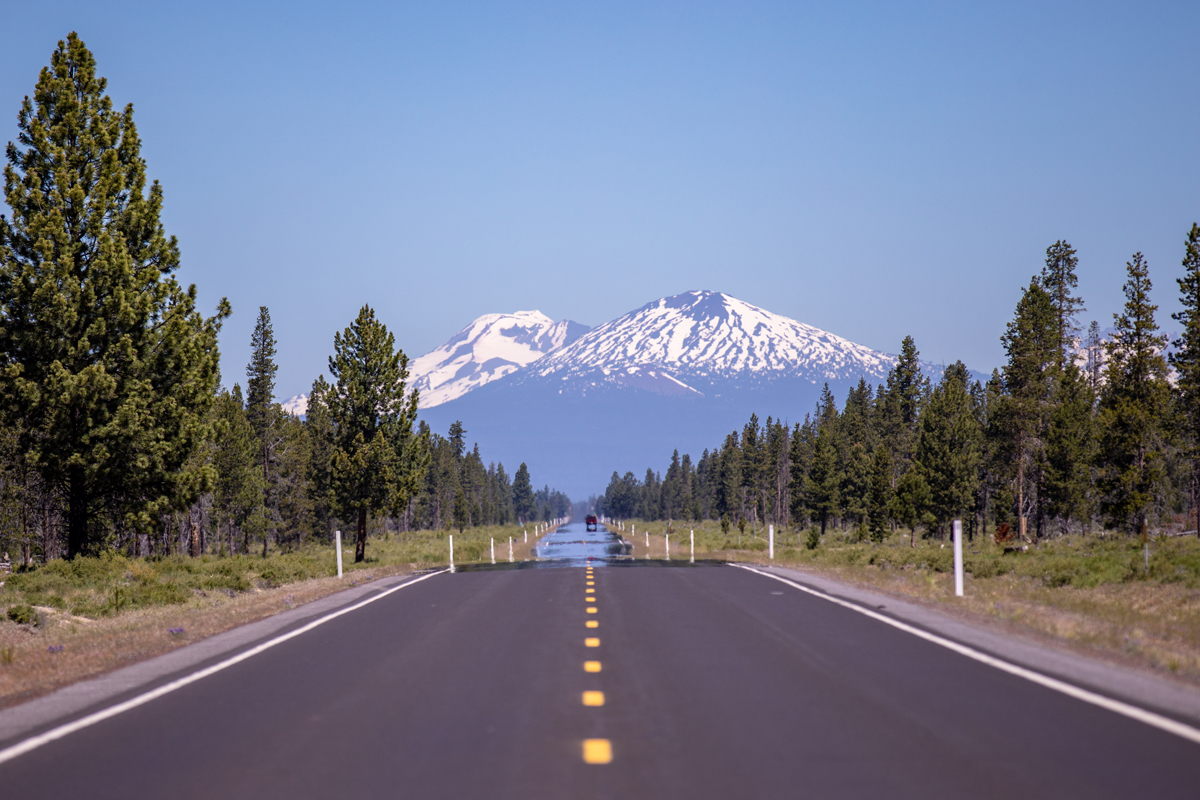

People often use the term “mirage” to describe a false promise, but it’s a real scientific phenomenon.
Your first encounter with the concept was probably in animation, as many classic cartoons feature a recurring trope where a character wandering the desert will hallucinate a tropical pond — or occasionally some other desirable feature — only to find nothing but sand there in reality.
Yet we encounter mirages in our everyday lives any time we’re in a vehicle on a hot day, when the distant road looks slick with water despite being bone dry. This illusion and the desert oasis cliche are formed the same exact way.
Not a Drop to Drink
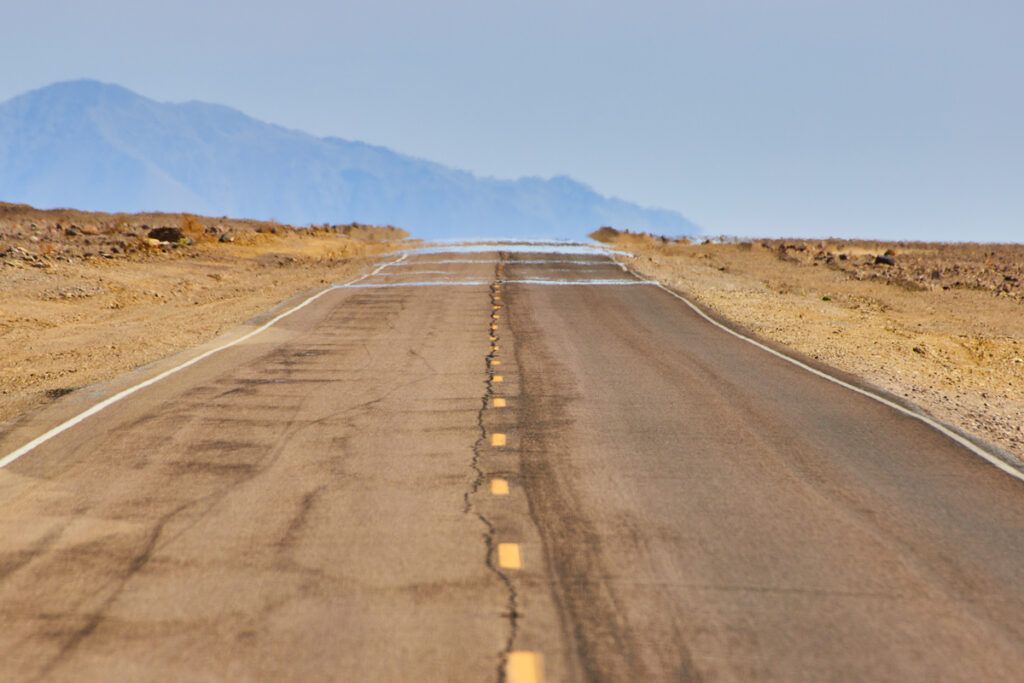
On sunny days, roads can get particularly hot — which you know if you’ve ever made the mistake of walking barefoot on concrete or pavement on a sweltering summer day.
The hot road heats the air just above it. Scientifically speaking, heat occurs when molecules are excitedly moving faster and farther apart from each other rather than staying tightly packed and still as they do when they’re cold. Because of this, warmer air expands and becomes less dense.
This allows light to move through it faster than cooler air (remember, there’s more space between the molecules). As light travels through the difference in temperature and density, it bends, directing light from the sky up and into your eyes.
The reflection appears to shimmer, since the light is constantly refracting at different speeds and angles due to the turbulent nature of the excited molecules dancing above the hot road. This shimmer makes the road appear wet, but as we get closer the illusion vanishes. That’s because it’s only visible from certain angles.
The stereotypical mirage of seeing an oasis in the desert can be explained the same way. Heat above the sand bends light, which reflects the blue sky, making it look as if there’s a pool of blue water just waiting for you to come take a drink.
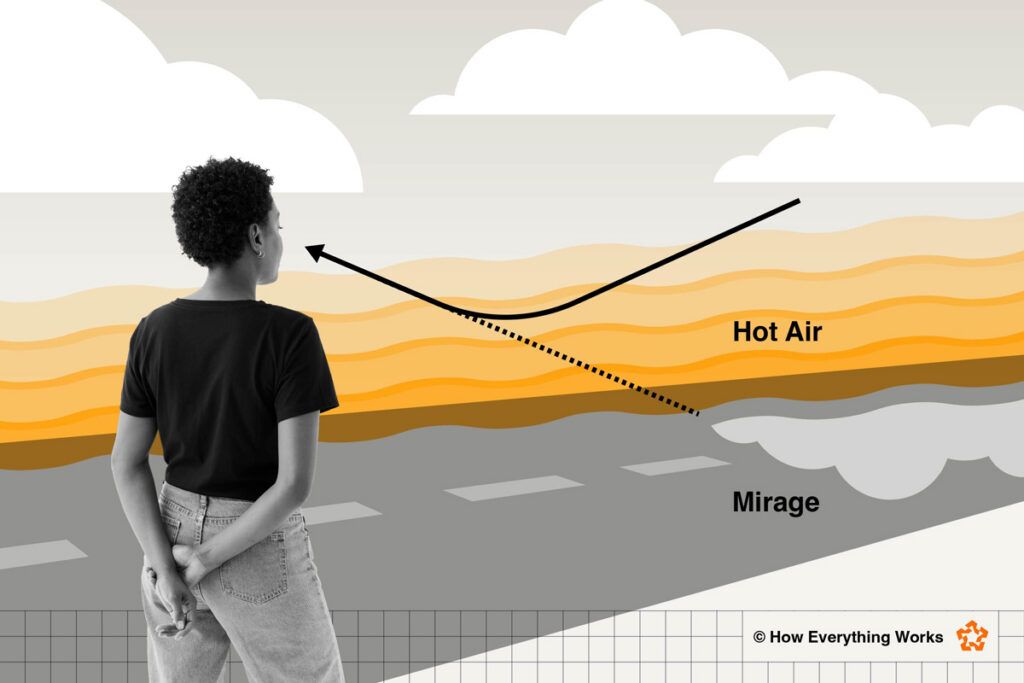
The wet road illusion is known as an inferior mirage, meaning an upside-down image appears below a real object. It applies not just to hot roads or sand, but to the seemingly wavy air you might see over a toaster or barbecue grill.
A superior mirage is when a distant object appears to be higher than it really is. It occurs for the opposite reason: The layer of air closer to the surface is cooler than the air above it, causing light to bend downward. It’s commonly seen across bodies of water or ice, where a ship might appear to be slightly above the water’s surface. Historian Tim Maltin suggested a superior mirage may have contributed to the sinking of the Titanic, creating a haze that prevented the ship from seeing the oncoming iceberg until it was too late.
While there may not be icebergs on the highway, it’s an important reminder to always keep your eyes on the road — even when the road isn’t exactly what it appears to be.
A road can appear wet on a hot day because the pavement warms the air just above it, causing light to bend as it passes between hot, thinner air and cooler, denser air. Light from the sky reflects unevenly to our eyes, which your brain perceives as a shimmering reflection, like water. This same phenomenon creates similar mirages in the desert or wavy air above barbecues and other hot objects.
Short Answer