HEALTH
Why Do You Wake Up Earlier As You Age?


When you were in your 20s, you probably could stay out late, fall asleep the minute you got home, and stay that way for at least eight hours (unless the alarm went off earlier for work). But as you age, this long, uninterrupted slumber seems harder to come by.
For the average adult, seven to eight hours of sleep per night is considered healthy. Yet older adults often struggle to get the recommended amount of sleep even if they go to bed at a reasonable hour. If you’re one of them, don’t beat yourself up over it — it’s mostly biological, and there are ways you can mitigate it.
Here’s why your body naturally wakes you up earlier as you age.
Off the (Internal) Clock
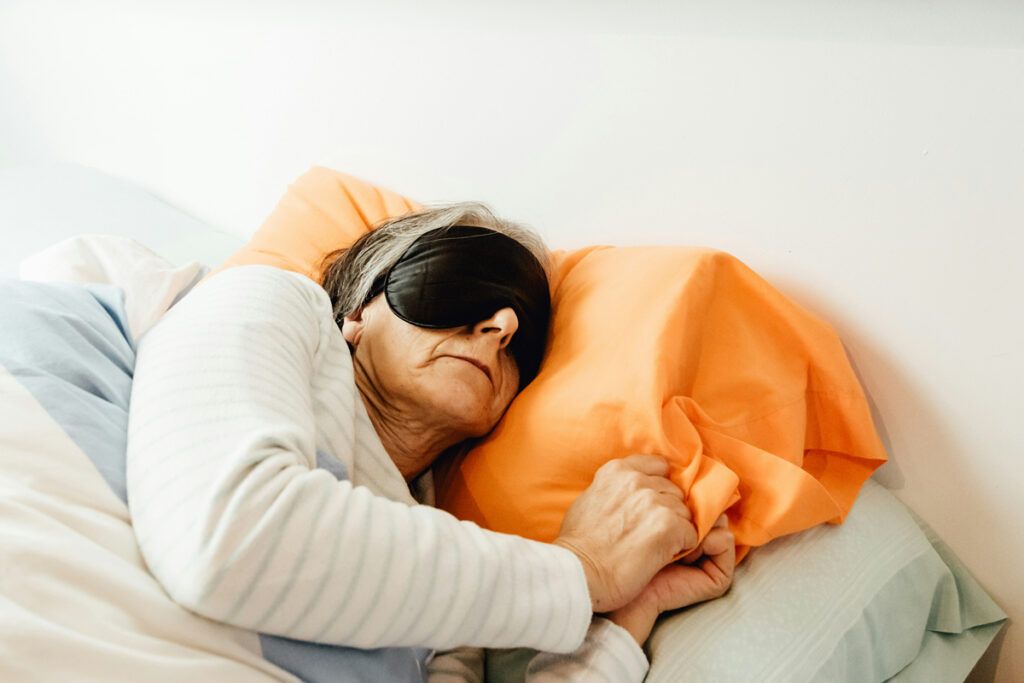
There are two main types of sleep patterns: REM (rapid eye movement) and non-REM (non-rapid eye movement). These are linked to electrical activity in your brain. REM sleep is when most dreams occur and your brain activity is more active, while non-REM includes deep sleep. This is when your brain activity slows down, which helps you feel refreshed in the morning.
You cycle through REM and non-REM sleep every night, usually three to five times. Children’s sleep cycles last about 50 minutes, while adults’ last about 90 minutes. As you age, you have fewer periods of “slow-wave sleep,” the deepest type of non-REM sleep you can have. Since your sleep is lighter, you’ll tend to get up earlier.
Two different body processes control your sleep-wake cycles: sleep-wake homeostasis and your circadian biological clock, also known as your internal clock. The first gives you energy when you wake up but chemically creates a need for sleep the longer you’re awake. The second is a natural 24-hour clock that controls the times you feel sleepiest (usually 2 a.m. to 4 a.m. and 1 p.m. to 3 p.m., though it varies from person to person).
The two systems work together. However, as you age, the time period during which your internal clock enables sleep shrinks. It also tends to move up further into the night, in a phenomenon called advanced sleep phase syndrome (ASPS).
You may find yourself waking up earlier in the morning and falling asleep earlier in the night. The reason for this shift in your internal schedule ranges from physical and behavioral changes to hormonal changes and medical issues. The brain’s internal clock is located in your hypothalamus, and age affects its functionality. ASPS also occurs because older adults are often less physically active and receive less sunlight.
Sunlight is a key part of your body’s melatonin production, and melatonin is an important sleep-regulating hormone. When it gets dark out, your brain sends a message to the pineal gland to release the hormone so you’ll start to feel sleepy. Compounding the issue is that, as you age, your body produces less melatonin.

It’s not the only hormone to affect sleep as you get older. Women who have undergone menopause may find the decline in estrogen and progesterone can cause night sweats and hot flashes — conditions that may make sleep harder to come by.
Everybody gets older, but there are things you can do to help improve your sleep. These include regular exercise, avoiding evening or late afternoon naps and caffeine, and improving your sleep environment and bedtime routine, such as taking a warm bath or reading a book at night.
It’s also important to follow a regular bedtime routine and schedule, even on weekends or when traveling. Even if you find yourself getting up earlier than you’d like, at least the sleep you’ll get will be better quality.
Waking up earlier is a natural part of aging. As you get older, you have fewer periods of “slow-wave sleep,” the deepest and most restful type of sleep. Since your sleep is lighter, you’ll get up earlier. Your internal clock also shifts due to your brain aging and spending less time in the sun or being physically active.
Short Answer