SCIENCE
Why Does Aluminum Foil Spark in the Microwave?
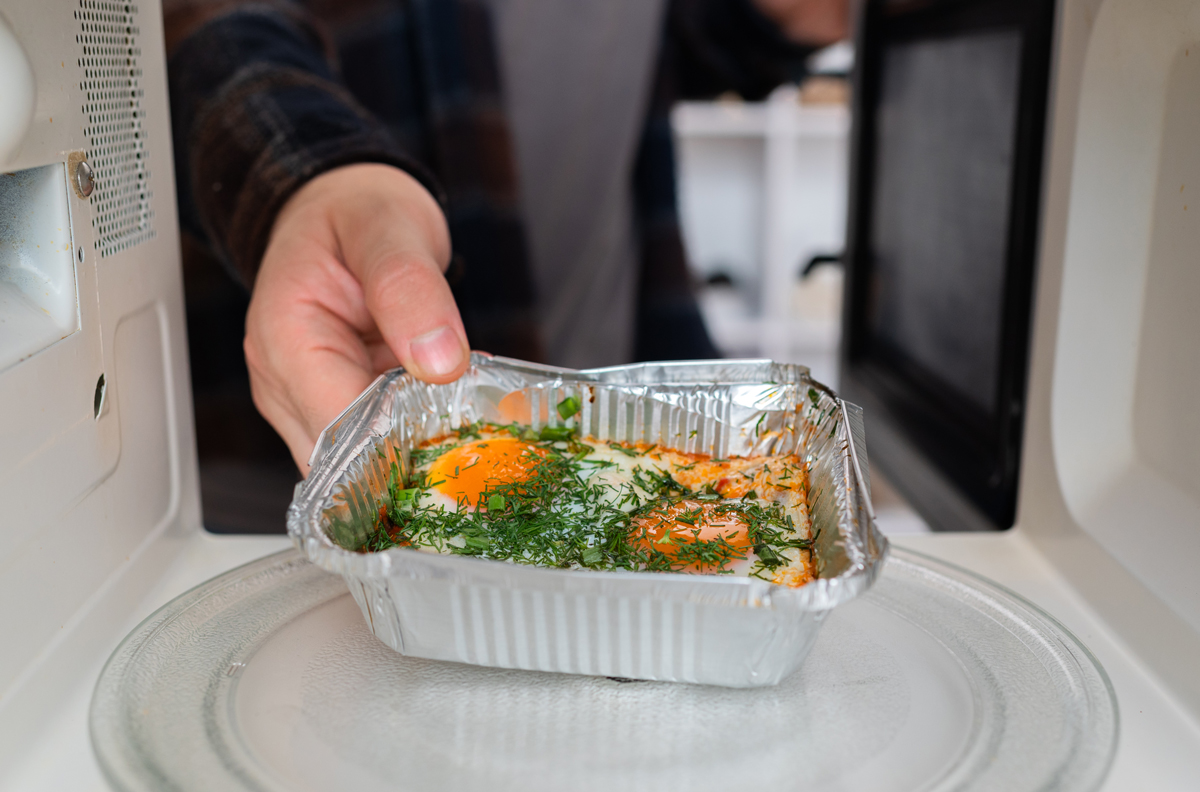

It’s lunchtime, and without thinking you grab last night’s aluminum-wrapped leftovers and toss them into the microwave. Big mistake. Soon, you’re treated to a sparking, plasma-filled light display that has you rushing for the “stop” button.
When you heat food in a traditional oven, aluminum is highly valuable because the material is a strong heat conductor that traps moisture. That’s great for keeping your lasagna from drying out, but it’s a whole different story in a microwave.
So why does aluminum foil spark in one but not the other?
Don’t Meddle With Metal
Traditional ovens and microwave ovens operate very differently. Whereas conventional ovens use electric coils or gas-fueled flames to heat food, microwave ovens use a subclass of radio waves labeled “micro” because they have shorter wavelengths compared to normal radio waves. Microwave ovens work on the principle that different materials absorb these microwaves at different frequencies.
Microwaves at 2.45 gigahertz — the typical frequency for microwave ovens — are absorbed by water, fats, and sugars, which in turn heat up, helping cook the rest of the food as well. Crucially, other materials such as plastic, glass, and ceramics don’t absorb microwaves at this frequency, which is why you can safely zap your lunch in plastic Tupperware.
When you stick metal in a microwave, though, things get interesting. It’s not metal in general that causes problems — after all, the inside of a microwave oven is purposefully designed with metal so it can bounce microwaves back and forth and keep them contained inside the oven. If the aluminum is in a somewhat uniform shape, such as a smooth, flat disk, the metal may not spark at all.
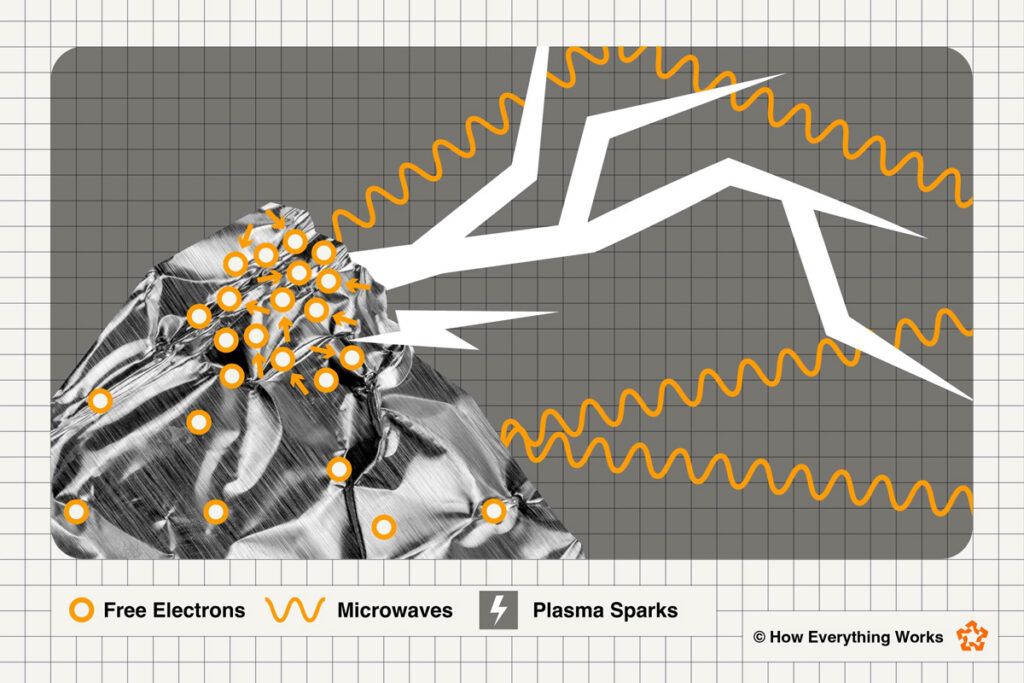
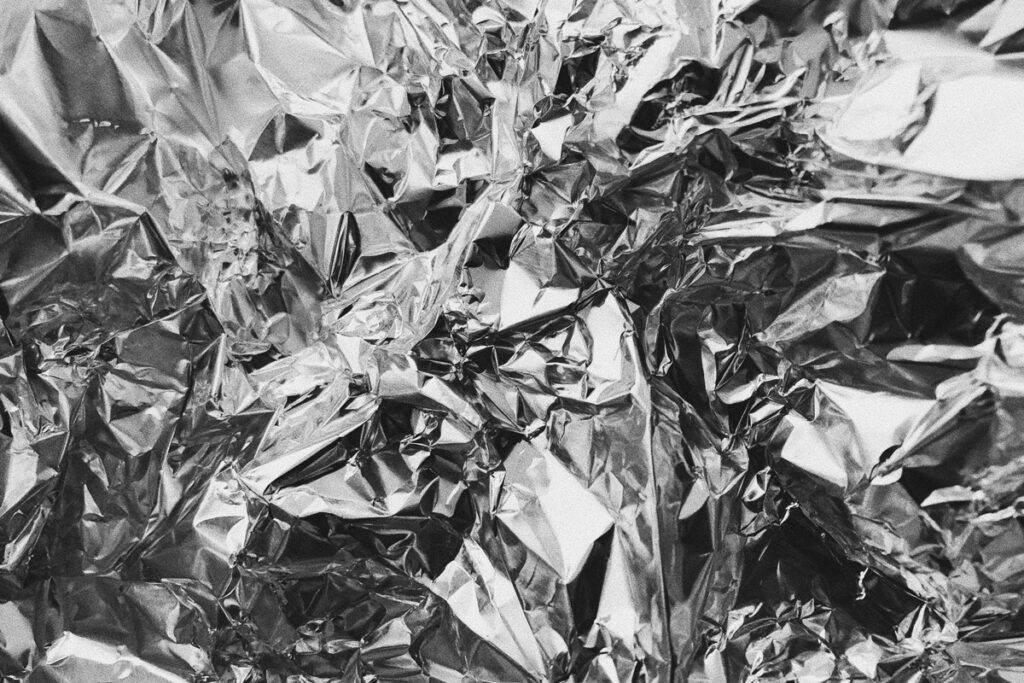
But it’s much more likely to spark when it’s crumpled into a ball — or hastily wrapped around last night’s burrito. Metals, such as aluminum, have free electrons that move back and forth when subjected to microwave energy. These electrons tend to line up when metal has sharp edges or comes to a point, though.
When electrons gather in a defined edge, it creates a high voltage, and eventually ionizes the molecules in the air. This creates a spark or plasma, which is sort of a less-intense version of a lightning bolt, like in the sci-fi toy globes you can touch. Something like bunched-up foil offers many tiny points for these electrons to gather — so that’s when sparks fly. Forks are also likely to cause problems, as it’s easy for free electrons to line up along the thin, straight tines.
Aluminum is the perfect material to create this microwave-induced plasma because it’s usually not uniform in shape and it’s also a thin material. Thicker metals will mostly just bounce microwaves back, acting similarly to the metal that makes up the wall of the microwave itself. If you placed food in a thick, enclosed metal container with no sharp edges, for example, your lunch wouldn’t heat up at all — the microwaves wouldn’t reach the food and excite the water and fat molecules inside.
Not only are the electric sparks dangerous, but they can ignite the contents of the microwave and cause fires. Accidents happen, and if you do happen to accidentally leave a fork in your microwave and damage the appliance, don’t use it.
Direct exposure to non-ionizing microwave radiation can still heat the water and fat in human tissue just like food, causing thermal burns or even cataracts in rare cases. As a general rule, you want to microwave your food — not yourself.
Free electrons found in metal tend to gather together when there are sharp points, such as crumpled aluminum foil or the tines of a fork. Microwaves can excite free electrons, creating a high voltage. If these voltages get high enough, they can ionize the molecules in the air, creating sparks and streams of bright, superheated gas called plasma.
Short Answer