SCIENCE
What Makes Popcorn Pop?


Popcorn is one of the few foods that announces it’s ready with a series of tiny explosions. One minute it’s a handful of small, hard kernels; just a few minutes later, it’s white, fluffy, and delicious with butter.
You can’t just throw any corn on the cob into the microwave and expect fireworks, though. Popcorn isn’t ordinary corn — it comes from a specific variety of flint corn, known scientifically as Zea mays everta. Two qualities make this variety especially well-suited for the movie theater.
Here’s what makes it pop.
Pressure Cooking
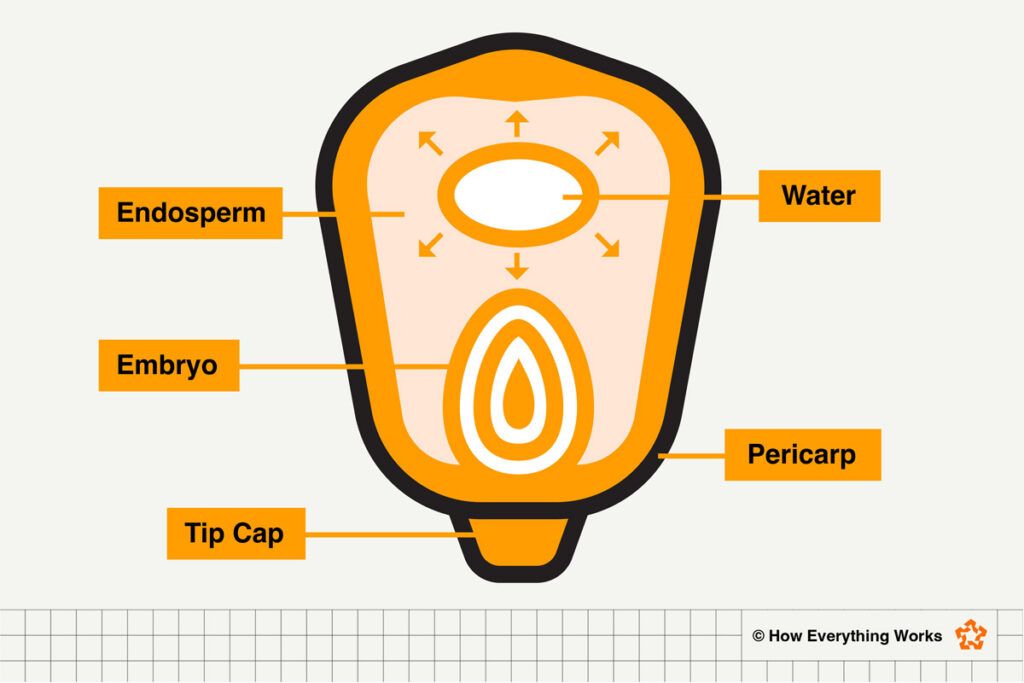
A popcorn kernel is like that one uncle in your family — tough on the outside, but really a softie on the inside. Similarly, every kernel of Zea mays everta contains three important parts: a starchy center called the endosperm, a tiny embryo that could grow into a new corn plant, and a tough outer shell known as the pericarp.
That outer shell is the key to making popcorn. Unlike the shells of sweet corn or field corn, it’s strong enough to trap steam inside as the kernel heats up. Although popcorn looks dry, each kernel contains water. The ideal moisture level for a kernel to pop is about 14%. The temperature inside the kernel climbs to roughly 350 degrees Fahrenheit, turning the water into steam. Because the steam can’t escape, it continues building.
As all of this is happening, the starch inside begins to soften into a thick, almost molten paste. Scientists call this process gelatinization, and it’s similar to what happens when starch thickens a sauce. Inside the kernel, it’s happening while steam continues pressing against the shell. Essentially, each kernel has become a tiny pressure cooker.

When the pressure inside reaches about 135 pounds per square inch (psi) — roughly four times the air pressure inside a car tire — the shell gives way. It cracks open almost instantly, similar to how built-up gas explodes from a can of soda when you shake it.
As the shell bursts, the trapped steam expands in a fraction of a second. The softened starch puffs outward and rapidly cools, hardening into the airy, irregular shape we recognize as popcorn. The familiar popping sound isn’t the starch expanding — it’s the shell finally cracking open.
Not every kernel pops perfectly. If there’s too little moisture inside, it can’t produce enough steam to burst. If the shell has even a tiny crack, that steam can escape before enough pressure can build for the kernel to pop.
That’s why you usually end up with a few stubborn kernels at the bottom of the bowl, and why throwing them back into the microwave isn’t going to “re-pop” them.
A specific variety of corn is used to make popcorn because its kernels contain a small amount of water sealed inside a particularly tough outer shell. As each kernel heats up, that water turns to steam, but the shell is strong enough to keep it trapped. The steam builds pressure while the kernel’s starch softens into a thick paste. Once the pressure becomes too great, the shell cracks open nearly instantaneously. The softened starch puffs outward and quickly cools into the light, fluffy popcorn we eat.
Short Answer